For handout preparation near colleagues, start with a quiet-click mouse that fits your hand and works with the office computer. A conventional shape is easier to consider for shared use, while a contoured or vertical shape deserves a closer fit check if you edit for long periods; Bluetooth or dual-mode connectivity matters when you change devices, provided pairing is permitted. For workers using display screen equipment daily for continuous periods of an hour or more, the Health and Safety Executive treats the mouse as part of the wider workstation assessment, not a standalone answer to discomfort.
Who is choosing a mouse?
Quiet shared-office document editors
If you revise and format handouts close to colleagues, click noise and straightforward everyday operation may matter more than extra controls. Logitech and Kensington both describe quiet-click options, but the claim needs to apply to the exact model you choose.
Regular display-screen users focused on fit
Long or frequent editing sessions make hand fit, desk arrangement and work routine worth considering together. The Health and Safety Executive advises looking at the workstation as a whole rather than relying on a mouse shape alone.
Desk and device switchers
If you move between a shared desktop and a laptop, Bluetooth or a switchable receiver connection may be useful. HP describes both types in its mouse range; check each computer’s compatibility and workplace pairing rules before choosing.
What matters when buying?
For shared-office handout work, identify the issue that would most affect your own editing, then check the mouse’s shape and connection against the people and computers that will use it.
| Concern | What to check | Who this matters to |
|---|
| Click noise |
Look for a quiet-click claim on the exact model, then check whether its shape suits everyone who will share it. |
Editing near colleagues makes repeated clicks an unwelcome distraction when I need to concentrate. Around 36% of consumers put quiet operation first. |
| Comfort during editing |
Check handedness and hand-size guidance, and consider the desk setup alongside the mouse. The Health and Safety Executive’s workstation guidance is relevant to regular display-screen use. |
When selecting text and adjusting layouts for long stretches, I need a shape I can use comfortably at my desk. For around 29% of consumers, fit during extended editing is the main concern. |
| Connection flexibility |
Confirm available USB ports, Bluetooth support, operating-system compatibility and workplace pairing permission. |
Moving between an office desktop and a laptop means I need a connection that works on both. Connection flexibility comes first for around 21% of consumers. |
| Limited desk space |
Check the usable mousing area and decide whether you would adapt to thumb-trackball control. Logitech describes the ERGO M575S as a stationary option for small or busy setups. |
With little room beside my paperwork, I want pointer control without repeatedly moving a mouse across the desk. Around 14% of consumers prioritise working in restricted space. |
Mistakes to avoid
-
Choosing by DPI alone
A DPI setting does not tell you whether clicks will disturb colleagues, the shape will fit your hand or the mouse will connect to the office computer.
For handout editing, check the exact model’s click description, shape and connection requirements before treating adjustable DPI as a deciding feature.
-
Assuming any wireless mouse will connect
A receiver needs a suitable USB port; Bluetooth needs compatible hardware and permission to pair with the work computer.
Check the computers you will use, their operating systems and workplace rules before choosing a connection method.
-
Expecting an ergonomic mouse to fix the workstation
The Health and Safety Executive’s display-screen guidance considers equipment, workstation arrangement and work routine together. A different mouse shape does not settle those other questions.
If you use display screen equipment daily for continuous periods of an hour or more, raise setup or discomfort concerns through your employer’s workstation assessment process.
-
Choosing a specialist shape without checking fit
A vertical mouse can be designed for particular hand sizes or handedness, while a thumb trackball changes how you move the pointer. Either distinction matters if colleagues share the device.
Check the maker’s fit guidance and, where possible, try the control style before relying on it for regular editing.
Brands to consider
Logitech
Logitech describes conventional quiet-click mice, the Lift vertical mouse and the ERGO M575S thumb trackball for different desk setups.
- Logitech positions Lift for small to medium hands and offers a left-handed version; it describes the ERGO M575S as suitable for a small or busy desk.
- Check the fit and controls of the particular model. These features do not apply to every Logitech mouse.
HP
HP lists office mice with different approaches to quiet clicks and device connection.
- HP specifies switchable Bluetooth and a 2.4 GHz USB-A receiver for the 255, while the Bluetooth 480 is specified to connect to up to three devices.
- Check which connection your office computers permit and which functions the chosen model supports on their operating systems.
Kensington
Kensington describes conventional quiet-click mice and ergonomic wireless designs among its office accessories.
- Its Wireless ValuMouse is described for quiet environments, and its Pro Fit Ergo Wireless Mouse lists Bluetooth and 2.4 GHz connectivity.
- Confirm the exact regional model and compatibility; features of one Kensington mouse cannot be assumed for another.
Joybuy mice for handout work
These mice cover wired and wireless connections, quiet-click descriptions and a vertical shape for shared-office handout work. Choose by the connection your computer allows, the people sharing the mouse and the fit you need.
 No image available
Logitech MX Master 3S Ergonomic Black
Consider this shaped mouse for regular handout editing if it fits your hand and grip.
Before using it across office computers, confirm the available connection and workplace pairing rules.
View on Joybuy
 No image available
HOFOTEK M311 2.4G+BT Silent Office Mouse, White-Grey
This is an option for consumers who want a quiet-click description and a choice of wireless connection methods for handout editing.
The name specifies adjustable DPI and a 1xAA battery. Check device compatibility and how switching between devices works before buying.
View on Joybuy
 No image available
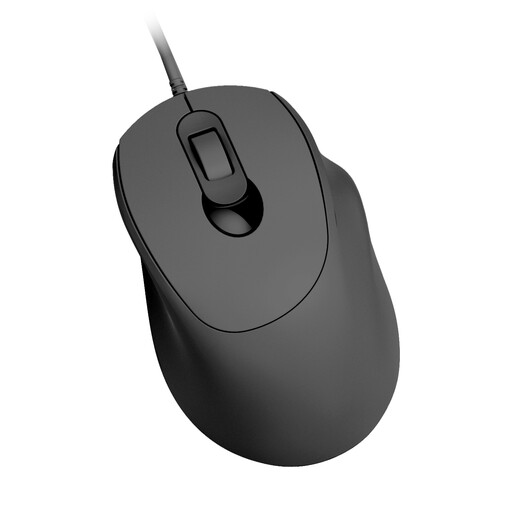
Rexsun V2 Wired Silent-Click Mouse, Black
A wired mouse is worth considering for handout work at one desk when a suitable USB connection is available.
This V2 variant lists four buttons and adjustable 1000/1200/1600 DPI. Its cable is less convenient if you move between desks; check the computer’s port and the mouse’s fit.
View on Joybuy
 No image available
Philips 3000 Series SPK7378B/00 Wireless Mouse, EU Version, Black
Consider this quiet-click model for a shared desk if its shape and receiver connection suit the people and computer using it.
The name specifies 2.4 GHz wireless operation, a USB receiver and 1600 DPI. Confirm port and operating-system compatibility for the intended office computer.
View on Joybuy
 No image available
V7 MW500BT Bluetooth Vertical Ergonomic Mouse
Consider the vertical shape for frequent editing only after checking that its hand position suits the intended user.
The name lists 2.4 GHz dual-mode connectivity, six buttons and an adjustable 1600 DPI sensor. If low click noise is essential, check the exact model’s click specification; also confirm pairing permission and whether a receiver is included.
View on Joybuy
Frequently asked questions
Do I need a particular ergonomic mouse for lesson-handout work?
Choose a mouse for the person, task and workstation rather than assuming one ergonomic shape is required or will resolve discomfort. For workers using display screen equipment daily for continuous periods of an hour or more, the Health and Safety Executive says the workstation must be assessed and risks reduced.
What should I check when using a mouse at a shared desk?
Check that the mouse fits its users and works with the desk space and computer at each workstation. Where the Health and Safety Executive’s regular display-screen-use conditions apply, concerns about a changing or uncomfortable setup belong in the wider workstation assessment.
Should I choose Bluetooth or a USB receiver for a shared office?
Choose Bluetooth if the computer supports it and workplace rules permit pairing; choose a receiver if you have the required USB port and that connection better suits your desk. A dual-mode mouse offers both stated methods, but check the selected model’s operating-system requirements and how it switches between devices.


