Shared-office proofreaders and editors
People checking programme copy, performer credits, timings and print layouts beside colleagues, where clicking and scrolling can be noticeable.


Choose a quiet conventional mouse if unobtrusive clicks, familiar handling and document scrolling matter most. If hand position during long editing sessions takes priority, consider a vertical shape after checking its fit; if you move between desks or devices, check portability and the connection methods your work computers permit.
People checking programme copy, performer credits, timings and print layouts beside colleagues, where clicking and scrolling can be noticeable.
People spending extended sessions on programme documents who want a grip and hand position suited to their desk setup.
People moving between a laptop and shared workstations who need a mouse they can carry and connect to each device they use.
Start with the issue that would most affect your programme work, then check the mouse against the other requirements of your desk.
| Concern | What to check | Who this matters to |
|---|---|---|
| Office noise | Look for an explicit quiet-click specification; check the scroll wheel separately if you review long drafts. | When colleagues work nearby, I want routine edits to make less clicking noise. Around 36% of consumers put quiet shared-office work first. |
| Document navigation | Check the available scroll behaviour for careful proofreading and longer documents; confirm software permissions if you want custom controls. | Moving between programme copy, schedules and proofs calls for scrolling I can control without losing my place. Document navigation is the main priority for around 29% of consumers. |
| Long-session fit | Compare hand-size and handedness guidance, and consider the mouse as part of your whole workstation setup. | During extended editing, I care most about whether the shape suits my hand and working position. Around 21% of consumers make sustained comfort their primary concern. |
| Changing desks | Check Bluetooth support or a suitable receiver port on each work device, along with workplace pairing rules. | If I alternate between a laptop and shared desks, I need a connection that works wherever I sit. For around 14% of consumers, flexible-desk compatibility comes first. |
Checking long programme drafts can involve frequent wheel use, and a quiet-click description does not by itself describe the wheel.
If low noise is important at your desk, check the button and scroll-wheel descriptions separately.
Logitech positions Lift for small to medium hands and offers a left-handed version. An ergonomic label alone cannot tell you whether a particular grip suits you.
Check the maker's dimensions and handedness guidance, and consider whether you can try the grip before committing to it.
Bluetooth pairing and receiver-based connections place different requirements on an office computer, particularly where device settings are managed.
Confirm Bluetooth access, a suitable USB port and any IT restrictions before choosing the connection method.
A desk without the required connection may mean using a suitable adapter or changing mice.
The UK Health and Safety Executive addresses display-screen work through the workstation and work routine, not the choice of a single accessory.
For regular, prolonged screen work, consider the mouse alongside your desk arrangement and your employer's workstation assessment process.
Its relevant UK product lines span conventional quiet-click, vertical and compact multi-device mice.
The Pro Wireless Silent Mouse MS355 is an office-oriented option for buyers comparing wireless connection methods.
Its relevant quiet office mice include receiver-based and dual-connection models.
Its GENTIX Silent and STREAM MOUSE COMFORT lines are described by CHERRY for quiet office use.
These wireless mice offer different combinations of quiet-click descriptions, connection options and document-control features for programme work. Check the particular model's fit and scroll-wheel noise where those matter to your shared desk.
 No image available
Consider this model if quiet clicking and a choice of wireless connection methods matter at your desk.
Its named features include adjustable DPI and operation with one AA battery. Check wheel noise and hand fit if you will use it through long editing sessions.
 No image available
Consider this quiet-click option if your office computer can accommodate its receiver-based connection.
The named specifications are 2.4 GHz wireless connectivity, a USB receiver and 1600 DPI. Check for a suitable port and assess wheel noise separately.
 No image available
Consider the HP 920 if hand position is a priority during long programme-editing sessions and you want to assess its shape with your workstation.
Its named accessory is a detachable wrist rest. Check the mouse's dimensions and both click and wheel noise before choosing it for a shared office.
 No image available
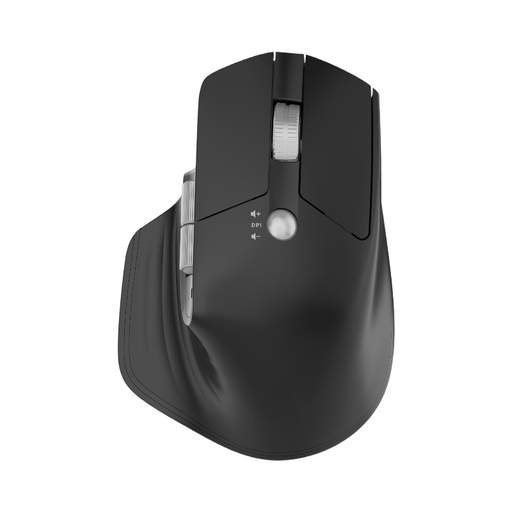
Consider this model if quiet clicks and a choice between Bluetooth and 2.4G connectivity suit your work devices.
The title specifies one-touch DPI adjustment. Check wheel noise and hand fit, and confirm any multi-device switching you need before relying on it.
 No image available
Consider this receiver-based mouse if adjustable pointer settings matter for programme layouts and your work computer has a suitable USB port.
Its title specifies five adjustable DPI levels. Check click and wheel noise before selecting it for a quiet office, and confirm any button functions you need on your operating system.
No. A vertical mouse is worth considering when hand position is your priority, but its fit still matters. Logitech positions Lift for small to medium hands and offers a left-handed version; assess the mouse alongside the rest of your workstation rather than expecting its shape alone to address discomfort.
No particular mouse model is specified by the UK Health and Safety Executive guidance cited here. The Executive says display-screen equipment rules apply to workers who use it daily for continuous periods of an hour or more; workstation arrangements and work routines need consideration rather than a mouse purchase in isolation.
Choose a connection your exact computer supports and your workplace permits. Bluetooth needs compatible hardware and pairing access, while a receiver needs a suitable port. Dell describes the MS355 and HP describes the 400 Quiet Dual Wireless Mouse as offering both connection routes.
Not necessarily. Check the wheel specification separately if you frequently scroll through programme drafts. Logitech describes quiet clicks and a quiet MagSpeed wheel for MX Master 3S, while its Lift product information describes quiet buttons and a quiet wheel.
Only if the controls you want work with your office computer and its software policy. Logitech describes Logi Options+ customisation for MX Anywhere 3S for Business; confirm whether your organisation permits the optional software before making those controls a deciding factor.