For writing customer instructions in a quiet study, start with a mouse whose exact model has an explicit quiet-click specification. Then choose a connection your computer can use and a shape that suits your hand: Bluetooth keeps a USB port free, a receiver needs a suitable port, and a wired mouse avoids pairing and battery changes. For longer writing sessions, mouse placement matters alongside its shape.
Who needs a quiet study mouse?
Writers working near others
If you draft and revise customer instructions in a low-noise room, documented quiet clicking may matter more to you than extra controls. Logitech UK, HP Store UK and Dell UK each describe quiet operation for particular mouse models, so check the wording for the one you intend to buy.
Writers at a desk for long sessions
Hand fit and desk layout deserve attention when you spend extended periods drafting. The Health and Safety Executive advises placing the mouse in line with your elbow; a different mouse shape does not replace a suitable workstation position.
Laptop and shared-device writers
If you move between computers, check their Bluetooth capability and available USB ports before choosing a connection. The M240 Silent, HP 280 Silent and Dell MS355 illustrate Bluetooth, receiver-based and dual-connectivity options respectively, according to their manufacturers.
What matters when choosing?
Check quiet-click wording for the exact mouse first, then match its connection to your computer and its shape to your hand and desk position.
| Concern |
What to check |
Who this matters to |
| Quiet clicking |
Look for a quiet-click claim for the exact model. Check whether it covers buttons, scrolling or both; manufacturers' noise-reduction claims do not establish a common sound level. |
When I edit instructions near other people, repeated clicks are the disruption I most want to reduce. Around 42% of consumers would put quiet clicking first. |
| Hand fit and desk position |
Check size, handedness and grip shape. The Health and Safety Executive advises keeping the mouse in line with your elbow. |
For a long drafting session, I need a mouse that fits my hand and a position that does not make me twist to reach it. Roughly 33% of consumers would make fit and positioning their primary concern. |
| Connection compatibility |
Confirm compatible Bluetooth or an available USB port for a receiver or cable; check the exact model if you need to switch between devices. |
If I write on both a laptop and a desk computer, I need a connection that works with each setup. About 25% of consumers would prioritise connection compatibility. |
Mistakes to avoid
-
Assuming every “silent” mouse makes the same sounds
Manufacturer claims differ by model and by the sounds they cover. Logitech UK states a 90% reduction in clicking sounds for the M240 Silent and over 90% for the M110 Silent; HP Store UK states up to 90% reduction for the HP 280 Silent's left and right buttons. Those figures should not be treated as directly comparable measurements.
Read the exact model's wording, especially if scroll-wheel noise would also disturb your study.
-
Choosing wireless before checking your computer
A Bluetooth mouse, a receiver-based mouse and a wired mouse need different connections. A receiver may also require an adapter if it does not fit an available port.
Check your computer's Bluetooth capability and ports before deciding which connection suits your desk.
-
Expecting mouse shape alone to fix an awkward setup
Even a contoured mouse can be awkward to use if you must reach or twist to operate it. The Health and Safety Executive advises positioning the mouse in line with your elbow.
Consider hand size and handedness, then arrange the mouse, keyboard and screen so you can work without twisting.
-
Forgetting how a wireless mouse is powered
A battery-powered mouse will eventually need a battery change, whereas a wired mouse does not. This can matter if the mouse stays at one study desk.
Check the exact model's power arrangement and decide whether battery changes or charging suit your routine.
Brands worth considering
Logitech
Logitech UK lists several shapes and connection types relevant to quiet-study writing, but quiet-click claims and fit options belong to particular models.
- The compact, ambidextrous M240 Silent uses Bluetooth; Logitech UK states that its clicking sounds are reduced by 90%.
- The wired, ambidextrous M110 Silent offers another desk setup, while Logitech recommends different Signature M650 variants by hand size and handedness.
- Check the connection and quiet-click specification of the exact M650 variant rather than assuming every variant matches the M240 or M110.
HP
HP Store UK describes a right-hand receiver-based option and a separate dual-wireless option for different desk setups.
- The HP 280 Silent has a right-hand shape, thumb rest and 2.4 GHz dongle; HP states up to 90% noise reduction on its left and right buttons.
- The HP 400 Quiet Dual Wireless Mouse offers Bluetooth and 2.4 GHz connectivity.
- The HP 280's right-hand shape will not suit everyone, while the HP 400's extra connection and scrolling options may be unnecessary at a fixed desk.
Dell
Dell UK describes the MS355 as a compact, symmetrical silent mouse with Bluetooth and RF-dongle connections.
- Its two connection options may suit a writer moving between a Bluetooth-capable laptop and a receiver-based workstation.
- Its compact three-button format may not suit someone looking for a more sculpted grip or additional controls.
Joybuy mouse choices
These quiet-click mouse choices cover dual-wireless, wired and receiver-based setups. Match each model's stated connection to your computer, then check its shape and controls against how you write.
 No image available
HOFOTEK M311 2.4G+BT Silent Mouse, white-grey
Consider this model if you want a choice between Bluetooth and 2.4G wireless use while writing in a quiet study.
The product name states silent clicking, adjustable DPI and a 1xAA battery. Check the connection and hand fit you need; the quiet-click wording does not establish how the scroll wheel sounds.
View on Joybuy
 No image available
Rexsun V2 Wired Silent-Click Mouse, black
Consider this wired option for a fixed study desk with a suitable USB port, particularly if you would rather avoid wireless pairing.
Its product name specifies four buttons, 1000/1200/1600 DPI settings and Windows and Mac compatibility. The quiet-click claim does not establish how the scroll wheel sounds.
View on Joybuy
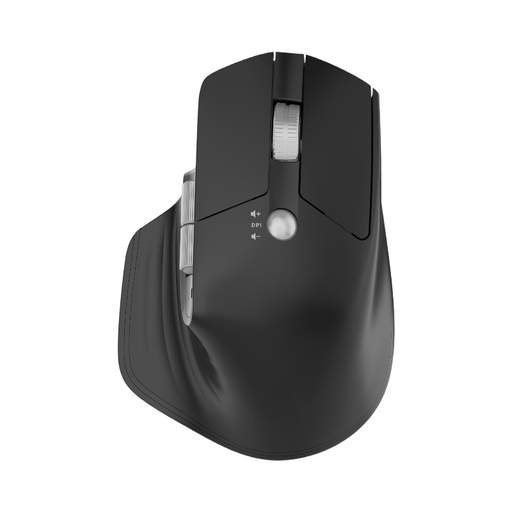 No image available
Ochama Bluetooth/2.4G Silent-Click Mouse
Consider this model if your writing setup calls for a choice between Bluetooth and 2.4G wireless connections.
The product name states silent clicks and one-touch DPI adjustment. Check the receiver arrangement, power requirements, computer compatibility and hand fit before choosing it.
View on Joybuy
 No image available
Philips 3000 Series SPK7378B/00 Wireless Mouse, EU Version, black
Consider this receiver-based model for a quiet study computer with a suitable USB port.
The product name states 2.4 GHz wireless use, a USB receiver, silent clicking, 1600 DPI and Windows and Mac compatibility. Check its shape and handedness against your needs before buying.
View on Joybuy
Frequently asked questions
Should I choose Bluetooth or a USB receiver for a quiet study?
Choose Bluetooth if your computer supports it and you want to keep a USB port free; choose a receiver-based mouse if you have a suitable port and prefer that connection. Logitech UK specifies Bluetooth without a dongle for the M240 Silent, HP Store UK specifies a 2.4 GHz dongle for the HP 280 Silent, and Dell UK lists both Bluetooth and RF connectivity for the MS355.
Will a silent-click mouse make the whole desk quiet?
No: a quiet-click claim does not establish how the keyboard, desk or every part of the mouse will sound. Check the exact model's wording if scrolling noise matters to you; manufacturers describe different sounds and conditions in their claims.
Is a contoured mouse enough for a long writing session?
A contoured shape is not a substitute for checking hand fit and desk position. The Health and Safety Executive advises keeping the mouse in line with your elbow as part of your workstation setup, so assess where the mouse will sit as well as how it feels in your hand.


