Quiet-study checkout testers
People who repeatedly click through checkout fields, payment steps and confirmation pages while trying not to disturb others nearby.


For checkout testing in a quiet study, start with a mouse whose main buttons are described as quiet, then check that its connection works with your test computer. A conventional mouse can suit one-computer testing; consider a vertical shape for regular desk sessions if it fits your hand, or multi-device pairing if you switch computers. A quiet-click description does not necessarily cover scrolling noise.
People who repeatedly click through checkout fields, payment steps and confirmation pages while trying not to disturb others nearby.
People who run checkout tests for extended periods and need to consider hand fit, mouse placement and the wider workstation.
People who move between test computers and need a suitable connection method, convenient switching and dependable pointer control.
Check which controls are described as quiet, then match the connection to your test computer before deciding whether hand fit or switching between devices calls for a different design.
| Concern | What to check | Who this matters to |
|---|---|---|
| Quiet clicks | Check which buttons the quiet-click description covers; ask separately about scrolling if it matters in your study. | When I click repeatedly through a checkout beside someone studying, I want the main buttons to draw less attention; around 36% of consumers put quiet clicking first. |
| Connection and navigation | Match Bluetooth or a USB receiver to the test computer’s capabilities, and check the exact model’s operating-system support. | If the mouse cannot connect to my test computer, I cannot work through forms and payment steps reliably; around 29% of consumers prioritise compatibility and navigation. |
| Desk-session comfort | Check hand-size and handedness guidance. The Health and Safety Executive advises placing the mouse in line with the elbow. | For longer sessions at a desk, I need a shape that fits my hand and a mouse position I can maintain comfortably; roughly 21% of consumers make comfort their primary concern. |
| Device switching | Check how many devices the exact model can pair with and whether any button-configuration software works on your computers. | When I move a checkout test between computers, I want to switch without repeatedly setting up the mouse; around 14% of consumers put multi-device flexibility first. |
A quiet claim may apply only to particular buttons. HP Store UK specifies its up-to-90% noise-reduction claim for the HP 280 Silent’s left and right buttons; Logitech UK separately describes quiet clicks and scrolling on Lift.
Check which controls the claim covers, particularly if you scroll through long checkout pages.
A vertical mouse is not a universal fit. Logitech UK describes Lift as suited to small to medium hands and offers a left-handed version.
Check the maker’s sizing guidance and the handedness of the exact variant before choosing it for regular testing.
Models differ between Bluetooth and USB-receiver connections. Logitech UK says MX Anywhere 3S can use a Logi Bolt receiver, but that receiver is not included.
Check each test computer’s ports and Bluetooth capability, along with what comes with the mouse.
A separate receiver or USB adapter may be needed for a setup that cannot use the supplied connection method.
The Health and Safety Executive treats mouse placement as part of the wider display-screen setup. A different shape does not replace attention to the desk, chair and working position.
Keep the mouse in line with your elbow and review the wider setup if regular testing remains uncomfortable.
Its relevant range includes conventional wireless, vertical and compact multi-device mice.
Its relevant models range from a receiver-based quiet mouse to a rechargeable multi-device design.
Its relevant quiet-click mice include a receiver-based ambidextrous model and a rechargeable dual-connectivity model.
These mice offer different ways to navigate checkout pages in a quiet study, including wired and wireless connections. Check each model’s quiet-click description, connection and fit against your own setup.
 No image available
Consider this model if you want quiet-click operation and a choice of wireless connections for checkout testing.
The title specifies 2.4G+BT connectivity and adjustable DPI. Check the connection and click feel with your test devices; the quiet-click description does not establish how the scroll wheel sounds.
 No image available
This wired option may suit a fixed checkout-test computer with a usable USB port.
Its title specifies four buttons and 1000, 1200 and 1600 DPI settings. The quiet-click description concerns the left and right buttons; check that the cable and port suit your desk setup.
 No image available
Consider this mouse if quiet main-button clicks and adjustable pointer sensitivity matter for navigating checkout pages.
The title specifies five adjustable DPI settings and a USB wireless connection. Check for a suitable USB port; the listing says its side buttons are unavailable on Mac OS.
 No image available
This receiver-based quiet-click option may suit checkout testing on a computer with a compatible USB connection.
The title specifies 2.4 GHz wireless connectivity, a USB receiver and 1600 DPI. Check how the scroll wheel sounds if scrolling noise matters in your study.
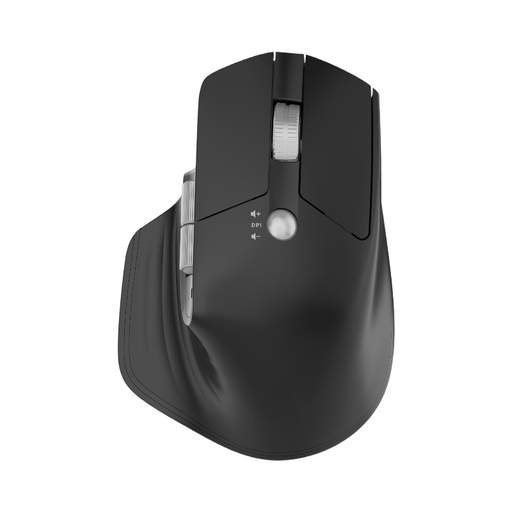 No image available
Consider this model if you want to choose between Bluetooth and a 2.4G connection for quiet-study testing.
The title specifies one-touch DPI adjustment. Check the exact receiver arrangement, operating-system compatibility and hand fit before relying on it across test computers.
No: a conventional quiet-click mouse can suit occasional testing. Consider a vertical design for regular desk work if its stated hand-size fit suits you; the Health and Safety Executive also advises keeping the mouse in line with your elbow, whichever shape you choose.
Choose the connection your test computer can use. Bluetooth can leave a USB port free, while a receiver needs a suitable port; check the exact model, as Logitech UK specifies Bluetooth Low Energy or Logi Bolt for Signature M650, whereas HP Store UK specifies a 2.4 GHz dongle for HP 280 Silent.
The Health and Safety Executive’s display-screen guidance does not prescribe a particular mouse model. Its guidance addresses the wider workstation, including mouse placement; its display-screen equipment rules concern employers whose workers regularly use screens as a significant part of their normal work.
Check the product and seller information for the mouse you are considering rather than assuming that a brand name establishes compliance. The Office for Product Safety and Standards explains that electrical equipment placed on the Great Britain market must meet applicable safety requirements, while the Health and Safety Executive identifies suppliers as responsible for their legal obligations.