People sharing a quiet study
If frequent clicks could disturb people nearby, check which buttons the maker describes as quiet. HP and Logitech specify noise-related features for particular controls, not a blanket noise level for every action.


For routine timetable checks in a quiet study, start with a mouse whose main buttons are explicitly described as quiet, then choose a connection your computer can use. Precision or fast scrolling becomes more relevant when you repeatedly navigate long tables; whatever you choose, check hand fit and desk position. A quiet-click claim does not necessarily cover the wheel or every button.
If frequent clicks could disturb people nearby, check which buttons the maker describes as quiet. HP and Logitech specify noise-related features for particular controls, not a blanket noise level for every action.
If you regularly move between dense tables and long route pages, consider whether you need precise row-by-row scrolling as well as a faster mode. Logitech describes both types of scrolling for the Signature M650 SmartWheel.
If you use the mouse for extended sessions, check its size and where it will sit on your desk. The Health and Safety Executive advises keeping the mouse within easy reach so you can use it with a straight wrist.
For timetable work in a quiet study, check the controls you will use most, then consider scrolling, connection and fit in your own setup.
| Concern | What to check | Who this matters to |
|---|---|---|
| Click noise | Check exactly which buttons have a quiet-click claim; assess wheel sound separately if you scroll often. | If I am selecting routes beside other people, repeated main-button clicks matter more to me than extra controls. Around 38% of consumers put quieter main clicks first. |
| Timetable navigation | Look for precise scrolling through rows; consider a faster mode if the pages you use are long. | When I move repeatedly between dense tables and lengthy service pages, I want to navigate without losing my place. Around 31% of consumers prioritise that navigation need. |
| Hand fit and position | Check the available size or shape and whether you can keep the mouse close with a straight wrist. | During longer study sessions, I need a mouse I can reach and hold comfortably. Hand fit and positioning come first for around 31% of consumers. |
A main-button noise claim may say nothing about the wheel or side buttons, which can also matter when comparing timetables.
Read which controls the maker names. If wheel sound is important, look for a separate wheel-specific statement and check the seller's return terms before ordering.
A receiver-based mouse may not connect directly to a laptop without a suitable USB port.
Check whether the model uses Bluetooth, a USB receiver or both, and compare that with your study device.
A USB adaptor may be needed if the receiver does not fit an available port.
Fast scrolling and customisable controls serve a different workload from opening a few timetable pages. They do not resolve a poor hand fit or desk arrangement.
Consider those features when long pages, multiple devices or repeated shortcuts are part of your work; otherwise, focus on the controls and connection you will use.
An ergonomic shape alone cannot correct an awkward reach. The Health and Safety Executive advises keeping the mouse close enough to use with a straight wrist.
Arrange the desk so your forearm is supported and you need not grip tightly. Seek appropriate clinical advice if symptoms persist or worsen.
Relevant if you want to compare a hand-size choice with more extensive scrolling controls.
Relevant for a straightforward receiver-based mouse used at one study computer.
Relevant if a compact mouse suits a small study space or occasional portable use.
These choices span wireless and wired mice for timetable work, from quiet-click options for routine use to a model aimed at more involved navigation. Match the connection and stated quiet controls to your study setup rather than assuming every model makes scrolling quiet.
 No image available
Consider this model if frequent navigation makes additional mouse controls relevant. Check the quiet-control claims and whether its shape fits your hand before choosing it for a study.
 No image available
The 2.4G+BT connection choices may suit a study device where port availability matters. The title specifies a 1xAA battery; check which controls the silent claim covers if wheel sound matters to you.
 No image available
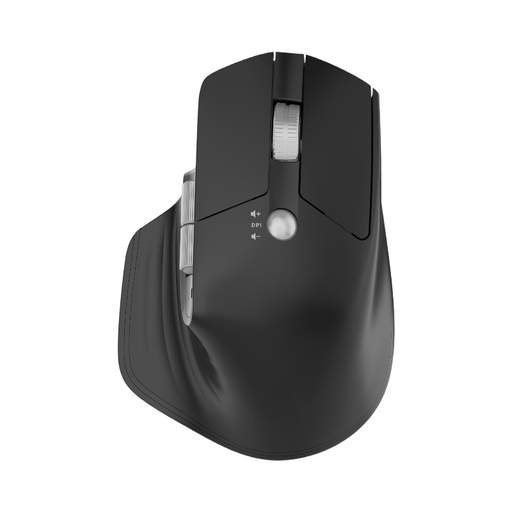
This is another connection-choice option for a study computer. Its title describes silent clicks and one-touch DPI adjustment; check control noise, device compatibility and physical fit for your setup.
 No image available
For a fixed study computer, this 2.4 GHz mouse uses a USB receiver. The title specifies a 1600 DPI optical sensor and silent clicks; confirm that the receiver fits your device and assess wheel sound separately.
 No image available
A wired USB connection suits a desk where a cable is acceptable. The title specifies four buttons and 1000/1200/1600 DPI settings; its silent-click wording should not be taken as a claim about wheel noise.
No. A 2.4 GHz USB receiver can suit one study computer, while Bluetooth may let you keep a USB port free. Check the mouse's stated compatibility and whether your computer has the required connection.
Not necessarily. HP's stated noise reduction for the 280 Silent applies to its left and right buttons; Logitech separately describes the MX Master 3S Bluetooth Edition wheel as quiet. Check the claim for each control you expect to use frequently.
An ergonomic label is not a treatment claim. The Health and Safety Executive advises keeping the mouse within easy reach and using it with a straight wrist; seek clinical advice if symptoms persist, worsen or interfere with normal activities.