
24/7 全天候客户支持

免费退货

当日/次日达

品质保障

开启新人专享福利: 全场免邮 | 低至 2 折 | 免费试用 30 天 JoyPlus 会员
下载 Joybuy
A quiet tower fan can make warm nights and stuffy rooms more comfortable, but choosing one involves more than comparing speed settings. UK shoppers often discover that a fan is noisier than expected, takes up more space than its photographs suggest or costs more to run because the motor and controls are poorly matched to daily use.
As the Joybuy Product Recommendation Officer, I focus on practical details that help separate useful features from marketing decoration. Before choosing a portable tower fan, check these common pitfalls and the specifications that affect everyday comfort.
“Quiet” and “low-noise” are useful descriptions, but they do not always explain how the noise was measured. A fan can be unobtrusive at its lowest setting yet noticeably louder at maximum airflow. Motor hum, oscillation movement and button beeps may also affect bedroom use.
If you are a light sleeper or work in a quiet home office, look for a stated noise figure where available, then consider whether the fan offers several lower-speed settings. A wider range allows you to reduce airflow and sound rather than relying on a single low mode.
A tall bladeless tower fan may fit neatly beside a wardrobe or sofa, but its narrow footprint does not automatically mean it will cool an entire room evenly. Conversely, a pedestal fan may move air over a wider area but require more floor space.
Consider where the airflow needs to reach. A bedroom fan beside a bed has different requirements from a living-room fan positioned several metres away. Oscillation, height adjustment and the direction of the air outlet can matter as much as the maximum speed.
A rechargeable tower fan is convenient for desks, travel or areas without a nearby socket, but battery runtime and charging arrangements should be considered. A mains-powered fan may be more suitable for overnight or extended use.
Also check whether the fan has a timer, remote control, accessible controls and a grille or outlet that can be cleaned safely. Dust accumulation can affect airflow and create additional noise over time. Always disconnect a fan before cleaning and follow the supplied instructions.
For a low-noise fan, check whether the product provides a measured decibel figure and whether that figure applies to a particular speed. A DC motor can offer smoother speed adjustment and lower energy consumption than many traditional AC motor designs. The actual result still depends on the fan’s construction, airflow setting and oscillation mechanism.
If you plan to sleep with the fan running, prioritise low-speed control, a fan with timer and the ability to switch off display lights or sounds where available.
Multiple speed settings allow closer control over comfort. The PELONIS model listed below provides 12 speeds, while the Duux pedestal fan offers 26 wind speed settings. More settings do not automatically indicate stronger airflow, but they can make it easier to find a comfortable level.
An oscillating fan spreads air across a wider section of a room. Check the stated oscillation function and whether the fan can be positioned close enough to circulate air without blowing directly at your face for long periods.
Measure the available floor or desk space before ordering. A tall tower design may suit narrow rooms, while a pedestal fan with an adjustable-height stand can direct air over furniture or towards a larger area.
For running costs, look for the wattage or motor information rather than relying only on the phrase “energy-efficient fan”. A low-wattage setting generally uses less electricity, although the exact cost depends on your tariff and how long the fan operates. For electrical products, check the supplied plug, operating instructions and relevant UK marking information before use.
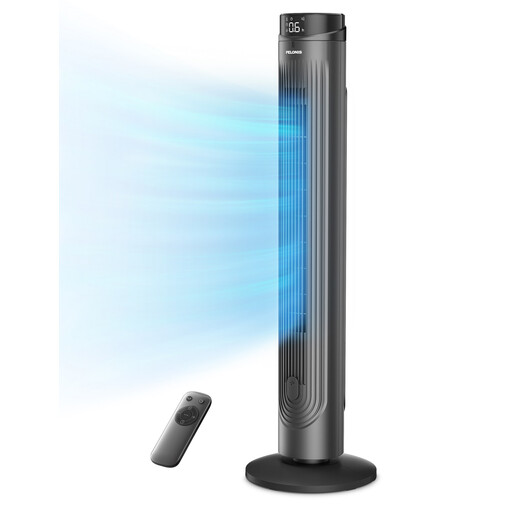
Why This Suits Their Persona: A practical floor-standing option for shoppers wanting a tall tower design, remote operation and detailed airflow adjustment for a bedroom or home office.
Its 12 speed settings offer more control than a simple three-speed design, while the 24-hour timer helps avoid unnecessary overnight running.
DC motor design, remote control, LED display, 12 speeds and oscillation.
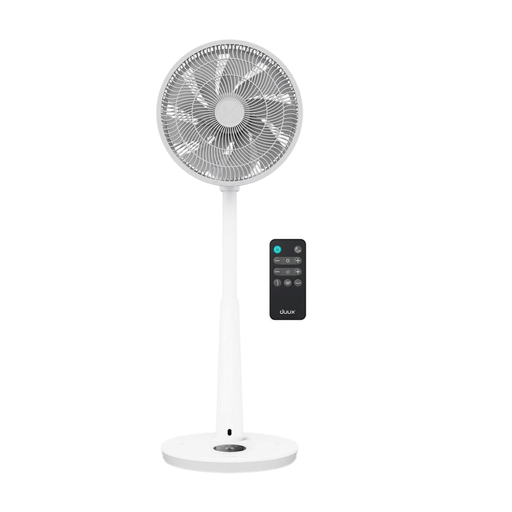
Why This Suits Their Persona: Suitable for shoppers who prefer fine airflow control and a height-adjustable format for bedrooms, living rooms or home offices.
The product specification states noise levels from 13dB and includes 26 wind speeds, helping users avoid depending on one broad “quiet” label.
Remote control, adjustable height, natural wind mode and stated power consumption of 1.6W–19W.
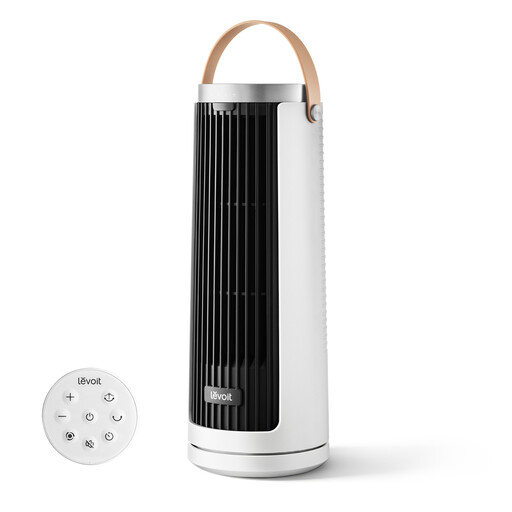
Why This Suits Their Persona: A compact choice for students, renters, desk users and anyone needing cordless airflow beside a bed, on a work surface or while travelling.
Its rechargeable battery and USB-C charging address limited socket access, while its compact format avoids the floor-space demands of a full pedestal fan.
USB-C recharging, cordless operation, multiple airflow modes and lightweight portable tower design.
We have compiled a complete, real-time list of products that fully satisfy these strict selection criteria and UK safety regulations.
Yes, a tower fan can suit a bedroom when it offers low-speed operation, stable positioning and a timer. A bladeless tower fan may also be convenient where a narrow footprint is important. Check the stated noise information and avoid placing the unit directly against furniture or soft bedding.
Not necessarily. Running cost depends on the fan’s wattage, selected speed, operating time and electricity tariff. A DC motor or an energy-efficient fan may use less electricity at comparable settings, but check the product’s stated power information rather than relying on general advertising language.
It depends on where you will use it. A rechargeable tower fan is useful for desks, travel, temporary workspaces and rooms with limited sockets. A mains-powered model is generally more convenient for continuous operation, provided the cable can be positioned safely. A USB-C fan also needs compatible charging equipment and should be charged according to its instructions.