What matters when choosing
Decide which need would determine your choice if a keyboard cannot satisfy everything: quieter typing, quicker access to profiling actions, or more usable desk space. Then check the exact layout and configuration, rather than relying on a product-family name.
| Concern | What to check | Who this matters to |
|---|
| Typing noise |
Check the exact key mechanism or switch variant. Logitech lists Tactile Quiet, Clicky and Linear versions of MX Mechanical with different sound and feel. |
If I type near colleagues throughout a profiling session, I want keystrokes that do not draw attention across the office. Around 42% of consumers put shared-office typing noise first. |
| Profiling shortcuts |
Check the keys and remapping tools your workflow requires, plus operating-system support and your employer’s software policy. |
When I move repeatedly between runs, logs and debugging tools, I want the actions I use most within reach. For around 33% of consumers, shortcut access is the primary concern. |
| Desk space and posture |
Decide whether you need a number pad or dedicated navigation keys. Check keyboard and mouse placement together, not just the keyboard’s footprint. |
If mouse movement feels cramped during long desk sessions, I would rather free up space than keep keys I seldom press. Desk space and workstation fit come first for around 25% of consumers. |
Joybuy keyboard choices
These full-size and compact keyboards offer different layout and connection choices for office typing. Check each variant’s key arrangement, switch and suitability for your work computer before choosing one for profiling.
 No image available
Targus EcoSmart full-size wireless keyboard (UK)
Consider this if you want a full-size wireless keyboard for an office desk. Check the exact UK key map and any shortcut-remapping requirements before relying on it for profiling.
View on Joybuy
 No image available
ET Silent wireless keyboard and mouse set, US layout
Consider the set if you want a keyboard and mouse together for a desk setup. Its full-size keyboard has a US layout and the title specifies a 2.4 GHz wireless connection; check whether the key positions suit your UK workflow. The quiet-typing wording should not be treated as a measured office noise level.
View on Joybuy
 No image available
Ticktype DP104 Gecha Gray, Silent Tactile switches, US layout
Consider this variant if you want mechanical keys and a full-size arrangement. The title specifies 108 keys, hot-swappable Silent Tactile switches and tri-mode connectivity; confirm the supplied switch variant, the US key positions and whether its sound suits your office. Check shortcut-remapping support separately.
View on Joybuy
 No image available
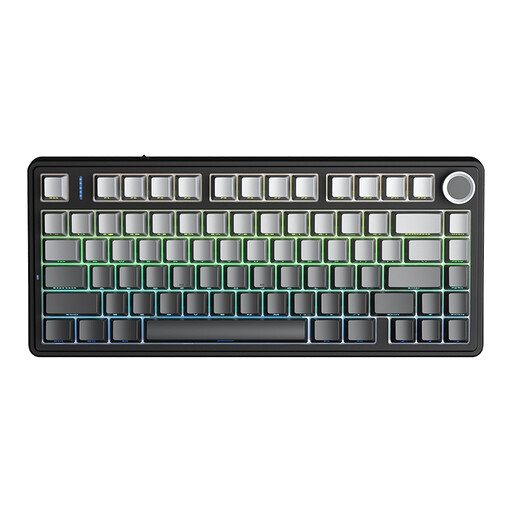
AULA F75 PRO wireless mechanical keyboard, 75% US QWERTY
Consider its compact 75% layout if mouse space matters more than a full-size key arrangement. The title lists Bluetooth, 2.4 GHz and wired modes plus hot-swappable switches; compare its US key map with the navigation keys you use. Check any quiet-typing claim and shortcut-remapping needs for the exact variant.
View on Joybuy
 No image available
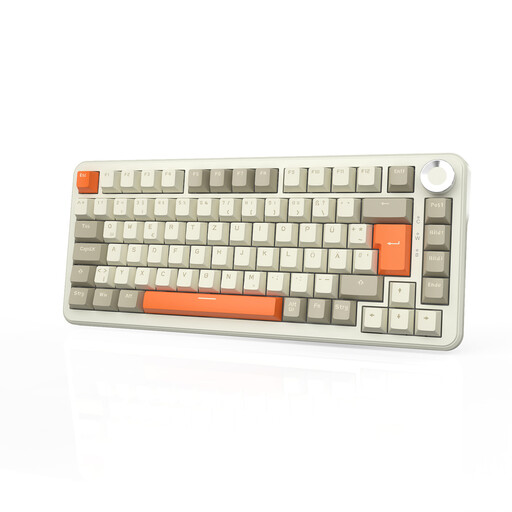
AJAZZ AK820 MAX, German QWERTZ, Flying Fish switches
Consider this mechanical variant only if its German QWERTZ key arrangement works for the commands and symbols you type. The title specifies tri-mode connectivity, Flying Fish switches and German keycaps; check the exact key map and sound before using it in a shared office.
View on Joybuy
Common questions
Should I choose a mechanical keyboard for profiling in a shared office?
Choose one if you value mechanical key feel or its particular configuration options, but check the switch on the exact variant before deciding it suits colleagues nearby. Logitech, for example, lists Tactile Quiet, Clicky and Linear MX Mechanical switches with different sound and feel; a quiet office keyboard is the simpler starting point when noise takes priority.
Will a 75% or TKL keyboard leave me with enough keys?
It can, if its key map preserves convenient access to the functions you actually use. CHERRY’s STREAM TKL omits the number pad, while the Keychron K3 Max uses a compact 75% layout; compare the exact navigation, function and numeric-key arrangement with your profiler, terminal and spreadsheet habits.
Does UK workplace guidance call for a particular keyboard model?
The Health and Safety Executive’s display-screen-equipment guidance focuses on the workstation rather than naming a keyboard model. HSE says employers must assess the workstation for workers who use display screen equipment daily as part of normal work for continuous periods of an hour or more; the assessment considers the work and individual requirements, not just the keyboard purchased.
How should I position a new keyboard for long desk sessions?
Position it as part of the whole workstation, with the keyboard central and just below elbow height and the mouse in line with your elbow, following HSE guidance. If the setup is uncomfortable, review the workstation arrangement rather than assuming a different keyboard alone will resolve it.


