
24/7 Customer Support

Free returns

Same-day & Next-day Delivery

Quality Guaranteed

Unlock Your Welcome Offers: FREE Delivery | Up to 80% OFF | Free 30-day JoyPlus trial
Download the APP
Choosing rabbit food and small animal treats can look straightforward until you compare ingredient lists, feeding instructions and species guidance. Bright packaging may suggest a complete diet, while a large bag of treats may offer poor value if only tiny portions are suitable each day.
For UK pet owners, the practical approach is to separate everyday food from complementary treats, then match the product to the animal’s species, age, size and existing diet.
A rabbit mix, fruit snack or herbal blend may be labelled as feed, but that does not necessarily mean it can replace hay, greens or a suitable complete food. For example, Mr Johnson’s Supreme Rabbit Mix is specifically described as a complementary rabbit feed. It should be offered with unlimited good-quality hay, fresh leafy greens and clean water.
Always check whether the packaging says complete feed or complementary feed. This distinction affects how the product should fit into your pet’s daily routine.
Fruit, flowers and colourful pieces can make a product appealing, but they do not automatically make it suitable as an everyday food. Rabbits require a forage-led diet, and guinea pigs, chinchillas and degus also need species-appropriate fibre sources.
Look beyond phrases such as “natural” or “with fruit”. Check the declared crude fibre percentage, the ingredient order and whether hay or grass appears prominently. Treats containing dried fruit can also contain naturally occurring sugars, so portion size matters.
“Small animal” is a broad retail category covering animals with different dietary needs. Rabbit nuggets are not automatically suitable for chinchillas, while some treats marketed for rabbits and guinea pigs may not be appropriate for every hamster, degu or gerbil.
Read the species information on the pack and follow the feeding guide. If your pet has a known health condition, unusual appetite or dietary restriction, seek advice from a qualified veterinary professional before changing its food.
For everyday rabbit food, compare the declared fibre figure rather than relying on front-of-pack wording. Supreme Science Selective Rabbit lists 23% fibre, while Burgess Excel Rabbit Nuggets lists lucerne, dried grass and other plant ingredients in its composition. These are objective details that can help you compare products.
A varied rabbit mix may provide different textures and encourage foraging, but it can also allow selective feeding if your rabbit picks out preferred pieces. Uniform rabbit nuggets are designed to reduce this issue by providing a consistent portion in each piece.
Check whether the product contains:
Natural small animal treats can be useful for enrichment, but “natural” is not a substitute for a feeding guide. Rosewood Naturals Meadow Hay Cookies, for instance, list 100% meadow hay and a declared crude fibre level of 32%, making the ingredient profile easy to understand.
A 1kg bag may appear economical, but its value depends on how quickly it will be used and whether it can be stored correctly. Keep dry food and treats sealed in a cool, dry place away from direct sunlight. Discard food if it becomes damp, stale or contaminated.
Introduce new rabbit food gradually. Burgess advises a transition from muesli-style food to its adult rabbit nuggets over 14 to 28 days. Sudden dietary changes can be unsuitable for sensitive animals.
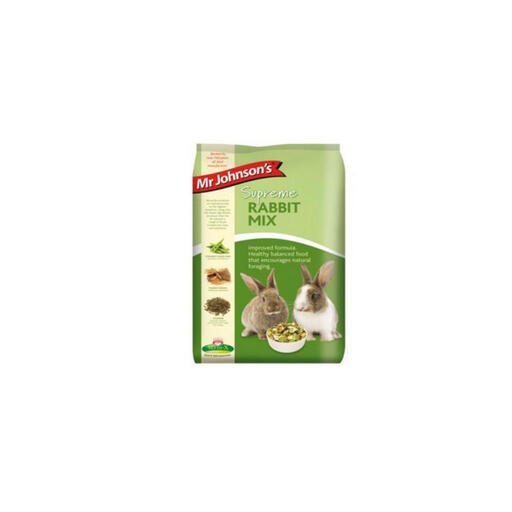
Why This Fits Their Persona: A 900g rabbit mix offers variety for owners who want to add texture and foraging interest without buying several separate products.
It is clearly identified as a complementary feed, so the buyer is reminded to provide unlimited hay rather than treating the mix as the sole diet.
Contains flaked peas, barley, maize, pellets, extrusions and herbs; declared crude fibre is 10%.
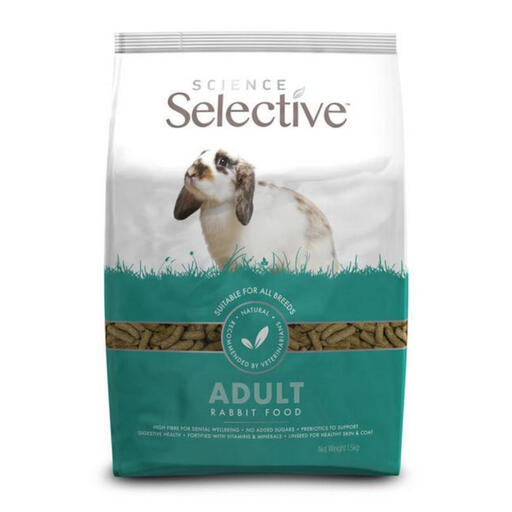
Why This Fits Their Persona: Suitable for owners who prefer a clearly specified high-fibre rabbit food in a larger 1.5kg pack.
The listed 23% fibre figure makes comparison easier than relying only on general “digestive support” language.
Forage is listed as the main fibre source; the formula also includes linseed and natural prebiotics.
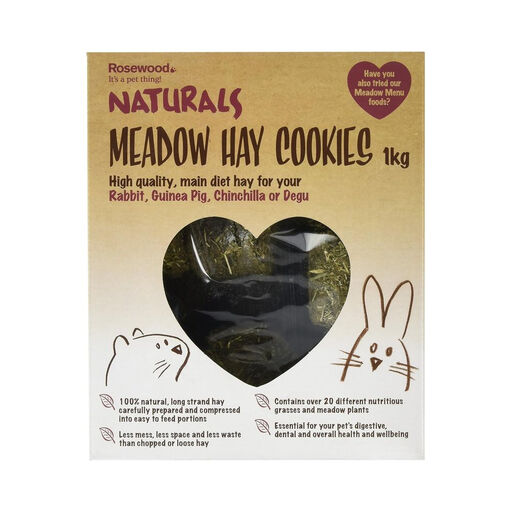
Why This Fits Their Persona: The 1kg pack is practical for households with several suitable small herbivores or frequent enrichment sessions.
Its single listed ingredient, meadow hay, avoids a long decorative ingredient list and makes the product’s purpose clear.
Made from 100% meadow hay; declared crude fibre is 32%; suitable for rabbits, guinea pigs, chinchillas and other small herbivores according to the listing.
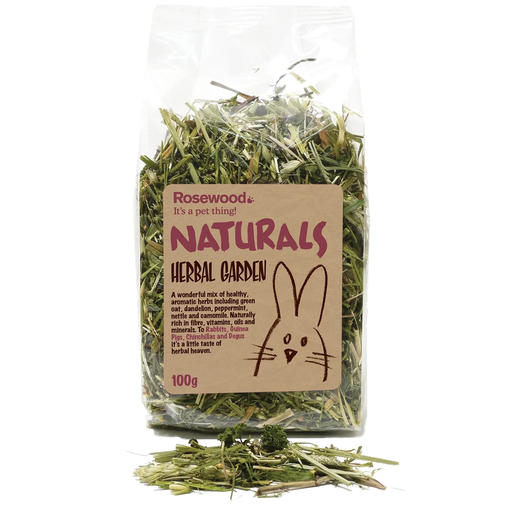
Why This Fits Their Persona: A useful choice for owners who want to scatter a measured herbal treat around an enclosure to encourage searching and variety.
The listing gives a suggested amount of 1–2 tablespoons daily and identifies it as a supplemental treat, helping prevent unrestricted feeding.
Contains dandelion, nettle, plantain, raspberry leaves, chamomile, mint and parsley; declared crude fibre is 18%.
Treats should remain a small part of the diet rather than replacing hay or a complete food. Examples include hay cookies for rabbits, herbal forage, flower sticks and occasional fruit-based snacks.
For rabbits and guinea pigs, prioritise forage and species-appropriate food. For chinchillas and degus, choose products specifically labelled for them, such as chinchilla food or degu treats. Hamster treats, gerbil treats, rat treats and mouse treats require separate consideration because these animals are not fed in the same way as rabbits.
Introduce one new product at a time and monitor appetite, droppings and general behaviour. Supervise feeding where the label advises it, particularly with larger or crunchy pieces. Reseal opened packs to protect freshness.
We have compiled a complete, real-time list of products that fully satisfy these strict selection criteria and UK safety regulations.
Unlimited good-quality hay or grass should be central to a rabbit’s daily diet, alongside clean water, suitable leafy greens and an appropriate complete food where required. Rabbit mix and rabbit treats should not automatically replace these essentials.
Some products are labelled for both rabbits and guinea pigs, but not every rabbit treat is suitable for both species. Check the packaging for explicit species guidance and follow the recommended quantity. Guinea pigs also have their own nutritional requirements, so choose food made for their needs.
Shelf life varies by product and packaging. Store food in a cool, dry place, reseal it after opening and follow the date and storage guidance on the label. Buy a pack size your household can use while the contents remain dry and fresh, rather than choosing a larger bag solely because the price per gram appears lower.