
24/7 Customer Support

Free returns

Same-day & Next-day Delivery

Quality Guaranteed

Unlock Your Welcome Offers: FREE Delivery | Up to 80% OFF | Free 30-day JoyPlus trial
Download the APP
Choosing suitable rabbit toys is not simply a matter of picking the brightest or largest item. Rabbits, guinea pigs, hamsters and other small pets have different chewing strengths, body sizes and play preferences. A toy that looks attractive online may be difficult to clean, too fragile for a persistent chewer or unsuitable for an enclosure.
This guide explains the main buying pitfalls, the specifications worth checking and a selection of small animal toys matched to different households.
Plush, glitter, bright colours and novelty shapes may appeal to people, but they do not necessarily provide useful activity for a rabbit. Natural behaviours such as chewing, nudging, climbing and searching for food are more relevant when choosing boredom breaker toys.
A decorative children’s toy is also not automatically suitable for pets. For example, plush rabbit products with button eyes or small accessories are designed for children’s play and decoration, not for unsupervised chewing. Keep these separate from genuine rabbit chew toys.
Thin loops, loose fibres, exposed staples and easily detached beads can become hazards once a pet has chewed through the outer surface. Marketing descriptions may focus on colour or “hours of fun”, while giving little attention to how the product is assembled.
Check whether the product lists its materials and whether it recommends supervision. Toys should be removed when they become heavily soiled, frayed, damaged or loose. No toy should be treated as indestructible.
Even well-designed small pet enrichment toys can lose their appeal when left in the same position for weeks. A better approach is to offer a small rotation: one chewable item, one forage toy and one object for pushing, tossing or exploring. Rotate clean, intact items while observing which activities your pet chooses.
For rabbits and guinea pigs, look for clearly stated materials such as natural wood, seagrass, loofah, hay, corn leaf or bulrush. Vegetable-based or pet-safe dyes may be specified, but colour safety does not remove the need for inspection.
Products made without wire, staples or glue can reduce certain construction concerns. The Rosewood Play Veg Flinging Fun Corn Toy, for instance, is described as hand-woven from corn leaf and bulrush and made without wire, staples or glue. Even so, plant-fibre toys should be checked regularly for loose strands.
Avoid products with unknown coatings, strong chemical smells, sharp edges or detachable components. If your pet has a history of swallowing large pieces, choose a simpler toy and supervise use closely.
A toy should be large enough not to become an obstruction or swallowing risk, but small enough for the animal to move and investigate. Consider:
A maze measuring 28cm by 18cm may suit a spacious enclosure, but it could be impractical in a compact habitat. Measure the available floor area before ordering.
Forage toys for rabbits can make feeding more active by encouraging pets to search, nudge or work around a toy. Hay toys for small animals can combine chewing with a food-based activity, but they should complement—not replace—the animal’s normal balanced diet.
Check the composition and feeding guidance. The Rosewood Naturals I Love Hay Forage Cube lists timothy hay, meadow hay and a vegetable-based binder, with a stated crude fibre level of 30%. The product information also advises replacing it if damp or soiled and notes that it is not suitable for animals with dental problems. Follow the packaging guidance and seek veterinary advice for a pet with eating or dental difficulties.
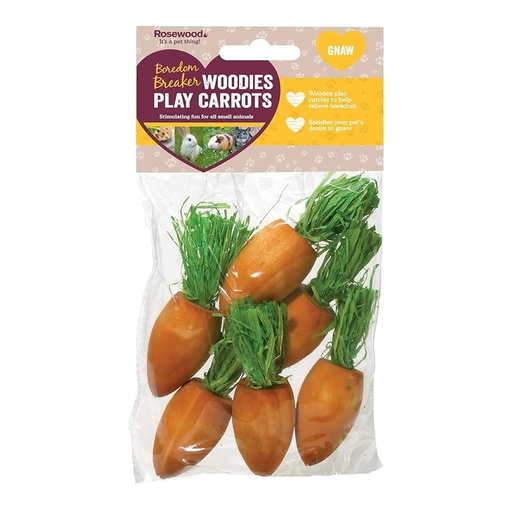
Why This Fits Their Persona: A three-piece set gives new owners a straightforward way to introduce natural wooden pet toys and observe whether their rabbit or guinea pig prefers chewing, carrying or nudging.
The listed material is natural wood with vegetable-based dyes, avoiding an unspecified composite construction. Inspect each carrot before and during use.
Pack contains 3 pieces; carrot shapes are designed for chewing and play.
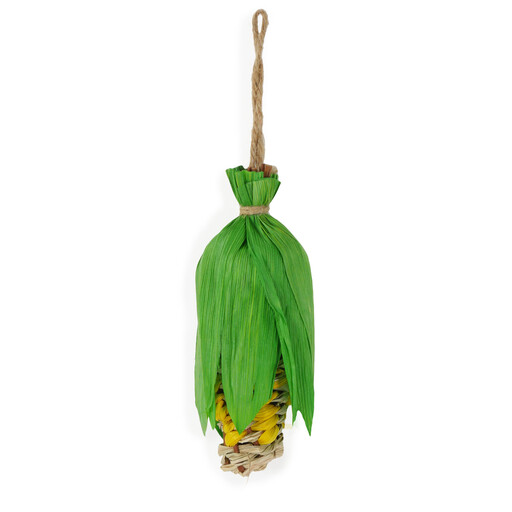
Why This Fits Their Persona: Suitable for owners who prefer a plant-fibre toy with flexible placement in a larger indoor pen or enclosure.
The listed construction uses corn leaf and bulrush without wire, staples or glue. Fraying still requires regular removal and replacement.
Can be placed on the floor or hung securely; designed for tossing, chewing and exploration.
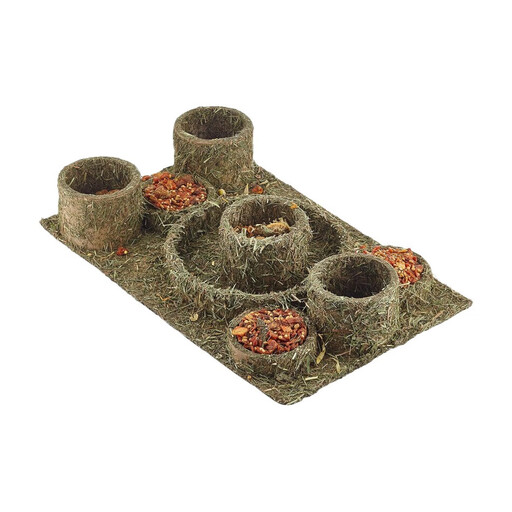
Why This Fits Their Persona: A practical choice for owners focusing on longer foraging sessions and mental activity in a spacious enclosure.
Its stated dimensions are 28cm by 18cm, making it easier to assess enclosure compatibility before purchase. Treat compartments should be refreshed and the maze checked for damage.
Combines hidden treat areas with gnaw-friendly surfaces; suitable for rabbits, guinea pigs, hamsters and other small herbivores.
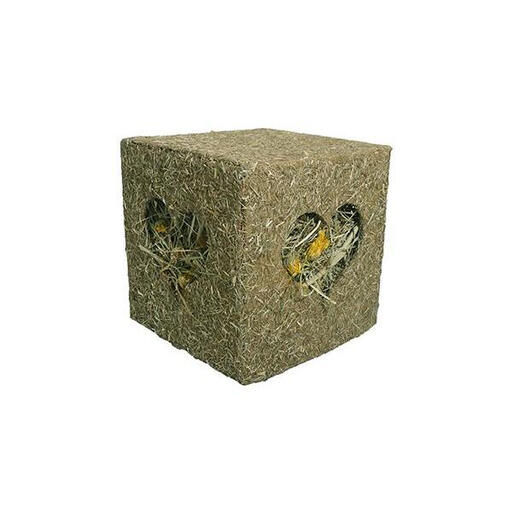
Why This Fits Their Persona: Designed for owners who want an edible forage and gnaw toy that fits naturally into a herbivore’s daily routine.
The composition and analytical constituents are stated, including timothy hay, meadow hay and 30% crude fibre. It must remain dry and should not be used for animals with dental problems.
Edible hay cube; combines a treat format with chewing and foraging activity.
We have compiled a complete, real-time list of products that fully satisfy these strict selection criteria and UK safety regulations.
For rabbits with persistent chewing habits, combine rabbit dental toys with safe branches or wood products specifically intended for small animals. Avoid giving untreated or potentially toxic household materials simply because they are wooden.
Many rabbits respond to a mixture of rabbit chew toys, forage toys and objects they can push or toss. Preferences vary, so offer different textures and monitor behaviour. Hay cubes, wooden shapes, loofah rings and woven plant-fibre toys can provide different forms of engagement.
There is no universal lifespan. Replacement depends on material, moisture, chewing intensity and cleanliness. Inspect toys at every cleaning session and replace them when they are splintered, structurally weak, mouldy, heavily soiled or shedding loose pieces.
Some products are labelled for rabbits, guinea pigs, hamsters and other small animals, but suitability still depends on size and construction. A large maze may suit a rabbit or guinea pig but not a hamster habitat, while a hanging toy must not create an entanglement risk. Always check the product’s species guidance and dimensions before buying.