For racing games in a bright room, start with the exact monitor’s screen finish, then choose a resolution and refresh rate your PC or console can use. An anti-glare QHD LCD is worth considering when reflections and high frame rates both matter; a low-reflection OLED shifts the emphasis towards fast motion, while a 4K IPS model may suit you if image detail matters more. Check supported modes on the input you intend to connect, especially for console play.
Who is this for?
Bright-room racing players
If windows or lamps reflect in your screen, make the exact model’s anti-glare or low-reflection finish an early check. Compare typical brightness separately from any HDR peak figure, and consider where the screen will sit in the room.
High-frame-rate PC racers
If your PC can sustain high frame rates, compare refresh rate at the resolution you plan to use and check variable refresh rate (VRR) support. A monitor’s maximum refresh rate alone does not tell you what your PC will deliver in a game.
PS5 or Xbox racers
Check the resolution, 120 Hz and VRR modes supported through the monitor’s intended HDMI input. PlayStation provides a PS5 test for 1440p output; Xbox specifies HDMI 2.1 equipment and an Ultra High Speed HDMI cable for 4K gaming at 120 Hz on Series X.
What matters when choosing?
Check reflections before comparing headline refresh rates. Then decide whether your priority is fast PC motion, a particular console mode or finer image detail.
| Concern |
What to check |
Who this matters to |
| Reflections and daylight readability |
Check the exact model’s screen finish and typical brightness; keep HDR peak brightness separate. |
If windows or lamps show up on the screen, I want to assess reflections before anything else. Around 33% of consumers would put reflection control first. |
| Motion through fast corners |
Check refresh rate at your chosen resolution and VRR compatibility with your PC. |
When scenery moves quickly, I care most about the motion my PC and monitor can produce together. Roughly 27% of consumers would prioritise motion. |
| Console modes |
Confirm supported resolution, 120 Hz and VRR modes on the intended HDMI input; check the cable required. |
I need my PS5 or Xbox to output the mode I plan to play in, rather than relying on a PC refresh-rate figure. Around 20% of consumers would make console compatibility their primary concern. |
| Image detail |
Compare native resolution with the refresh rate available at that resolution and your PC’s capabilities. |
For me, clearer track scenery and interface text take precedence over chasing the highest refresh rate. About 20% of consumers would put image detail first. |
Buying pitfalls
-
Comparing HDR peak brightness with normal brightness
ASUS lists both 300 cd/m² typical brightness and 400 cd/m² HDR peak brightness for its VG27AQML5A. LG’s 1,300-nit figure for the 27GX790A-B is a peak claim, not a like-for-like typical-brightness figure.
For daylight use, check the screen finish and compare typical brightness figures separately from HDR peaks.
-
Assuming your console can use the maximum refresh rate
A monitor’s PC refresh-rate figure does not establish its supported PS5 or Xbox modes. Xbox specifies compatible HDMI 2.1 equipment and an Ultra High Speed HDMI cable for 4K at 120 Hz on Series X.
Check the monitor’s modes on the intended input, then confirm the console, cable and game settings.
-
Assuming 4K IPS solves a reflection problem
Samsung lists 4K Fast IPS and 144 Hz for the Odyssey G70D LS27DG702EUXXU. Those specifications do not establish how its screen finish will handle a window or lamp reflected in it.
Check the exact model’s screen-finish specification independently of its resolution and panel type.
Brands to consider for these monitor routes
ASUS
The TUF Gaming VG27AQML5A illustrates an anti-glare, high-refresh QHD choice for a bright room.
- ASUS lists an anti-glare surface, 300 cd/m² typical brightness, a 300 Hz maximum refresh rate and Adaptive-Sync for this model.
- Its separately listed 400 cd/m² HDR peak figure should not be used as its typical-brightness figure; check the modes available from your source device.
LG
The UltraGear 27GX790A-B illustrates a QHD OLED route with a low-reflection screen treatment.
- LG lists anti-glare and low-reflection treatment, a 480 Hz refresh rate and AdaptiveSync for this model.
- LG’s 1,300-nit peak-brightness claim is not a typical full-screen figure. Check typical brightness and current availability for the exact model you intend to buy.
Samsung
The Odyssey G70D LS27DG702EUXXU illustrates a detail-focused 4K Fast IPS route.
- Samsung lists 4K UHD resolution and a 144 Hz refresh rate for this model.
- Before choosing it for a room with strong reflections, confirm the exact model’s screen finish.
Joybuy monitors for this scenario
These monitors offer different ways to approach bright-room racing, from high-refresh OLED models to matte or anti-glare screens with more modest refresh rates. Compare each model’s screen finish and usable input modes against your room and gaming device.
 No image available
Samsung Odyssey G6 S27DG612 27-inch QHD OLED
Consider this model if you want to assess an anti-glare OLED screen for fast-paced racing; check whether its finish and typical brightness suit your room.
The product title specifies 240 Hz and 0.03 ms. Confirm the resolution, refresh rate and VRR modes available on the input you will use.
View on Joybuy
 No image available
Samsung Odyssey Gaming OLED G8 LS32DG802SUXXU 32-inch Ultra HD
If you want an Ultra HD screen for racing, check how this model’s reflection treatment works with your planned placement and whether your device can use your preferred mode.
The product title identifies it as a Smart Gaming Monitor. Confirm typical brightness and the supported modes on the input you intend to use.
View on Joybuy
 No image available
LG UltraGear 32GX850A-B 32-inch 4K OLED Dual Mode
This model is worth considering if you want to choose between detail and a faster racing mode; confirm which setting your PC can use.
The product title states a maximum of 330 Hz. Check typical brightness for your room, and follow the product’s advice on prolonged static images on its OLED panel.
View on Joybuy
 No image available
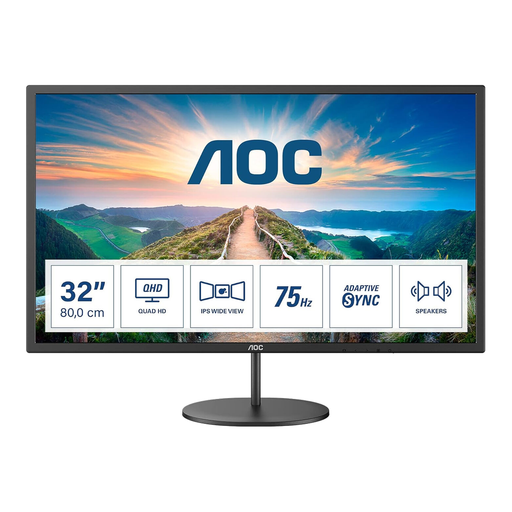
AOC Q32V4 31.5-inch IPS monitor
Consider its matte-screen route if limiting visible reflections matters more to you than pursuing the highest refresh rate; check the screen in relation to your room lighting.
The product title lists AdaptiveSync, a 4 ms response-time claim and built-in speakers. Confirm the refresh rate and console modes you need before ordering.
View on Joybuy
 No image available
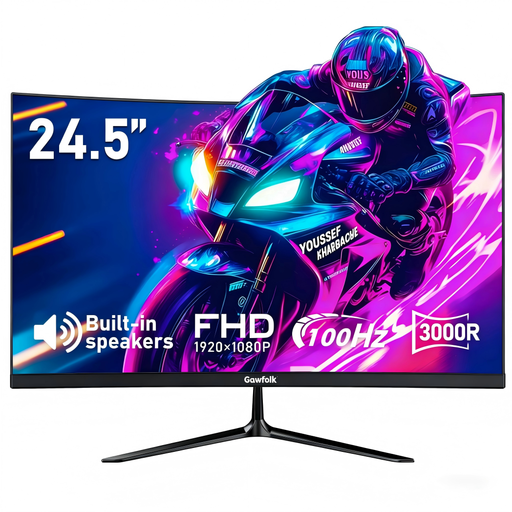
Gawfolk 24.5-inch FHD curved 100 Hz monitor
If you want a smaller curved screen, its stated anti-glare finish is relevant to the bright-room check; confirm typical brightness for your planned placement.
The product title lists AMD FreeSync and a 3000R curvature. Check the resolution and refresh-rate modes supported by the input you will use, rather than relying on the conflicting response-time claims.
View on Joybuy
Common questions
Can a PS5 use a 1440p monitor at 120 Hz with VRR?
It can when the connected display and game support the selected mode. PlayStation provides a PS5 1440p output test covering SDR and HDR at 60 Hz or 120 Hz and VRR; use it to check the monitor and intended connection together.
What do I need for 4K at 120 Hz on Xbox Series X?
Xbox specifies a Series X, an Ultra High Speed HDMI cable and a display supporting HDMI 2.1 for 4K gaming at 120 Hz. Check that the monitor supports the mode through the HDMI input you plan to use; Xbox notes that 120 Hz may still be possible at a lower resolution without HDMI 2.1 display support.
What does VESA AdaptiveSync certification tell me?
VESA describes AdaptiveSync Display as a tested variable-refresh-rate standard whose gaming tier addresses higher refresh rates and low latency. Its logo indicates a tested maximum Adaptive-Sync frame rate at native resolution under factory-default settings; you still need to check compatibility with your gaming device.


