Oval-sim learners working on braking
If you want to practise repeatable brake inputs, choose a pedal type you can calibrate in your simulator. iRacing, for example, gives different brake-setting guidance for potentiometer and load-cell pedals.


For virtual oval practice, check that the pedals work with your simulator and wheel or console, then consider whether you can keep them stable while braking. A load-cell brake suits someone who wants pressure-based input and can mount and calibrate it; travel-based pedals remain an option for a simpler setup. Wearing headphones does not change those pedal checks.
If you want to practise repeatable brake inputs, choose a pedal type you can calibrate in your simulator. iRacing, for example, gives different brake-setting guidance for potentiometer and load-cell pedals.
If you already have a wheel or console, the pedal connection matters as much as the brake mechanism. Fanatec and MOZA Racing specify model-dependent connection routes, so check your exact combination before buying.
If you have a stable pedal plate or cockpit, adjustable pedal position and resistance may help you set up a comfortable practice position. Check the adjustments offered by the particular model rather than assuming they are included across a brand.
Start with the simulator and connection route, then decide which brake feel, mounting arrangement and adjustments fit your practice setup.
| Concern | What to check | Who this matters to |
|---|---|---|
| Compatibility | Confirm support for your simulator and platform, and whether the pedals connect by USB or through a compatible wheel base. | If my current wheel or console cannot recognise the pedals, I cannot use them for practice. Around 29% of consumers put connection compatibility first. |
| Braking and calibration | Identify the brake sensor type and follow your simulator's calibration and brake-response instructions. | I want to practise applying the brake consistently, so the input needs to feel manageable and respond as intended. For around 36% of consumers, repeatable braking is the primary concern. |
| Mounting and position | Measure the available space and check how the pedals can be secured and positioned, particularly if you want a firmer brake. | If the pedals shift beneath my feet or sit awkwardly, repeating an input becomes harder. Stable placement comes first for around 21% of consumers. |
| Future adjustment | Check which springs, pedal-position changes or accessories suit the exact model, and which are included. | I may want to change the pedal feel as I practise, without assuming that an accessory fits a similarly named set. Around 14% of consumers chiefly value that flexibility. |
iRacing distinguishes between potentiometer and load-cell brake settings. An inappropriate setting or skipped calibration can make it difficult to judge how a new pedal responds.
Check the sensor type for your exact model, then calibrate the pedals and follow your simulator's instructions before assessing the feel.
The Fanatec CSL Pedals Load Cell Kit requires CSL Pedals; its console connection also depends on a compatible Fanatec wheel base. MOZA Racing likewise specifies different compatibility rules for SR-P and SR-P Lite.
Write down your existing pedal, wheel-base and platform models, then confirm that the proposed kit and connection route match them.
A pedal base that moves under braking can interfere with repeatable practice. Before choosing a high-force setup, consider how firmly your seating position and pedals can be held in place.
Measure the intended pedal area and check the model's mounting provisions before ordering.
If your current arrangement cannot hold the pedals steady, you may need a suitable pedal plate, wheel stand or cockpit.
MOZA Racing says its SR-P Lite Brake Pedal Performance Kit does not fit SR-P pedals, despite the similar names.
Match the accessory to the full pedal model name and check the manufacturer's compatibility information.
The CSL Pedals Load Cell Kit is an upgrade route for someone who already owns CSL Pedals.
PRO Racing Pedals are a three-pedal route for buyers who want to change pedal positions and feel.
T-LCM Pedals offer a complete three-pedal load-cell set with mechanical adjustment.
Its SR-P and SR-P Lite lines are worth distinguishing when choosing pedals or an upgrade within the R5 ecosystem.
The P1000-F is a PC-focused option for someone planning an adjustable pedal setup on a suitable rig.
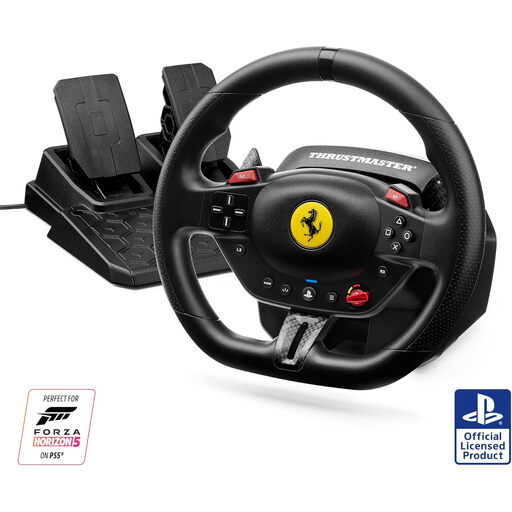
If you need a wheel as well as pedals for virtual oval practice, this Joybuy choice is a combined set. Check your particular simulator and mounting arrangement separately.
 No image available
This combined set suits someone who needs both wheel and pedal controls; check whether your particular virtual oval simulator supports it.
The listed platforms are PS5, PS4 and PC. If pedal adjustment or secure mounting matters to you, confirm the available options for this set before ordering.
No. iRacing provides calibration guidance for both potentiometer and load-cell pedals. A load-cell brake is worth considering if you want pressure-based input and can mount and calibrate it appropriately; travel-based pedals can also be used for learning.
Connect the pedals, make sure Windows recognises them, then use iRacing's Configure Controls prompts to calibrate them. iRacing says independently functioning dedicated pedals can be assigned alongside other controllers, and changing a controller's USB port requires recalibration.
Yes, check it when moving between potentiometer and load-cell brakes. iRacing gives different Brake Force Factor guidance for those pedal types; identify your exact model, calibrate it and follow the applicable setting instructions before practising.
Not automatically. Fanatec says console use of its CSL Pedals Load Cell Kit requires a compatible Fanatec wheel base, while MOZA Racing specifies different connection rules for SR-P and SR-P Lite. Check the exact pedal, wheel-base, connection and platform combination.
No, headphones do not determine pedal sensing or the pedal connection route. Choose pedals around your simulator, hardware compatibility, brake feel and mounting; check headset compatibility separately with your audio setup.