Seated kart-style PC drivers
If you drive from a chair, compact stand or cockpit, start with accelerator-and-brake placement, pedal stability and whether your game recognises the connection you plan to use. A clutch is not automatically necessary.


For seated simulated-go-kart driving, check that the pedals connect to your PC or console setup before choosing a layout that stays stable and puts the accelerator and brake comfortably within reach. A load-cell brake is an option if you want to adjust pressure-based braking and can secure your seat and pedals; a two-pedal layout may be simpler if your chosen game does not require a clutch.
If you drive from a chair, compact stand or cockpit, start with accelerator-and-brake placement, pedal stability and whether your game recognises the connection you plan to use. A clutch is not automatically necessary.
An existing PlayStation or Xbox wheel can determine which pedals will connect. Thrustmaster Support specifies a wheel-base connection for T-LCM Pedals on consoles, while Logitech G describes an adapter for certain older G-Series wheel configurations.
A mounted seated rig gives you a way to secure pedals before adjusting a pressure-based brake. Check the mounting arrangement and the resistance adjustments offered by the particular pedal set.
Confirm the connection path and game controls first, then check whether your seat and pedals will stay put at your preferred brake resistance. Pedal spacing and the parts needed for your chosen layout follow from those decisions.
| Concern | What to check | Who this matters to |
|---|---|---|
| Platform and connection | Match the pedals to your PC or console, wheel base and cable path; confirm recognition in your chosen game. | I need pedals that work with the wheel and platform I already use, before I compare how they feel. Around 33% of consumers would put connection compatibility first. |
| Braking and stability | Check brake-resistance adjustment and how the pedals and seat will be secured when you apply force. | If my chair or pedal base shifts under braking, a firmer brake may be difficult to use as intended. Stable braking would come first for around 27% of consumers. |
| Layout and comfort | Check pedal spacing and position, and whether your game calls for two pedals or a clutch as well. | I want my feet to reach the accelerator and brake comfortably without fitting a pedal I will not use. Pedal layout would be the primary concern for around 27% of consumers. |
| Upgrade planning | Identify the pedal count, adapter, mounting parts and optional modules needed for the configuration you intend to use. | If I might change my setup later, I want to know which components that change would require. Around 13% of consumers would prioritise the upgrade path. |
Connection rules differ by pedal set and platform. Thrustmaster Support directs console users to connect T-LCM Pedals to a Thrustmaster wheel base by RJ12; Logitech G describes a separately sold Racing Adapter for certain G-Series wheel and newer pedal combinations.
Write down your exact platform, wheel model and intended connection before choosing pedals.
A load-cell brake registers applied force, but a chair or pedal base that moves when you press it can make that resistance awkward to use from your seated position.
Check the chair, stand and pedal support at the resistance you intend to use. If you plan to brake firmly, consider how the pedals will be mounted.
A clutch may take up space without serving your chosen game. SIMAGIC also notes that some P1000 modular upgrades require an additional power supply.
Confirm the game's controls, then choose a two- or three-pedal configuration and check what each planned upgrade requires.
Its PRO Racing Pedals are relevant when adjustable spacing and removable pedal modules matter to a shared or changing seated setup.
T-LCM Pedals are an option for drivers with a compatible Thrustmaster wheel base who want adjustable pedal positions and a load-cell brake.
SR-P Pedals are relevant to a PC setup where the pedals connect independently by USB.
The P1000 range is aimed at drivers planning a mounted rig and choosing among different pedal layouts and modular options.
These are racing wheel-and-pedal bundles for seated setups, rather than standalone pedal replacements. Compare the stated platform and pedal layout with your game's controls, and check how you will support the pedals from your seat.
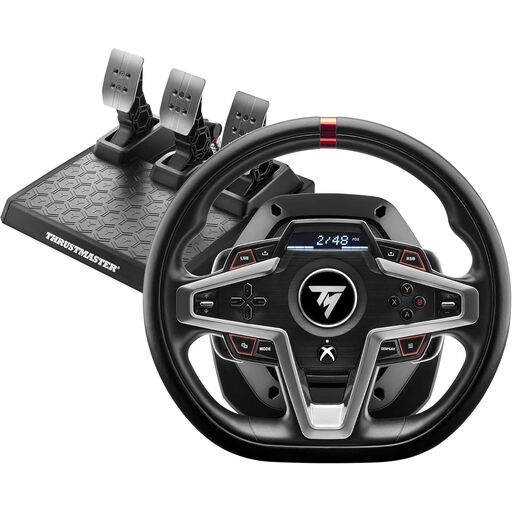 No image available
Consider this wheel-and-pedal bundle if you need an Xbox or PC racing setup and your chosen game supports it. Check how its pedals will be supported in your seated position; the bundle is not a standalone pedal set.
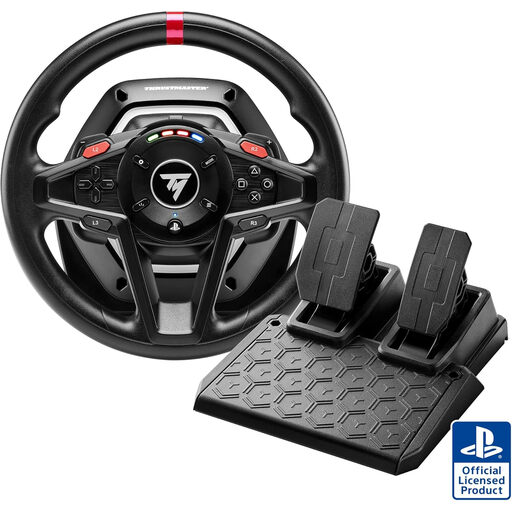 No image available
The included two-pedal layout may suit a game that needs only an accelerator and brake. This is a PS5, PS4 and PC wheel-and-pedal bundle, not standalone pedals; confirm game recognition and how the pedals will stay in place from your seat.
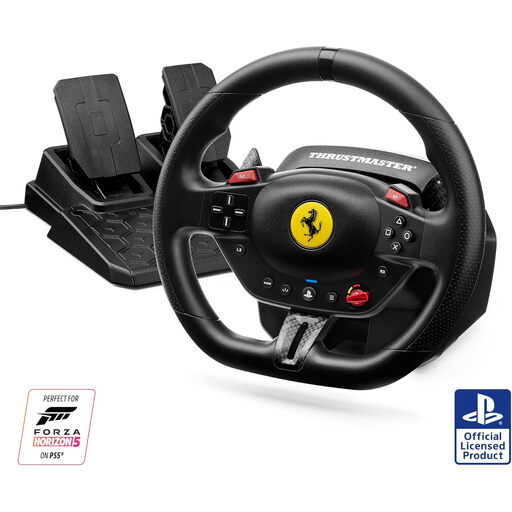 No image available
Its included two-pedal layout may suit seated driving when your game does not call for a clutch. This PS5, PS4 and PC product is a wheel-and-pedal bundle; check recognition in your chosen game and pedal stability in your intended setup.
Not necessarily: choose the pedal count required by your game and driving style. Logitech G's PRO Racing Pedals have removable modules, and SIMAGIC offers a dual-pedal P1000-F variant if you want to prioritise accelerator-and-brake placement.
No direct console USB connection is specified: Thrustmaster Support says to connect T-LCM Pedals to a Thrustmaster wheel base using RJ12 on consoles. On a Windows 10 or later PC, the specified options are direct USB or RJ12 through the wheel base.
Secure the pedals and seating arrangement if they move at your preferred brake resistance. A load-cell brake registers applied force; if you plan to use pedals on the floor, check the maker's setup guidance for that specific model rather than assuming a mounted-rig arrangement will work unchanged.
For a PC USB setup, MOZA Racing says its SR-P Pedals can function with other wheel-base brands when the interface is compatible. Check that your chosen game recognises separate wheel and pedal devices; this does not establish console compatibility.