
24/7 Customer Support

Free returns

Same-day & Next-day Delivery

Quality Guaranteed

Unlock Your Welcome Offers: FREE Delivery | Up to 80% OFF | Free 30-day JoyPlus trial
Download the APP
Whether you're planning a friendly knockabout in the garden, introducing your child to a new sport or gearing up for club competitions, choosing the right racket sports equipment can feel overwhelming. The market is flooded with options, and it's easy to fall for marketing hype that promises professional performance but delivers disappointment. As a Joybuy Product Recommendation Officer, my role is to help you see past the flashy labels and focus on what truly matters for your needs.
Before you add anything to your basket, let's look at a few common pitfalls that catch out many UK shoppers.
To avoid these traps, focus on a few core parameters. Understanding these will empower you to choose equipment that genuinely suits your purpose, whether it's a badminton racket set for the park or competitive table tennis bats.
The material of your racket's frame is the foundation of its performance. Don't just look at the headline material; consider what it means for you.
These three elements determine how a racket feels in your hand and how it plays.
In any portable bat and ball sets, the quality of the balls or shuttlecocks is just as important as the rackets.
Based on these practical criteria, here are a few recommendations matched to specific types of players.
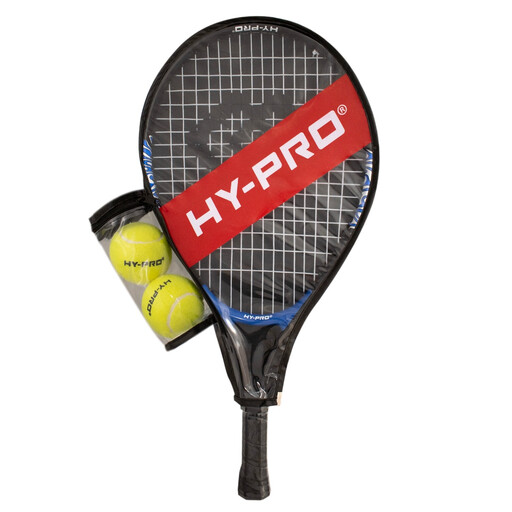
Why This Fits Their Persona: This set is for parents in the UK looking to introduce their child to tennis without overwhelming them. The 19-inch racket is sized specifically for young children, making it easy to handle and helping them build confidence and coordination on the court or in the park.
It directly counters the skill-level mismatch trap. Instead of a cumbersome adult racket, this junior tennis racket features a lightweight aluminium frame and comfortable grip, purpose-built to support a child's development.
The complete starter set includes two balls and a carry bag, making it a convenient, ready-to-play option for lessons or family outings.
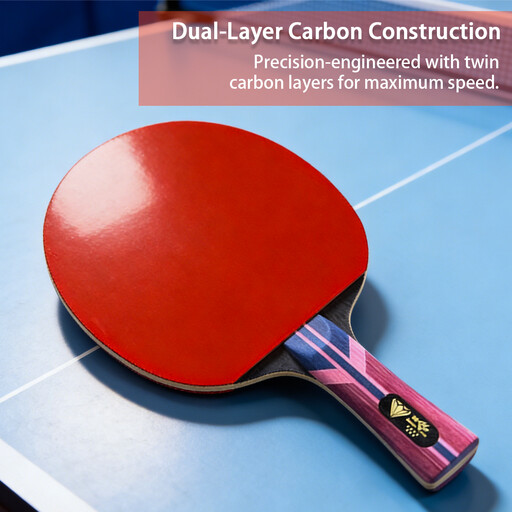
Why This Fits Their Persona: This player is active in a local club and wants to elevate their game. They need a racket that offers a significant step up in performance from basic table tennis bats, providing the power and precision required for competitive play.
It avoids the vague material trap by clearly stating its construction: a dual-layer high-modulus carbon blade. This isn't just marketing fluff; it's a specific feature that delivers the explosive power and speed that advanced players require.
The combination of a carbon blade, competitive-grade rubber and an ergonomic flared grip provides a balance of power and control for aspiring pros.
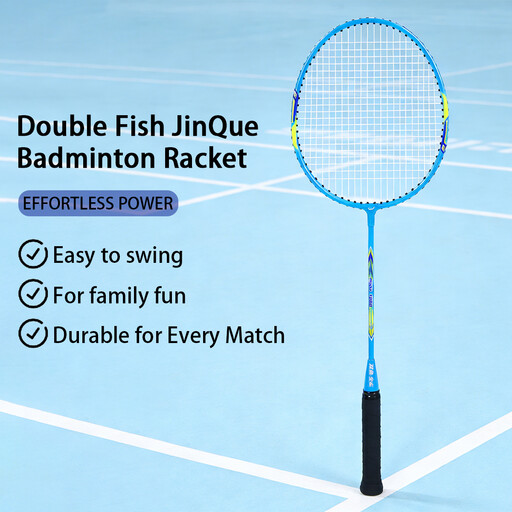
Why This Fits Their Persona: This user wants a reliable badminton racket set for family fun and casual games without a hefty investment. They need something durable enough for regular use in the garden or at the local park, that is easy for players of different ages to use.
It avoids the "complete set" illusion by focusing on providing two quality rackets and a bag. While shuttlecocks are not included, this allows the user to purchase them separately based on their needs (e.g., durable plastic shuttles for outdoor fun).
The lightweight iron-aluminium alloy frame is both durable and easy to swing, making it suitable for a wide range of players. The non-slip grip ensures comfort and control during play.
We have compiled a complete, real-time list of products that fully satisfy these strict selection criteria and UK safety regulations.
Feather shuttlecocks, typically made from goose or duck feathers, are the standard for competitive badminton. They have a natural flight trajectory that is stable and precise. However, they are less durable and more expensive. Plastic shuttlecocks are much more robust, last longer and are more affordable, making them an excellent choice for beginner sports kits, training and casual garden and beach games where durability is key.
Choosing the correct size junior tennis racket is crucial for developing good technique and preventing injury. A simple guideline is to have your child stand upright with the racket held by their side, head down. The tip of the racket should just touch the ground without them having to lift or angle their arm. If it's too long, it will be heavy and unwieldy.
For casual players, the rubber on table tennis bats can last for a year or more with proper care. For serious club or competitive players, performance is key. The rubber's tackiness (for spin) and elasticity (for speed) degrade over time. A common rule of thumb for competitive players is to consider replacing the rubber after every 80-100 hours of play or whenever you notice a significant drop in performance.