Choose the ticket stock before the printer: for substantial card, look for an exact model and feed path that explicitly support it. Brother identifies the MFC-J4340DW manual feed for card up to 300gsm, while its DCP-T780DW ink-tank printer offers a different route for repeat batches, with a stated standard-tray range of 64–220g/m². If lighter stock suits your tickets, a cartridge inkjet or colour laser may also be worth considering, but check the chosen media and feed route rather than assuming automatic duplexing works on card.
Who needs which printer?
Thick-card ticket makers
If you want tickets that feel more substantial than office paper, start with your chosen card and look for a printer with a documented manual, rear or straight feed for that stock. Brother and Epson publish different limits for particular models and feed paths, so a general card-printing claim is not enough.
Repeat fundraiser organisers
If you print several batches over time, a refillable ink-tank model may mean fewer ink changes. Check its media limits separately: a printer suited to recurring colour work is not automatically suited to thick ticket card.
Small-space hobby-room users
If tickets share your workspace with ordinary A4 paperwork, wireless printing and copy or scan functions may matter alongside the space the printer occupies. Check the exact model’s dimensions and paper handling before choosing for convenience alone.
What matters when choosing?
Settle the ticket stock and its feed path first, then consider repeat printing, the design and your hobby-room workflow.
| Concern |
What to check |
Who this matters to |
| Card and feed path |
Check the supported weight, media type and thickness for the exact tray or feed you intend to use. Test your chosen stock. |
If I want substantial tickets, I need the sheets to feed reliably before I commit to numbering a full batch; around 36% of consumers put card handling first. |
| Ink for repeat runs |
Compare the included-ink yield basis and replacement ink options. Treat page yields as estimates, not a ticket count. |
When I organise raffles repeatedly, I want fewer interruptions between colour batches; around 29% of consumers make repeat-printing needs their priority. |
| Numbers and finish |
Check that your numbered design remains readable on the intended stock, and proof any coated or glossy finish. |
If the tickets carry colour artwork as well as numbers, I need both to remain clear on the finished sheet; around 21% of consumers prioritise presentation. |
| Hobby-room workflow |
Check the printer’s dimensions, connection options and whether copy or scan functions will be useful. |
With limited space, I want to send ticket layouts from my usual device without complicating other A4 jobs; around 14% of consumers put workflow first. |
Mistakes to avoid
-
Assuming any printer will take your ticket card
Weight limits can differ between a main tray and a manual or rear feed. A printer’s ability to handle ordinary paper does not establish support for 250–300gsm card.
Choose the stock first, check the exact model’s feed-path instructions, then print a small proof before numbering or cutting the full run.
A failed feed can waste prepared card and the time spent arranging numbered sheets.
-
Reading a photo-paper limit as a card limit
Canon lists up to 300g/m² for Canon photo paper in the PIXMA TS5350i rear tray, but its plain-paper range is 64–105g/m². That photo-paper figure does not establish support for arbitrary raffle card. Epson also cautions that some third-party heavyweight media can cause feed problems.
Check the stated media type as well as its weight, then test the exact finish and sheet size you plan to use.
-
Finalising the artwork before identifying the draw
Gambling Commission guidance distinguishes small society lotteries from incidental lotteries held at events. The applicable arrangement can affect what you need to check before tickets are printed or sold.
Identify the type of draw and consult the Gambling Commission guidance for that arrangement before approving the ticket artwork.
Brands to consider for raffle-ticket printing
Brother
Brother offers distinct options for thicker card and recurring A4 printing; their media limits should not be treated as interchangeable.
- Brother identifies the MFC-J4340DW manual feed for paper and card up to 300gsm. Its DCP-T780DW is an ink-tank all-in-one with a 150-sheet tray and manual feed slot.
- The stated DCP-T780DW standard-tray range is 64–220g/m². Do not apply the MFC-J4340DW’s manual-feed limit to it.
Epson
The EcoTank ET-8500 is an option to examine when ticket designs call for colour and speciality media.
- Epson specifies rear feeds for thicker media and a straight A4 feed for media up to 1.3mm thick on the ET-8500.
- Epson cautions that third-party heavyweight media can cause feed issues. Check the exact stock against the model’s instructions and test it before a full run.
Canon
The PIXMA TS5350i combines ordinary A4 printing with copy, scan and wireless functions for a home workspace.
- Canon specifies rear and front paper feeds, Wi-Fi and print, copy and scan functions for the PIXMA TS5350i.
- Its rear-tray limit of 300g/m² refers to Canon photo paper; Canon lists plain paper at 64–105g/m². Neither figure confirms support for every raffle card.
Joybuy printer choices
These printers are choices to consider for home ticket batches, including repeat-run ink-tank options and a wireless inkjet. Match each model’s feed path to your intended stock before printing a full batch.
 No image available
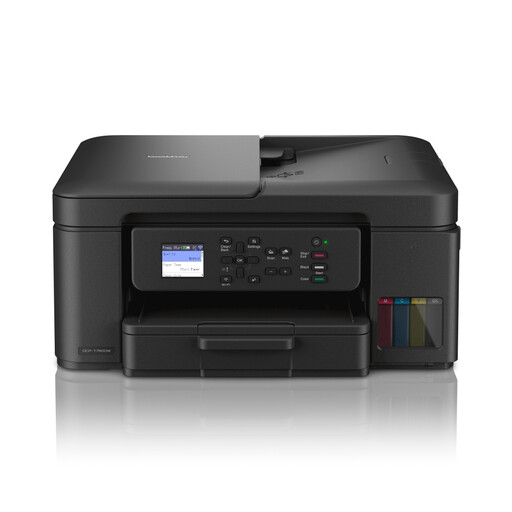
Brother DCP-T780DW 3-in-1 Wireless Ink Tank Printer
Consider this model for recurring ticket batches on stock suited to its feed path. Brother specifies a 150-sheet tray and a standard-tray media range of 64–220g/m²; check the finish and test a numbered proof before a full run.
View on Joybuy
 No image available
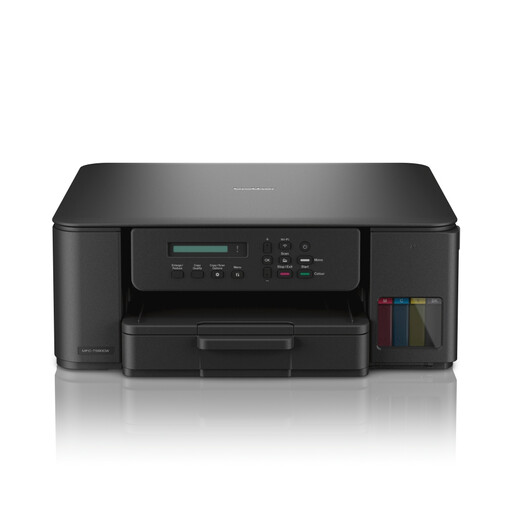
Brother DCP-T580DW 3-in-1 Wireless Ink Tank Printer
The refillable ink-tank design is relevant if you print ticket batches repeatedly. Confirm the supported weight and finish for the feed path you will use; do not assume automatic duplexing works on your card.
View on Joybuy
 No image available
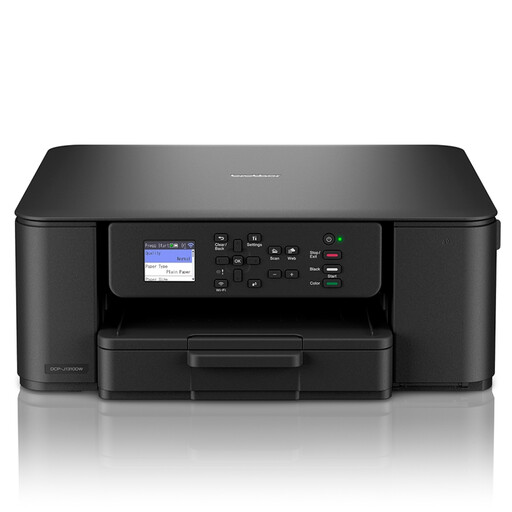
Brother DCP-J1310DW Wireless Inkjet Printer
Consider this wireless inkjet for occasional ticket jobs using lighter stock. Check the exact paper and finish against its tray instructions, then proof the numbered layout before printing the batch.
View on Joybuy
 No image available
Canon MAXIFY GX6150
For repeated colour ticket batches alongside home paperwork, check whether this model’s supported media and feed paths accommodate your chosen stock. Test a proof sheet, and confirm duplex support separately if the design uses both sides.
View on Joybuy
Frequently asked questions
Can I print raffle tickets on 300gsm card?
Yes, if the exact printer and feed path explicitly support your card. Brother identifies the MFC-J4340DW manual feed for card up to 300gsm; that limit does not transfer to another Brother model or guarantee that every finish will feed successfully.
Will automatic duplexing work on ticket card?
Only use it when the printer explicitly supports automatic duplexing with your chosen stock and feed route. Canon specifies automatic duplexing for plain paper on the PIXMA TS5350i, so its duplex feature should not be taken as confirmation for heavy card.
How can I reduce smudging and failed feeds?
Match the card’s weight and finish to the exact printer’s media instructions, then print a small proof batch. Brother notes that thick or glossy media can lead to smudging, misalignment or jams, while Epson cautions that some third-party heavyweight stock can cause feed problems.
Do raffle rules affect what I print?
Yes: establish the type of draw before finalising the ticket design. Gambling Commission guidance sets out different conditions for small society lotteries and incidental lotteries held at events; a small society lottery requires registration with the relevant local authority, while an incidental event lottery that meets its applicable rules does not require a Gambling Commission licence.


