
24/7 Customer Support

Free returns

Same-day & Next-day Delivery

Quality Guaranteed

Unlock Your Welcome Offers: FREE Delivery | Up to 80% OFF | Free 30-day JoyPlus trial
Download the APP
From the perfect crack of a crème br?lée spoon to neatly portioned leftovers, the right kitchenware makes all the difference. If you're tired of wrestling with cling film over your individual desserts or looking for a smarter way to meal prep, ramekins with lids are a simple yet transformative solution. These versatile dishes seamlessly transition from oven to table to fridge, making them an indispensable tool for any home cook.
As the Joybuy Product Recommendation Officer, my role is to help you find practical, high-quality items for your home. This guide is designed to cut through the clutter, focusing on the key features that matter when choosing the right set of ramekins for your culinary adventures. We'll explore what to look for and share some of our top recommendations for 2026.
Before you buy, consider these three key points to ensure you select a set that truly meets your needs.
The material of your ramekin affects everything from durability to cleaning. Most high-quality options are either porcelain or ceramic.
Both are fantastic choices for oven safe ramekins, but if you prioritise a sleek finish and maximum durability against chipping, porcelain is often a preferred option.
Ramekins come in various sizes, but the 8 oz ramekins (approx. 237 ml) are a popular all-rounder. This size is perfect for traditional crème br?lée dishes, individual soufflé dishes, lava cakes and custards.
For those who enjoy making mini pot pies, baked oatmeal or larger individual desserts, a 12 oz (approx. 355 ml) ramekin provides that extra space. Consider what you plan to cook most often to choose the capacity that best suits your kitchen.
The lid is what elevates a simple ramekin into a multi-functional kitchen hero. A well-fitting lid is essential for storing leftovers, preventing odours from transferring in the fridge and stacking for organised meal prep. Look for features like a secure seal to prevent spills and, for added convenience, a date dial to help you track freshness. Remember, plastic or silicone lids are for storage and sometimes microwave use—they should never be used in a conventional oven.
Here are a few options that stand out for their quality, functionality and design.
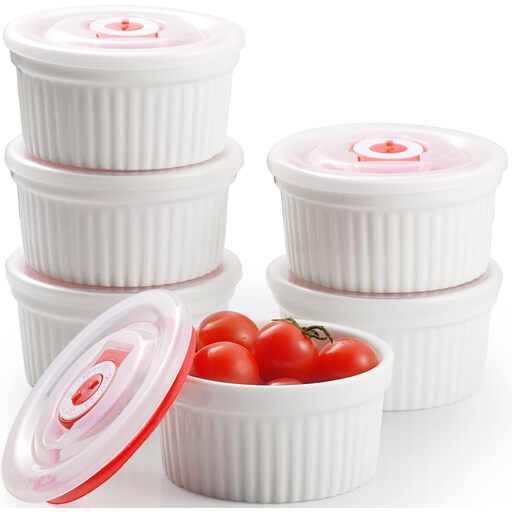
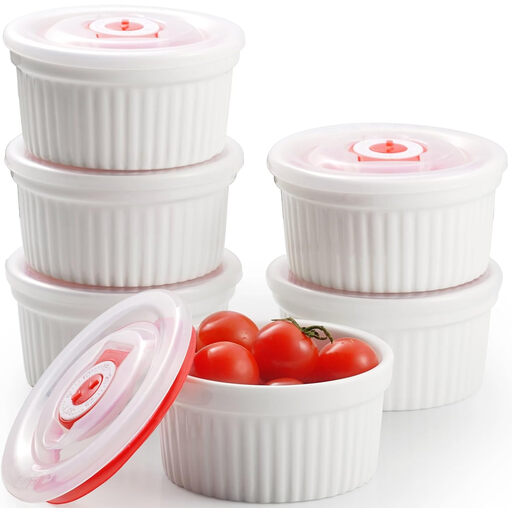
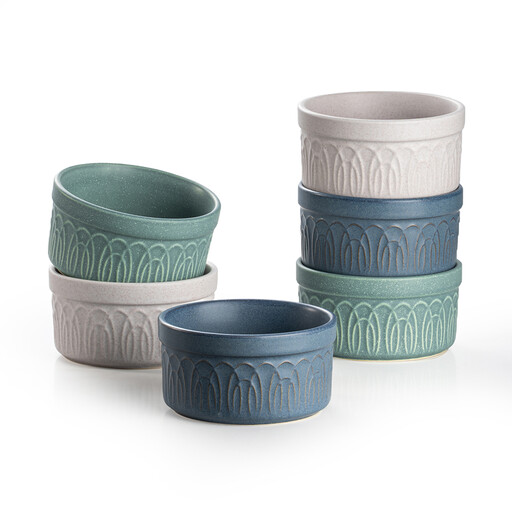
If you haven't found the perfect fit or want to explore different sizes and styles, there's a wider world of bakeware to discover. From large mixing bowls to specialised pans, having the right tools can elevate your baking.
Explore our complete range of baking bowls to find your perfect match.
1. Are ramekins with plastic lids oven safe? The ceramic or porcelain dish itself is designed to be oven safe. However, the plastic lids are not and should always be removed before placing the ramekin in a conventional oven or under a grill. The lids are intended for storage in the fridge or freezer, and some may be safe for microwave use—always check the manufacturer's instructions.
2. What can you use ramekins for besides crème br?lée? Their versatility is one of their greatest strengths. Use them as individual baking dishes for mini quiches, pot pies and baked eggs. They are also perfect as ceramic pudding cups for chocolate lava cakes, soufflés and fruit crumbles. Beyond baking, they are ideal for serving dips, olives, nuts or for portioning out ingredients while you cook.
3. What is the difference between porcelain and ceramic ramekins? Both are excellent materials for bakeware. Porcelain custard cups are fired at a higher temperature, resulting in a denser, less porous material that is highly resistant to chipping and staining. Ceramic is also very durable and provides fantastic, even heat distribution. The choice often comes down to personal preference for finish and feel, as both perform wonderfully in the kitchen.