
24/7 Customer Support

Free returns

Same-day & Next-day Delivery

Quality Guaranteed

Unlock Your Welcome Offers: FREE Delivery | Up to 80% OFF | Free 30-day JoyPlus trial
Download the APP
A reliable ratchet set is the cornerstone of any well-equipped toolbox, whether you're a professional mechanic or a dedicated DIY enthusiast tackling car repairs at the weekend. Yet, the market is flooded with options that look impressive on the shelf but fail when you need them most. Choosing the wrong set not only wastes money but can turn a straightforward job into a frustrating ordeal.
Before you buy, be aware of these common purchasing pitfalls that catch out many UK shoppers:
To ensure your new tool is an asset, not a liability, focus on these core parameters. They are the true indicators of a quality ratchet set.
The square drive is where the socket attaches to the ratchet handle. The size dictates the tool's application and torque capacity.
Some innovative tools offer 3-in-1 handles, combining all three drive sizes into a single, space-saving ratchet.
A ratchet's internal gear mechanism is defined by its tooth count. This is not just a technical detail; it directly impacts usability.
For anyone working on cars, motorcycles or in any confined area, a high tooth count is non-negotiable. Also, ensure the tool has a robust and easily accessible reversible ratchet switch to change direction without fumbling.
While the manual ratchet wrench is a staple, powered options offer distinct advantages for specific jobs.
Based on these practical criteria, we've identified several options from our catalogue that are well-suited to different user needs, helping you get the right tool for your specific tasks.
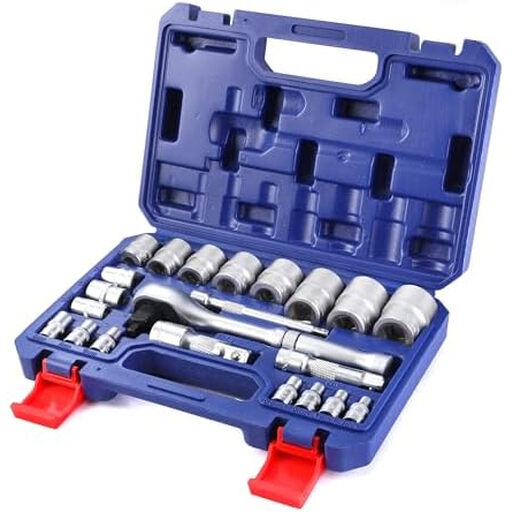
Why This Fits Their Persona: This is an excellent starting point for a home DIY tool kit. The clever 3-in-1 handle covers 1/4", 3/8" and 1/2" drive sockets, providing immense versatility for furniture assembly, bicycle maintenance and basic car repairs without needing three separate ratchets.
It sidesteps the "massive piece count" trap by focusing on a high-value, versatile core tool and a curated selection of common metric sockets. The 72-tooth mechanism provides a practical 5-degree swing arc, avoiding the frustration of cheaper models.
The 3-in-1 drive head saves significant space and cost. The set includes extension bars and comes in a durable, organised case to keep everything in its place.
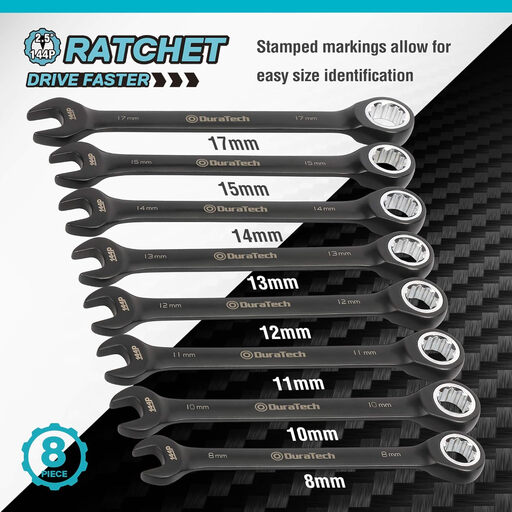
Why This Fits Their Persona: For professionals who frequently encounter fasteners in extremely confined areas, this ratcheting spanner set is a problem-solver. It's designed for those situations where even a slim-head ratchet and socket won't fit, such as on brake lines or engine auxiliaries.
This set directly counters the low-tooth-count trap by offering an exceptionally high 144-tooth mechanism. This provides a tiny 2.5-degree swing arc, making it one of the most effective tools for extremely tight spaces.
The 2.5-degree swing arc is its standout feature. The wrenches are made from Cr-V steel with a black chrome finish for enhanced corrosion resistance, and they come in a roll-up pouch for easy organisation.
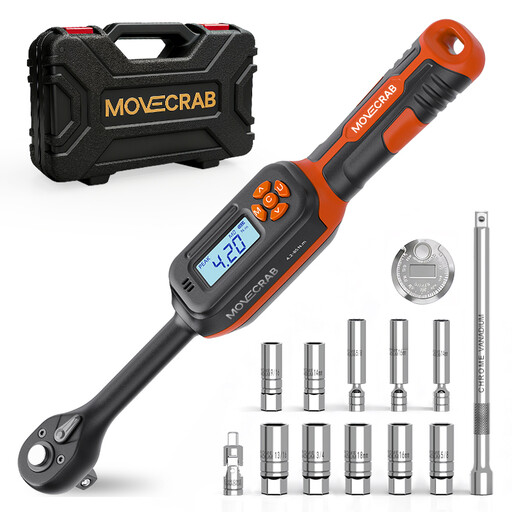
Why This Fits Their Persona: For any mechanic or serious enthusiast performing critical engine work, changing spark plugs or re-fitting alloy wheels, precision is paramount. This digital torque wrench set provides the accuracy needed to adhere to manufacturer specifications and prevent damage.
This tool moves beyond the simple functionality of a standard ratchet. It addresses the hidden danger of incorrect torque, a flaw in even high-quality manual ratchets when used for precision jobs. Its ±2% accuracy provides verifiable, repeatable results.
The high-accuracy digital display with multiple units (Nm, ft-lb, etc.) and 10 preset modes greatly improves workflow efficiency. The kit includes magnetic spark plug sockets and an extension bar, making it a complete solution for specific tasks.
We have compiled a complete, real-time list of products that fully satisfy these strict selection criteria and UK safety regulations.
The main difference is the swing arc required to engage the next tooth. A 72-tooth ratchet needs 5 degrees of movement, while a 90-tooth ratchet needs only 4 degrees. This one-degree difference may seem small, but in the extremely tight confines of an engine bay or behind an appliance, it can be the difference between being able to turn a bolt and not. For professional use or frequent work in tight spaces, a 90-tooth or higher model is a noticeable upgrade.
For a typical home DIYer, a cordless ratchet is a luxury rather than a necessity. However, if you frequently work on projects with many long-threaded bolts, such as assembling flat-pack furniture or performing extensive car maintenance, it can be a significant time and effort saver. It excels at quickly spinning nuts and bolts on and off, but you will still need a manual wrench or breaker bar for the initial loosening and final tightening.
Rust is the enemy of any steel tool, especially in the damp UK climate. To maintain your socket set, always wipe the tools clean of oil, grease and moisture after each use with a dry cloth. Store the set in its case in a dry environment. For long-term storage, placing a silica gel desiccant pack inside the case can help absorb ambient moisture. A light spray of a water-displacing lubricant on the ratchet mechanism periodically will also keep it operating smoothly.