
24/7 Customer Support

Free returns

Same-day & Next-day Delivery

Quality Guaranteed

Unlock Your Welcome Offers: FREE Delivery | Up to 80% OFF | Free 30-day JoyPlus trial
Download the APP
By Joybuy Product Recommendation Officer
Whether you are maintaining a car on a UK driveway, repairing a motorcycle, assembling furniture or working in a workshop, the right ratchet wrench can make repetitive fastening tasks considerably easier. However, product listings often emphasise tooth counts, torque figures and battery capacity without explaining how those details affect real use.
This guide highlights the common buying traps, the specifications worth checking and a selection of ratchet tools matched to different users.
A 3/8 inch ratchet wrench is a practical middle ground for many automotive, motorcycle and household jobs. It accepts a broad range of medium-sized sockets without being as bulky as a 1/2 inch model.
A 1/4 inch ratchet handle is more suitable for smaller fasteners, electronics housings, furniture fittings and confined spaces. A 1/2 inch ratchet handle is designed for larger sockets and jobs where additional leverage may be useful. Buying based only on the handle price can leave you with sockets that do not fit your existing collection.
Check the square-drive size before ordering and confirm whether adapters are included.
A high tooth count usually means a smaller operating arc. This is useful when you cannot swing the handle very far, but it does not automatically mean that the tool is suitable for every high-load application.
For example, a 90-tooth mechanism with a stated 4° operating angle can help in tight installation spaces. A 72-tooth swivel head ratchet with a 5° working arc offers a similar access benefit, while its flexible head is intended for awkward angles. Always consider the socket size, handle length and manufacturer’s torque information together.
An electric ratchet wrench can speed up repetitive removal and installation, particularly when working beneath a vehicle or inside a narrow engine bay. However, cordless tools are generally designed for powered running-down or loosening—not necessarily for final tightening to a specified torque.
For safety-critical fasteners, use the appropriate torque tool and follow the vehicle or equipment manufacturer’s instructions. Also check battery charging time, included batteries, socket compatibility and whether the tool has a safety lock.
The drive determines which sockets fit the handle:
A socket wrench is only useful when its drive matches your socket set. Some cordless models include a 3/8 inch to 1/4 inch adapter, which can broaden compatibility, but adapters may add length in confined areas.
A reversible ratchet handle should have a clear forward/reverse selector that can be operated without removing the socket. A quick-release button is also useful when changing between fasteners during a repair.
Tooth count and operating angle affect access. A 90-tooth ratchet specified at 4° requires less handle movement than a lower-tooth design. This can be helpful around brake components, engine bays or furniture frames, where a full swing is not possible.
Chrome vanadium steel ratchet handles are commonly selected for their combination of strength and resistance to wear and corrosion. Material alone does not establish a safe working load, so inspect the stated specifications and use the tool within its intended application.
For a cordless ratchet wrench, compare:
A compact head may improve access, while a heavier battery can affect comfort during overhead or extended work.
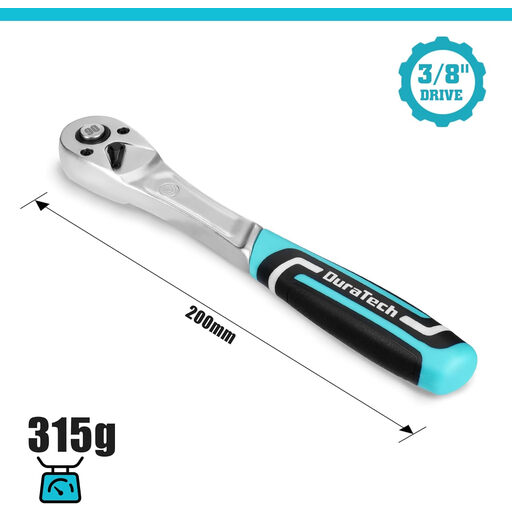
Why This Fits Their Persona: A compact manual option for UK DIY users who need a small-drive tool for furniture, household maintenance and light mechanical work.
Its 1/4 inch drive makes the intended use clear, while the 90-tooth mechanism and stated 4° operating angle address limited clearance.
Chrome vanadium steel construction, quick release and a rubberised ergonomic handle.
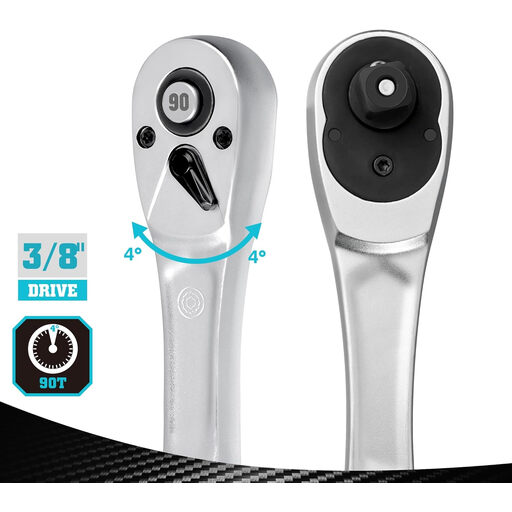
Why This Fits Their Persona: A balanced manual choice for regular automotive repair, motorcycle work and workshop maintenance where access and control matter.
The 3/8 inch format is versatile without the bulk of a 1/2 inch handle, and the quick-release button avoids repeated socket wrestling.
90 teeth, a stated 4° operating angle, chrome vanadium steel and a listed 8-inch length.
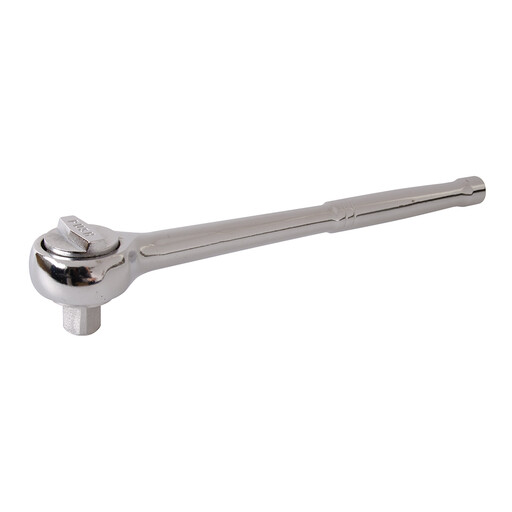
Why This Fits Their Persona: Suited to workshop users and home mechanics who already use larger sockets for automotive or machinery maintenance.
Its 250 mm handle length and 1/2 inch compatibility make its leverage-oriented purpose clear rather than relying on vague strength language.
Chrome vanadium steel, reversible operation and compatibility with standard 1/2 inch sockets.
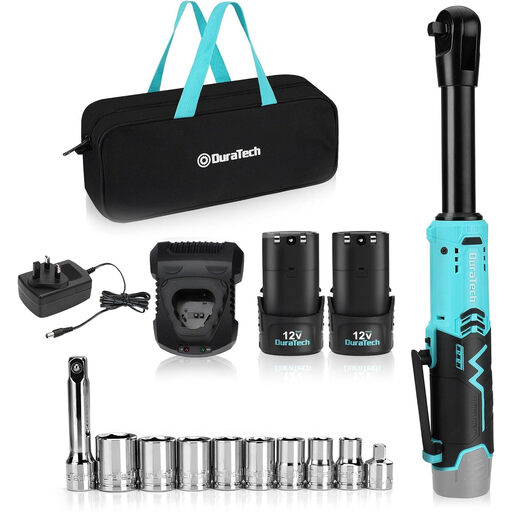
Why This Fits Their Persona: A practical powered option for users removing or installing multiple fasteners in tight vehicle or machinery areas.
The listing specifies two 2,000 mAh batteries, a quick charger, LED lighting and a battery indicator, helping buyers assess running arrangements.
Listed 60 N·m torque, 180 rpm speed, forward/reverse control, eight sockets and a storage case.
It is suitable for many general automotive and motorcycle tasks, particularly when working with medium-sized fasteners. Larger suspension or wheel-related fasteners may require a 1/2 inch drive, while smaller trim and interior fasteners may be more convenient with a 1/4 inch drive.
The main running considerations are battery replacement, charging frequency and the number of batteries supplied. A model with two batteries can reduce interruptions during longer jobs. Electricity use for charging is generally only one part of the cost, so check battery availability and replacement pricing before purchasing.
Service life depends on load, cleanliness, storage and whether the tool is used within its intended limits. Avoid adding extension pipes to a standard ratchet, using it as a hammer or applying impact-tool force. Inspect the teeth, selector and square drive regularly, and replace a tool showing cracks, slipping or damaged engagement.