
24/7 Customer Support

Free returns

Same-day & Next-day Delivery

Quality Guaranteed

Unlock Your Welcome Offers: FREE Delivery | Up to 80% OFF | Free 30-day JoyPlus trial
Download the APP
Plasterboard can look solid until a shelf pulls away, a coat hook loosens or a bathroom accessory starts working its way out of the wall. Choosing Rawlplug plasterboard fixings by price or pack size alone can lead to wasted time, damaged boards and an unsuitable fixing for the load.
The main buying traps are usually straightforward:
Rawlplug cavity fixings cover several installation methods, including interset anchors, metal self-drill plasterboard fixings, nylon self-drill options and spring toggle fixings. The right choice depends on board thickness, fixture depth, access behind the wall and the type of load involved.
Start by identifying what is behind the surface. Standard plasterboard, double-thickness board, plywood, hollow doors, lath and plaster and lightweight or aerated concrete each require a suitable fixing design.
Interset cavity fixings expand behind the board and distribute pressure across the rear face. They are suitable for plasterboard, hardboard and plywood where the fixing can be inserted through a drilled hole. The screw and fixture can be removed and reused, which may be useful when moving radiators during redecoration.
Metal self-drill plasterboard fixings sit flush with the board and are designed for plasterboard, including double thickness in the stated applications. The supplied product information specifies an 8mm pilot hole, so they should not be treated as completely drill-free fixings.
Nylon self-drill plasterboard fixings are designed for quick installation. The supplied information states that the plaster can be pierced before the fixing is screwed into position. Nylon also provides insulation against accidental electrical contact, but the maximum fixture thickness is stated as 12mm, so check the accessory depth carefully.
Spring toggle fixings are useful for cavity walls and ceilings with low structural strength, such as lath and plaster. Their toggle opens behind the board and spreads the load across a wider area. They can also suit plasterboard, plywood and hardwood, subject to the product’s application guidance.
The terms M4 and M5 cavity fixings refer to the metric thread size. M5 has a larger thread than M4, but thread size alone does not determine whether a fixing is suitable. Check:
For example, the RAWLPLUG Interset M4 x 20mm Trade Pack of 100 has an 8mm drill size and a stated 15mm fixing thickness. The M4 x 38mm versions have an 8mm drill size, but their stated fixing thickness varies by pack and listing, so read the individual specification rather than assuming all versions are identical.
The M5 x 40mm Interset version uses a 10mm drill size and has a stated 20mm fixing thickness. This can make it more appropriate where the fixture and board build-up require additional clearance.
For occasional domestic work, a screwdriver may be sufficient for an interset fixing or spring toggle. For repetitive trade installation, a compatible setting tool such as RAWAT88 may speed up the process where specified.
Do not mix screws between fixing systems unless the manufacturer’s instructions allow it. The metal self-drill listing specifically states that the fixings are for use with the supplied screws. Also check for hidden cables and pipes before drilling or piercing any wall.
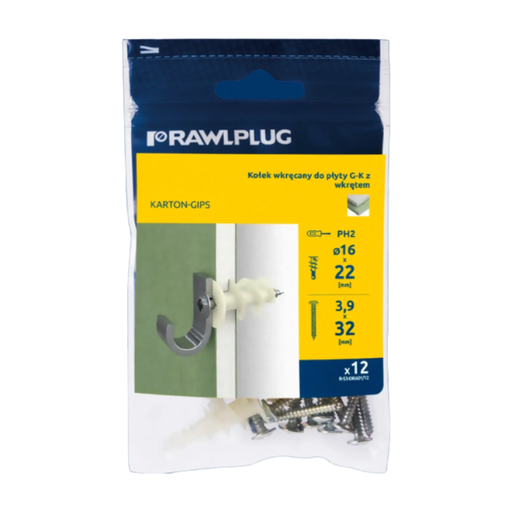
Why This Fits Their Persona: A 12-pack suits small household jobs such as coat hooks, lightweight shelves and bathroom accessories without committing to a trade-size quantity.
The stated 12mm maximum fixture thickness makes the depth limit clear, helping buyers avoid using it for an overly thick fitting.
Nylon construction; no drilling is stated as necessary; screw and fixing can be removed and reused.
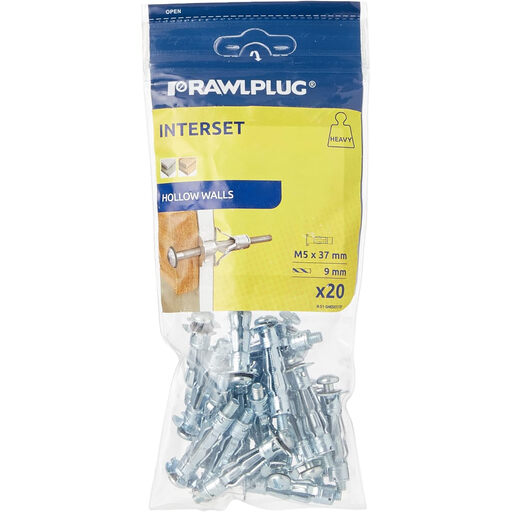
Why This Fits Their Persona: A reusable interset system suits installers who value a defined specification for repeated work on plasterboard, hardboard or plywood.
The listing states a 10mm drill size and 20mm fixing thickness, reducing guesswork when checking the wall and fixture.
M5 x 40mm format; trade pack of 20; screw and fixture are stated to be removable and reusable.
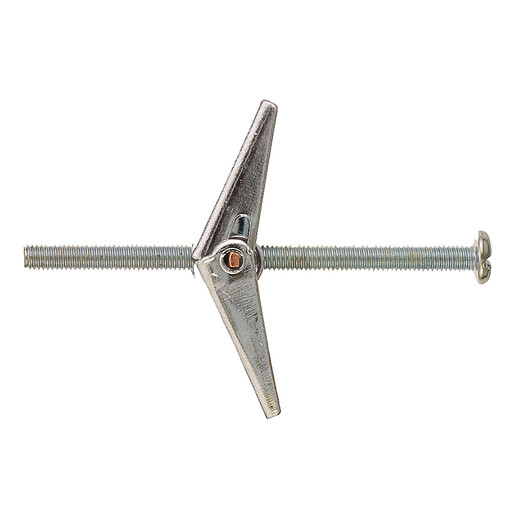
Why This Fits Their Persona: Designed for cavity walls and ceilings of low structural strength, it suits larger fixtures where a broad load-spreading toggle is required.
The product is specifically described for plasterboard, lath and plaster, plywood and hardwood, rather than being presented as a universal wall anchor.
M5 x 50mm size; wide-area toggle; no special tools are stated as necessary.
Before fitting plasterboard screws and fixings:
Trade users needing larger quantities can compare cards and packs across the range, including M4 x 38mm, M4 x 40mm and M5 options. For related woodworking hardware, Joybuy also provides a separate range of threaded inserts for wood.
We have compiled a complete, real-time list of products that fully satisfy these strict selection criteria and UK safety regulations.
Some interset cavity fixings are listed for radiators and kitchen cabinets, including the M5 x 40mm version. Check the board construction, fixture thickness and expected load before installation. Where possible, use structural support rather than relying solely on a hollow-wall anchor.
The listed nylon fixings are designed to be installed by piercing the plaster and screwing the fixing home. They have a stated maximum fixture thickness of 12mm. Always check the product instructions and inspect for hidden services before installation.