
24/7 Customer Support

Free returns

Same-day & Next-day Delivery

Quality Guaranteed

Unlock Your Welcome Offers: FREE Delivery | Up to 80% OFF | Free 30-day JoyPlus trial
Download the APP
A fixing that looks suitable on the packet can still be wrong for the wall, load or screw length. Choosing Rawlplug wall fixings by price or pack size alone may leave you with a loose shelf, damaged plasterboard or a plug that spins inside the hole.
Three common buying pitfalls are worth avoiding:
For plasterboard fixings, hollow doors, plywood and other sheet materials, use an anchor designed to spread its load behind the board. Interset cavity fixings open behind the surface and can be removed and reused when the screw is taken out correctly. They are suited to items such as coat hooks, bathroom accessories, shelves and some radiator installations, subject to the wall construction and load.
Spring toggle fixings are another option for cavity walls and ceilings, including lath and plaster. Their toggle spreads across a wider area, which can be useful where the board or ceiling has relatively low structural strength.
For brick, block, concrete or stone, choose masonry frame fixings or another suitable expansion fixing. These work differently from cavity anchors: the fixing expands inside the drilled hole rather than behind a thin board.
An M4 fixing is not interchangeable with an M5 fixing. Diameter affects the screw size and the type of load the fixing can accommodate. Length is equally important.
For example:
Always measure the combined thickness of tiles, plasterboard, brackets, spacers and the item being mounted. Also check the required drill size: the M4 products listed here use an 8mm drill, while the M5 x 40mm model uses a 10mm drill.
For ordinary indoor fastening, zinc-plated steel screws are a practical option when used in appropriate conditions. Stainless steel self-tapping screws, such as A2 stainless steel, offer greater resistance to corrosion than standard steel in damp or outdoor environments. They should still be matched to the base material and exposure conditions.
Countersunk screws are designed to finish flush with a suitable surface. A PZD drive must be matched with the correct bit to reduce slipping and head damage. For general DIY, a compartmented assortment can be convenient, but check the imperial sizes carefully if your project specification is metric.
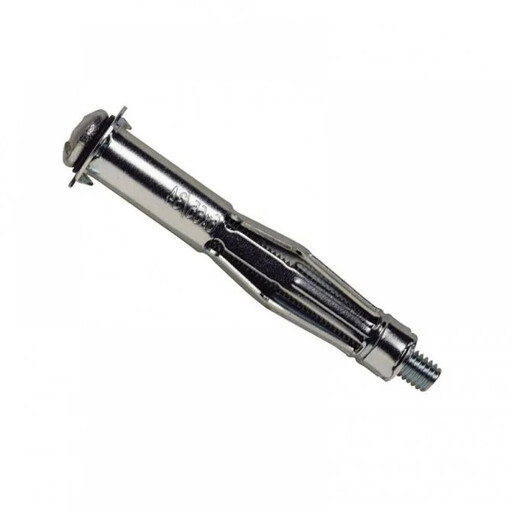
Why This Fits Their Persona: A six-pack suits a homeowner handling a small number of hooks, accessories or light-duty fittings on plasterboard, without buying a trade quantity.
The stated 6mm fixing thickness helps buyers compare the anchor with the actual board and fixture rather than guessing from appearance.
M4 x 20mm format; 8mm drill size; screw and fixture can be removed and reused.
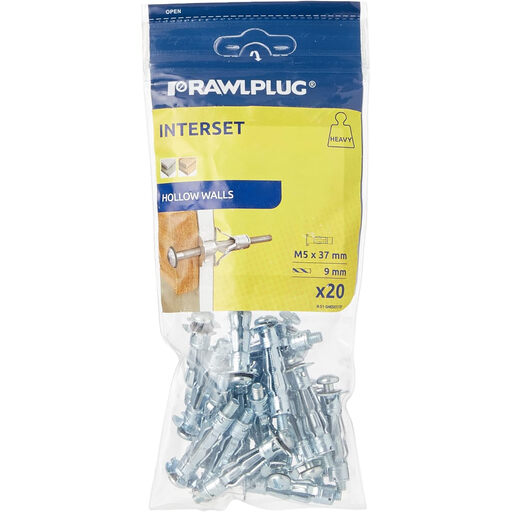
Why This Fits Their Persona: Suitable for installers who want a specified M5 size and a moderate trade pack for repeated work on partition boards.
Its stated 20mm fixing thickness and 10mm drill size make the installation requirements clear before purchase.
M5 x 40mm dimensions; 20-piece trade pack; removable and reusable fixing design.
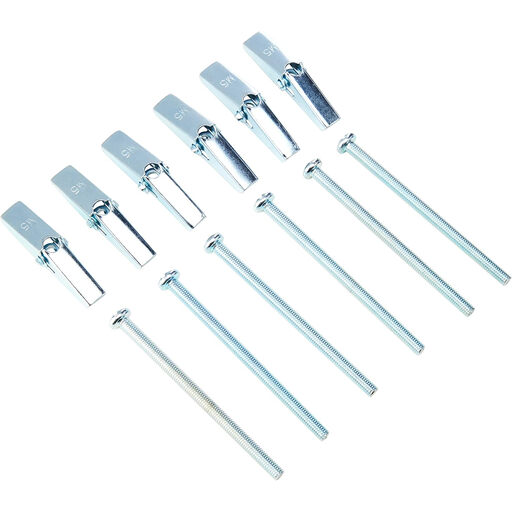
Why This Fits Their Persona: Designed for cavity walls and ceilings such as lath and plaster, this format suits larger fixtures where a broad load-spreading toggle is required.
The wide toggle is intended for cavity substrates, avoiding the mistake of using a standard plug that cannot grip behind the board.
M5 x 80mm size; suitable for plasterboard, plywood and hardwood; no special tool required.
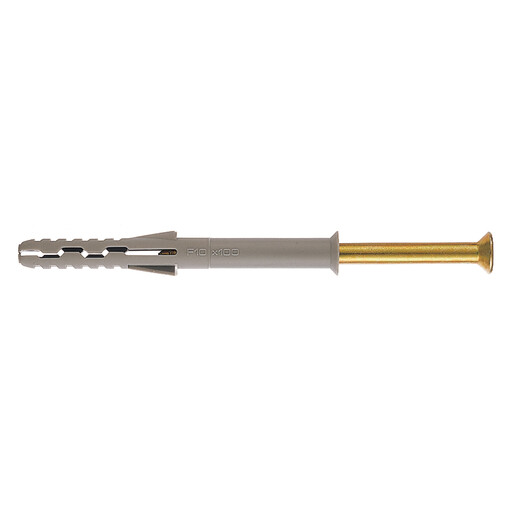
Why This Fits Their Persona: A longer frame fixing is appropriate for timber or metal window and door frames being secured to concrete, brick, stone or blockwork.
The specified maximum fixture thickness of 80mm helps prevent selecting a 120mm fixing without accounting for the frame depth.
8 x 120mm format; supplied with screws; anti-rotation lugs and a nylon sleeve.
We have compiled a complete, real-time list of products that fully satisfy these strict selection criteria and UK safety regulations.
Before drilling, check for concealed pipes and electrical cables, particularly around sockets, radiators and bathrooms. Use the drill size specified for the fixing and clean dust from masonry holes before inserting an anchor. Avoid over-tightening: crushing plasterboard or distorting a frame can reduce the effectiveness of the installation.
For shelves, cabinets and radiators, consider the combined load, the number of fixing points and how the item will be used. A manufacturer’s load guidance applies only when the stated substrate, spacing and installation method are followed. Where the load is substantial or the wall condition is uncertain, obtain suitable building or trade advice rather than relying on pack imagery.
No. They are intended for particular board thicknesses and cavity conditions. Check the fixing thickness, drill size and manufacturer guidance. Double-layer, tiled or damaged plasterboard may require a different anchor or installation approach.
The listed Interset products state that the screw and fixture can be removed and reused. Remove the screw carefully and inspect the fixing and board before reinstalling. Replace any component that is bent, damaged or no longer grips securely.
The correct choice depends on the substrate, fixture thickness, fixing points and expected load. Interset cavity fixings are listed for some shelves, radiators and kitchen cabinets on suitable plasterboard. Spring toggles may suit larger fixtures in certain cavity walls. For brick or concrete, compare masonry frame fixings and use the appropriate drill and embedment depth.