
24/7 Customer Support

Free returns

Same-day & Next-day Delivery

Quality Guaranteed

Unlock Your Welcome Offers: FREE Delivery | Up to 80% OFF | Free 30-day JoyPlus trial
Download the APP
The RayNeo GT Max AR glasses are designed for people who want a cinema-style screen without carrying a television or portable monitor. They target frequent travellers, home cinema fans, gamers and streaming users with a claimed display size of up to 267 inches, a wide 59-degree field of view and Dolby Vision support.
However, impressive headline figures do not automatically make AR glasses suitable for every buyer. The useful question is whether the glasses match your devices, viewing habits, comfort needs and surroundings. Before purchasing, it is worth looking beyond the marketing language and checking the specifications that affect everyday use.
A “267-inch cinema display” describes the apparent size of the virtual image, not a television that occupies that much physical space. Your experience will still depend on the source device, content resolution, viewing environment and how well the glasses remain positioned on your face.
A large virtual screen can be particularly useful on trains, flights or in a small flat, but it does not necessarily deliver the same social viewing experience as a conventional television.
The RayNeo GT Max supports Dolby Vision, a high-dynamic-range format designed to provide compatible content with a wider range of brightness and colour information. To benefit from it, your source device, connection and content must also support the relevant format.
Check the specifications of your phone, games console, laptop or streaming device before buying. An AR glasses model cannot add Dolby Vision to content or hardware that does not provide it.
At 78g, the GT Max is positioned as a lightweight AR glasses model, but weight is only one part of comfort. Nose fit, temple pressure, cable arrangement, lens positioning and brightness can all affect longer viewing sessions.
The supplied safety information warns that prolonged use may cause eye strain, visual fatigue, headache, dizziness or discomfort. Take regular breaks, use a comfortable brightness and stop using the glasses if symptoms occur. Do not use immersive display functions while driving, cycling, crossing roads or operating machinery. These glasses are not protective eyewear.
The GT Max provides an advertised virtual display of up to 267 inches and a 59-degree field of view. A wider field of view can make films and games feel more enveloping because more of the image is visible without constantly moving your head.
The glasses use the Peacock Optical Engine 3.0 Max with Dolby Vision support, while the Vision 4000 display chip is specified as part of the dual-chip architecture. Buyers should still check the retailer listing and source-device requirements for connection compatibility before ordering.
The Zone 360 3DoF chip supports three degrees of freedom, commonly abbreviated to 3DoF. This allows the virtual screen to respond to head rotation, helping it remain spatially positioned as you look around.
3DoF is not the same as full room-scale tracking. It does not mean the glasses map your entire room or allow you to walk around a virtual environment as you would with a fully immersive headset. For films, desktop viewing and console play, however, a stable virtual screen may be more relevant than room-scale functions.
At 78g, the GT Max is lighter than many larger head-mounted display systems, although it remains heavier than ordinary spectacles. Its racetrack quad-speaker system, co-tuned by Bang & Olufsen, is designed to provide built-in audio without separate headphones.
The speaker system may be convenient when travelling, but it is not the same as private noise isolation. On public transport or in shared accommodation, check the volume carefully and consider whether headphones would be more appropriate. Also confirm what adapters, cables and compatible accessories are included before purchase.
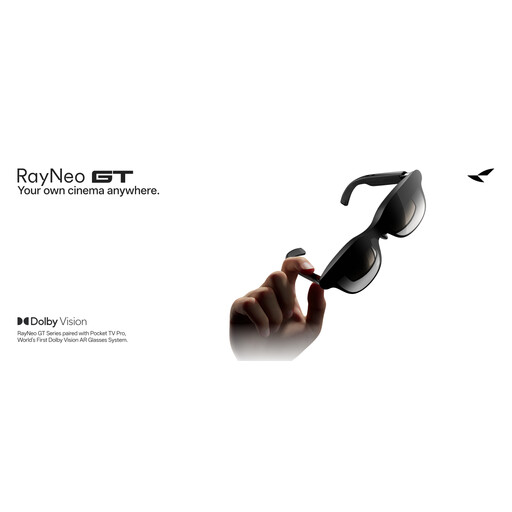
Why This Fits Their Persona: A practical starting point for shoppers who want AR viewing features without choosing the larger GT Max specification. It offers a 201-inch cinema display and weighs 68g.
Its stated screen size and weight are clearly defined, helping buyers compare the product with the GT Max rather than relying only on general “cinema” wording.
Dual-chip architecture, Dolby Vision support, 3DoF tracking and a 68g streamlined design.
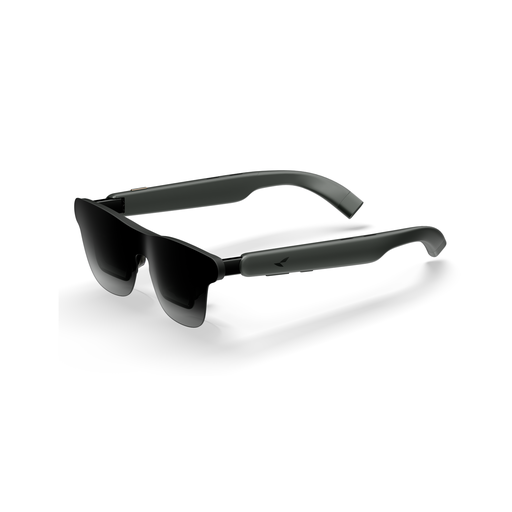
Why This Fits Their Persona: Suited to buyers prioritising a wide viewing area, HDR-format support and integrated audio for films, games and streaming at home or while travelling.
The listing identifies the 59-degree field of view, 267-inch display claim and 78g weight, giving shoppers concrete points to assess before purchase.
Vision 4000 and Zone 360 chips, Dolby Vision support and a racetrack quad-speaker system co-tuned by Bang & Olufsen.
Why This Fits Their Persona: The larger virtual display and wide field of view make this a logical match for frequent film watching, gaming sessions and portable cinema use, provided the wearer takes regular breaks.
Its published weight and tracking components make comfort and image positioning easier to assess than an unspecified “immersive” headset.
Up to 267-inch display, 59-degree field of view and quad-speaker audio in a 78g design.
Before ordering, confirm the following:
AR glasses do not have a universal running cost in the same way as a television. Power consumption, source-device use and any required accessories depend on your setup. Check charging and compatibility details on the product page before committing.
They can be convenient for portable viewing when used while seated, provided the airline permits electronic devices and the wearer can safely follow crew instructions. Do not use immersive display functions when you need full awareness of your surroundings.
There is no single suitable duration for every person. Take regular breaks, keep brightness and volume comfortable, and stop immediately if you experience eye strain, dizziness, headache or other discomfort.
No. Dolby Vision support is a feature rather than a requirement for every video. However, compatible content and source equipment are needed to take advantage of that format. Check your device and streaming service specifications before purchase.