
24/7 全天候客户支持

免费退货

当日/次日达

品质保障

开启新人专享福利: 全场免邮 | 低至 2 折 | 免费试用 30 天 JoyPlus 会员
下载 Joybuy
Choosing between men’s razors, women’s razors, facial hair removers and dermaplaning tools is not simply a question of blade count. The right option depends on where you are shaving, how often you use it, your preferred level of control and the ongoing cost of replacement razor blades.
Marketing often focuses on words such as “smooth”, “comfort” and “precision”, but these descriptions can hide important differences. Before buying, check the cartridge design, refill compatibility and cleaning requirements rather than relying on promotional language alone.
A 5-blade razor may provide close contact with the skin, but it can also hold more hair and shaving product between the blades if the cartridge is difficult to rinse. A 3-blade razor may be easier to clean and sufficiently close for many everyday routines.
Blade count should be considered alongside spacing, lubrication, head movement and rinsing access. For facial hair, a smaller cartridge or precision trimmer may also be more useful than extra blades.
Handles and cartridges are usually system-specific. For example, all Mach3 blades are designed to fit Mach3 handles, while Venus refills fit Venus handles except for specified ranges such as Simply Venus and Venus Pubic Hair & Skin. Buying a low-priced handle without checking the refill system can lead to higher costs later.
Before purchasing, confirm:
Gel bars and lubrication strips can help a razor glide, but they do not remove the need to wet the skin and use suitable shaving gel where recommended. Fragrance, botanical ingredients or moisturising components may not suit everyone. If your skin is easily irritated, check the ingredient list and stop using the product if discomfort develops.
3-blade razors can offer a balance between close shaving and easier rinsing. 5-blade razors may suit users seeking close facial or body shaving with a flexible head, although the cartridge can be wider.
Safety razors use a single double-edge blade and require more technique. They can provide precise control and use replaceable blades, but the exposed edge means light pressure and careful handling are essential.
For fine facial hair, a dedicated facial hair remover or dermaplaning tool is a different category from a wet-shaving razor. Rotary facial hair removers are designed for dry, cordless touch-ups, while dermaplaning tools use a guarded blade held at an angle against the skin.
Look for an ergonomic grip, a pivoting or flexible head if shaving body contours and a rear trimmer for sideburns or the area beneath the nose. A heavy metal handle can feel stable, whereas a lightweight cordless device may be more practical for travel.
A safety razor demands a controlled angle and short strokes. Electric facial hair removers should remain dry if the instructions specify dry use.
Compare the cost per cartridge, not only the price of the starter handle. Some products state that a cartridge may last around a month under particular usage patterns, while others recommend replacement when the blades pull, feel uncomfortable or show wear.
Rinse cartridges thoroughly and store them in a dry, ventilated place. Do not wipe sharp blades with a towel, as this can affect the edge or alignment.
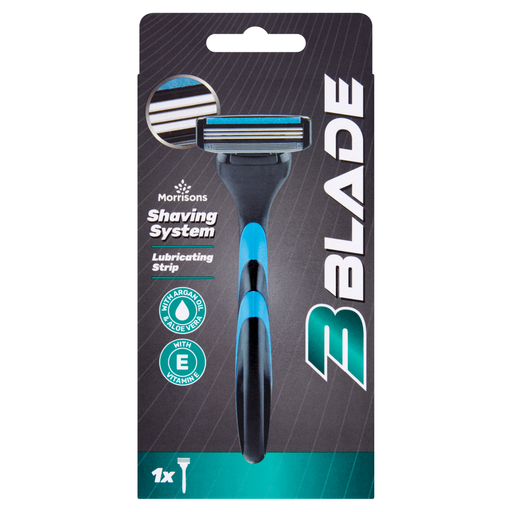
Why This Fits Their Persona: A straightforward option for UK shoppers setting up an everyday shaving routine without immediately committing to a higher-blade refill system.
Its open cartridge architecture is designed for easier rinsing, helping address build-up between the blades.
Three blades, a pivoting head, lubricating strip and click-release cartridge system.
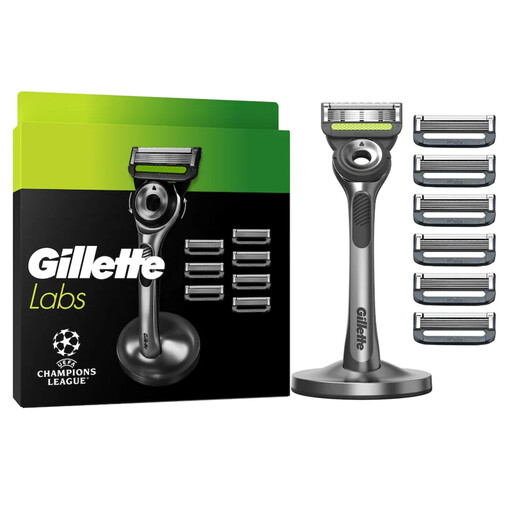
Why This Fits Their Persona: Suitable for shoppers who value a premium handle, organised storage and a larger supply of compatible facial shaving refills.
The seven-blade pack makes the refill commitment clear, while the magnetic stand supports dry storage rather than leaving the cartridge beside a wet sink.
Five blades, an exfoliating bar, 2D FlexDisc head movement, lubrication strip and magnetic stand.
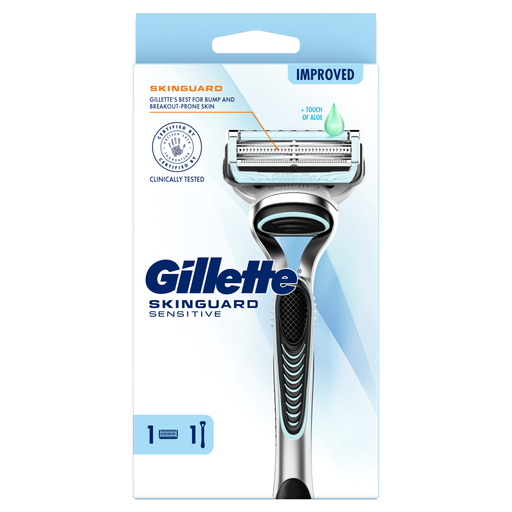
Why This Fits Their Persona: A facial shaving option for users prioritising a guarded two-blade design and gentle handling over maximum blade count.
The guard between the two blades and aloe lubrication strip provide visible design features rather than relying only on vague comfort wording.
Two spaced blades, a protective guard, rear precision trimmer and one handle with one refill.
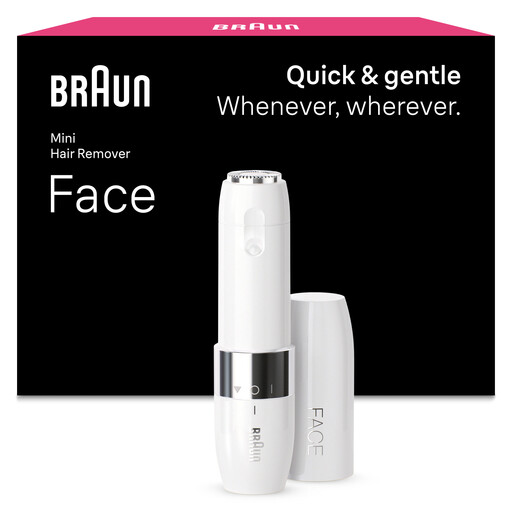
Why This Fits Their Persona: Practical for quick peach-fuzz touch-ups at home, at work or while travelling without wet shaving products.
It is clearly a dedicated facial hair remover rather than a body razor, and it includes an AA battery and cleaning brush.
Cordless rotary cutting system, built-in Smartlight, compact format and replaceable cleaning head design.
We have compiled a complete, real-time list of products that fully satisfy these strict selection criteria and UK safety regulations.
There is no universal lifespan. Some products specify up to 15 shaves per blade, while others suggest around one month based on regular use. Actual life depends on hair thickness, shaving frequency, cleaning and storage. Replace the cartridge sooner if it pulls or causes discomfort.
Blade count alone does not determine comfort. Look at blade spacing, lubrication, guards and the pressure required. A guarded two-blade or 3-blade system may be preferable for some users. Check ingredients if you react to fragrance or particular lubricating components.
A facial hair remover, such as a compact rotary device, is designed for quick hair removal close to the skin and may be used dry. A dermaplaning tool is a manual guarded blade used at an angle, often to remove fine facial hair and surface debris. Follow the product instructions carefully and avoid irritated skin.