
24/7 Customer Support

Free returns

Same-day & Next-day Delivery

Quality Guaranteed

Unlock Your Welcome Offers: FREE Delivery | Up to 80% OFF | Free 30-day JoyPlus trial
Download the APP
The excitement of a new remote control car is universal, promising hours of thrilling races, stunts and off-road adventures. However, that excitement can quickly turn to disappointment if the toy breaks after one crash or the battery dies before the fun has even begun. As a gift-giver or parent, navigating the market for RC cars for kids can be tricky, with many products over-promising and under-delivering.
This guide cuts through the marketing clutter. We will highlight the common purchasing pitfalls to watch out for and break down the essential features that define a durable and enjoyable remote control car.
Before you add a car to your basket, be aware of these frequent issues that can lead to a wasted purchase.
Many toy cars are marketed as tough, but the reality is often different. A common flaw is the use of cheap, brittle plastic for the body shell and chassis. While it may look good on the shelf, a single high-speed collision with a kerb or a tumble down the stairs can result in a cracked frame, rendering the car useless. A quality build uses more resilient materials like flexible ABS plastic, which can absorb impacts rather than shatter.
A frequently cited frustration is poor battery performance. The advertised runtime of "30 minutes" is often measured under ideal, low-intensity conditions. For a child who wants to perform continuous stunts or drive at top speed, the actual playtime can be less than half of that. This is why a rechargeable RC car with a swappable battery system is a far more practical choice, allowing you to have a spare battery charging for uninterrupted fun.
The term "off-road" is used liberally. Many cars with this label have low ground clearance, weak motors and tyres unsuited for anything beyond a smooth patio. A true off-road RC truck needs a robust suspension system, high torque, and a 4WD remote control car drivetrain to handle British gardens, local parks and gravel paths effectively.
To ensure you are getting a vehicle that will last and provide genuine enjoyment, focus on these core specifications.
The drive system determines how the car handles and where it can go.
How the child interacts with the car is a key part of the experience.
Disposable batteries are not only costly and environmentally unfriendly, but they also fail to provide the consistent power needed for high-performance motors. A rechargeable RC car with a modern lithium-ion battery is the standard for any decent model. Look for vehicles that come with at least one USB-rechargeable battery pack. Models that include two batteries are even better, as they effectively double the available playtime.
Based on these practical criteria, we have matched a few standout models to different types of young drivers.
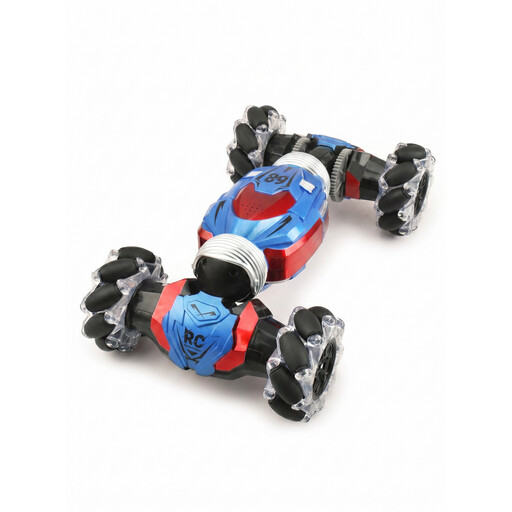
Why This Fits Their Persona: This model is built for action. The dual-control system, offering both a traditional remote and an intuitive gesture control car watch, caters to different play styles. Its ability to transform, drive on both sides and perform side drifts with its Mecanum wheels makes it a captivating RC stunt car for kids who want dynamic, visually impressive play.
Its "bionic-spine" deformable frame is designed for flexibility, not rigidity, helping it withstand tumbles. The double-sided driving feature means a flip-over doesn't stop the fun, avoiding the frustration of constantly having to set it upright.
The combination of 4WD and Mecanum wheels allows for omnidirectional movement, including side-to-side drifting, which most standard RC cars cannot do. The body is made from thick, eco-friendly ABS plastic.
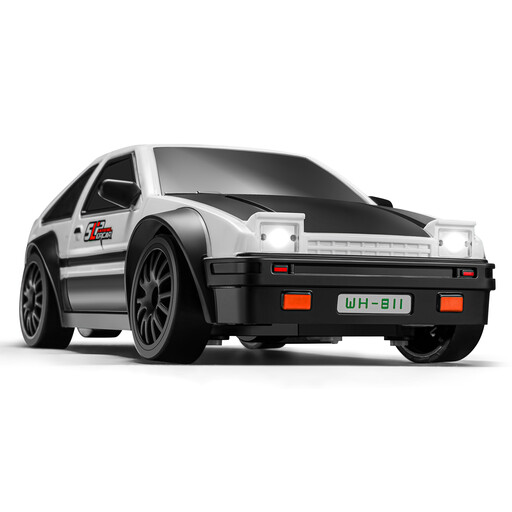
Why This Fits Their Persona: For the child or teen focused on skill-based driving, this RC drift car is an excellent starting point. The 1:24 scale is perfect for indoor practice on tile or wood floors, and the inclusion of a gyroscope helps stabilise the car during drifts, making it easier for beginners to learn control without constantly spinning out.
Instead of being a generic "racer," this car is purpose-built for a specific skill. It avoids the "all-terrain" overstatement by being clearly designed for flat surfaces. The ABS plastic body shell offers good impact resistance for the inevitable collisions during practice.
It comes with two sets of tyres—one for drifting and one for racing—allowing for versatile play. The adjustable gyroscope and proportional throttle/steering provide a level of control that grows with the user's skill level.
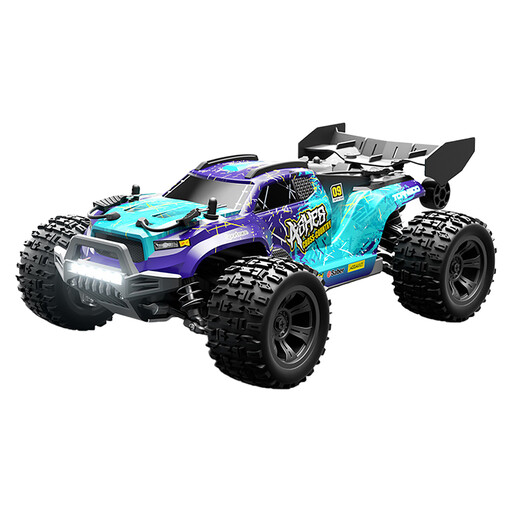
Why This Fits Their Persona: This is a proper fast RC car for teens and ambitious younger drivers. With a top speed of over 40 KM/H, a full metal-gear 4WD system, and adjustable shock absorbers, it's built to handle gardens, parks and dirt tracks. It's a step up from basic toys into the hobbyist category, offering genuine performance.
It directly addresses the battery life issue by including two rechargeable batteries for over 50 minutes of potential runtime. Its frame is reinforced with aluminium alloy at key stress points, and the IPX4 splash-proof rating means it can handle puddles and mud, avoiding the "pavement-only" trap.
The high-torque brushed motor and 4x4 transmission provide the power needed for true off-road driving. The bright RC car with lights system also allows for fun in low-light conditions, extending its use into the evening.
We have compiled a complete, real-time list of products that fully satisfy these strict selection criteria and UK safety regulations.
1. How long do rechargeable RC car batteries actually last? This depends heavily on the car and how it's used. For most toy-grade RC cars, you can expect 15-25 minutes of continuous, aggressive play from a single charge. Models that include a second battery are a great solution, allowing you to swap them over and effectively double the playtime to 30-50 minutes. Always check the battery capacity (measured in mAh)—a higher number generally means a longer runtime.
2. Are gesture control cars difficult for young children to use? Not at all. In fact, many children find gesture control more intuitive than a traditional remote. The system is designed to be simple: tilt your hand forward to accelerate, tilt back to reverse and twist your wrist to turn. It creates a direct physical connection to the car's movement that kids often pick up very quickly, making it a fantastic feature for a first kids toy car gift.
3. What is the main difference between a "toy-grade" and "hobby-grade" RC car? The primary differences are in performance, durability and repairability. Toy-grade cars are designed for casual play, are generally less expensive, and if a part breaks, the entire car often needs replacing. Hobby-grade cars, like the All-Terrain RC Truck mentioned above, feature higher speeds, more durable components (like metal gears) and most importantly, have replaceable parts. This means you can repair and upgrade them over time, making them a longer-term investment for an enthusiastic teen or adult beginner.