
24/7 Customer Support

Free returns

Same-day & Next-day Delivery

Quality Guaranteed

Unlock Your Welcome Offers: FREE Delivery | Up to 80% OFF | Free 30-day JoyPlus trial
Download the APP
Navigating the world of remote control cars can be thrilling, but choosing the right 1/24 RC drift car often feels like driving through a fog of marketing hype. Many enthusiasts, especially those new to the hobby, find themselves with a model that looks the part but fails to deliver the performance, leading to frustration and a wasted investment. As the Joybuy Product Recommendation Officer, my role is to help you cut through the clutter and focus on the features that truly matter for an authentic drifting experience.
Before you add a car to your basket, it's crucial to understand the common pitfalls that can turn your exciting new hobby into a disappointment.
To ensure you get a capable and enjoyable remote control drift car, focus on these non-negotiable technical specifications. These are the details that separate a genuine hobby-grade model from a short-lived toy.
For drifting, a four-wheel drive (4WD) system is fundamental. It provides power to all four wheels, offering the balance and control needed to initiate and maintain a slide. Unlike a 2WD system, which can be unpredictable, 4WD allows for more stable power delivery out of corners and greater control during transitions. Look for models that specify a shaft-driven or belt-driven 4WD system, as this indicates a more robust, hobby-grade design. Paired with independent suspension, this setup ensures all four tyres maintain contact with the surface for maximum grip and control.
Perhaps the single most important feature for a modern RC drift car for beginners is the gyroscope, or gyro. This small electronic device detects when the car is sliding sideways (yaw) and automatically applies a small amount of counter-steer to prevent it from spinning out. This assistance is what allows for the smooth, cinematic drifts you see in videos. A car without a gyro is exceptionally difficult to control. For maximum value, look for a model with an adjustable gyro. This allows you to reduce the level of assistance as your skills improve, providing a car that can grow with you.
The difference between a toy and a hobby-grade machine often comes down to the controls. Basic RC cars have "all-or-nothing" steering and throttle—the wheels are either straight or fully turned. A proper electric RC drift car must have proportional controls. This means you can make fine adjustments to both the steering angle and the throttle. If you turn the wheel on the remote slightly, the car's wheels turn slightly. This level of precision is not just a luxury; it is essential for the subtle inputs required for drifting.
Finding a model that ticks all these boxes can be a challenge. Based on a careful review of specifications against the common pitfalls, we've identified a standout option that aligns with the needs of both newcomers and intermediate hobbyists.
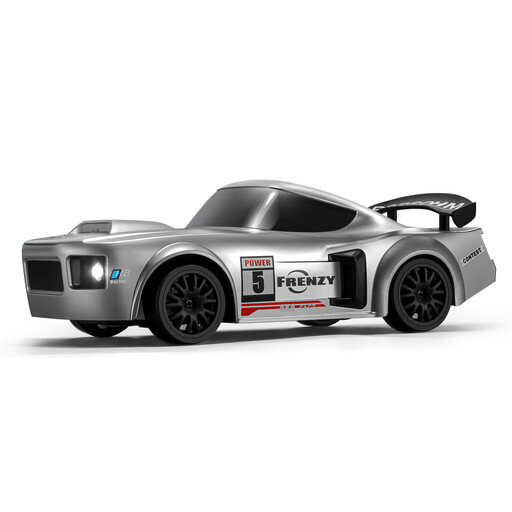
Why This Fits Their Persona: This model is an ideal starting point for someone in the UK who wants to get into the RC drifting hobby seriously. It's a complete, ready-to-run package that includes all the essential hobby-grade features, allowing a beginner to learn the fundamentals of drifting on a capable platform without the immediate need for expensive upgrades.
It directly counters the main pitfalls by including a professional 4WD transmission, a built-in adjustable gyroscope system for stability and full-scale proportional controls. The LiPo battery also includes over-charge protection, a key safety and durability feature missing from toy-grade models.
The inclusion of two sets of tyres (drift and racing) offers excellent value and versatility. You can practise precision drifting and then switch to high-speed racing. The remote-controlled LED lights are a great touch for visibility and aesthetics during low-light driving.
We have compiled a complete, real-time list of products that fully satisfy these strict selection criteria and UK safety regulations.
Here are answers to a few common questions that prospective buyers in the UK often have.
Run time varies depending on the model and how aggressively you drive. For a hobby-grade model with a LiPo battery, you can typically expect around 15-25 minutes of continuous use. Many enthusiasts purchase a second battery and charge one while using the other to extend their practice sessions.
The 1:24 scale RC car is primarily designed for indoor use on smooth, clean surfaces like laminate flooring, tile or a dedicated carpet or foam track. Its compact size and low ground clearance make it unsuitable for rough terrain, grass or gravel. It can be used outdoors on very smooth, clean tarmac or concrete, but be mindful that small stones can interfere with its operation.
While some advanced kits require full assembly, many models aimed at beginners and intermediate users come "Ready-to-Run" (RTR). This means the car is fully assembled straight out of the box and the package includes the transmitter (remote control). All you typically need to do is charge the vehicle's battery and you are ready to start drifting. The model recommended above is an RTR, making it perfect for getting started without delay.