
24/7 Customer Support

Free returns

Same-day & Next-day Delivery

Quality Guaranteed

Unlock Your Welcome Offers: FREE Delivery | Up to 80% OFF | Free 30-day JoyPlus trial
Download the APP
The appeal of mastering a perfect, controlled slide around a corner is undeniable. For many, the world of radio-controlled drifting offers an accessible and thrilling way to experience this precision driving. However, navigating the market for an RC drift car can be complex, with terms like 'gyro', 'proportional control' and '4WD' often creating more questions than answers.
This guide is designed to clarify these features, helping you understand what to look for. We will outline key considerations for your purchase and present a few standout models that offer a great balance of performance and features for enthusiasts in the UK.
Making an informed choice comes down to understanding a few core components. Focusing on these will ensure you select a car that matches your skill level and expectations.
For drifting, control is everything. A 4WD RC drift car delivers power to all four wheels simultaneously. This provides the consistent, predictable traction loss needed to initiate and hold a smooth drift. While rear-wheel-drive models exist, the all-wheel-drive platform is generally more stable and forgiving, making it an excellent choice for both newcomers and seasoned drivers.
To further enhance stability, many modern models include an RC car with a gyro. This small electronic device automatically detects sideways movement (yaw) and applies tiny, rapid counter-steering adjustments. This helps prevent the car from spinning out, allowing for longer, more stylish drifts with less effort. It’s a feature that significantly shortens the learning curve.
The 1:24 scale RC car has become particularly popular. Its compact size is ideal for setting up indoor tracks in a garage or living room, yet it's large enough to house sophisticated mechanics and showcase impressive detail. Many of these models are styled after iconic real-world vehicles, such as the popular GTR style RC car, adding to their visual appeal.
A key feature to look for is the inclusion of interchangeable tyres. A good package will often come with two sets: one pair of low-friction, hard plastic tyres for drifting and another set of high-grip rubber tyres for traditional racing. This versatility effectively gives you two types of RC car in one.
A quality hobby grade RC car will feature a 2.4G remote control car system. This frequency-hopping technology prevents signal interference, which is crucial when driving with friends. Look for transmitters that offer proportional steering and throttle. Unlike the all-or-nothing controls of basic toys, proportional inputs allow for fine adjustments to your speed and steering angle, which is essential for the nuanced art of drifting.
Finally, most hobby-focused models are a rechargeable RC car, typically using Lithium-Polymer (LiPo) or Lithium-Ion (Li-ion) batteries. These offer a good balance of power, runtime and weight, and can be recharged easily via USB.
Based on the features that deliver a rewarding drift experience, here are a few models worth your consideration.
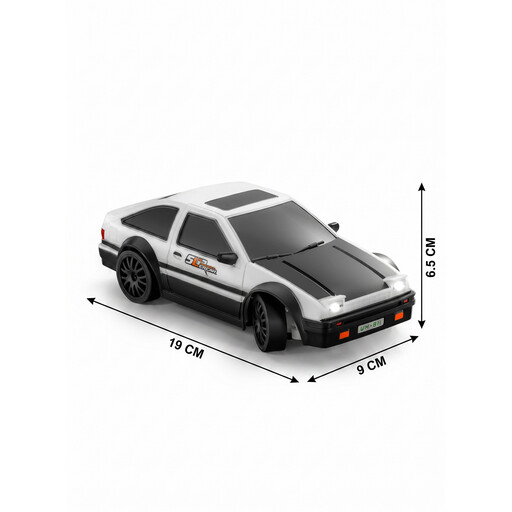
Why It Stands Out: This model serves as an excellent entry point into the world of hobby-grade drifting. It packages the most essential features—4WD and an integrated gyroscope—into a straightforward, ready-to-run car. The durable ABS body is resilient enough to handle the inevitable bumps and scrapes that come with learning.
Pros:
Who is it for: This car is ideal for those just starting their RC drift journey who want core performance features without a high initial cost.
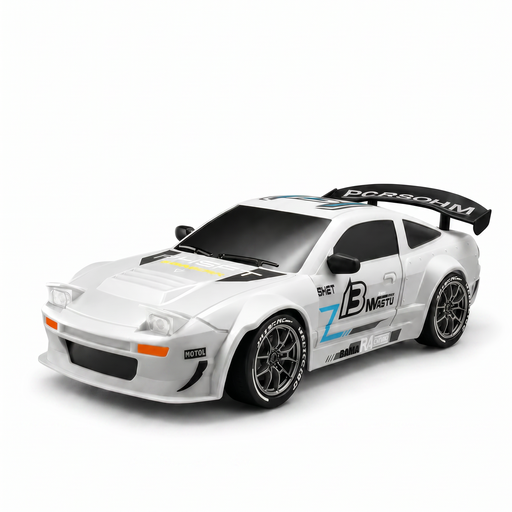
Why It Stands Out: This package offers a more complete experience straight out of the box. The key upgrade here is the adjustable gyro stabiliser, allowing you to fine-tune the level of assistance as your skills improve. It also includes both drift and racing tyres, front and rear LED lights and a full accessory kit with traffic cones for setting up your own course.
Pros:
Who is it for: A great fit for hobbyists who want to practice with different tyre setups and appreciate a complete, ready-to-run package that encourages progression.
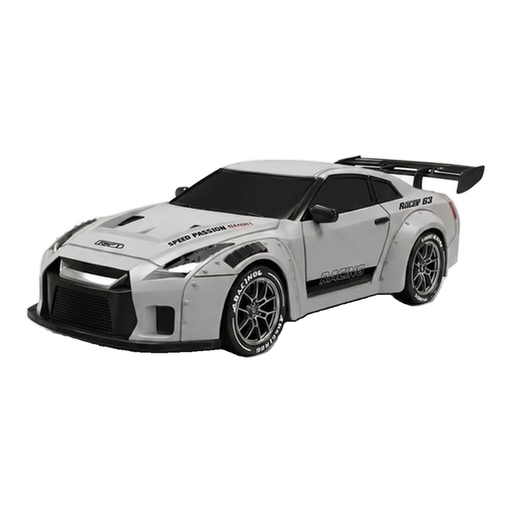
Why It Stands Out: This model is geared towards the RC drift car for adults and serious enthusiasts. The standout features are the 2.4G proportional remote control and a professional steering servo, which together provide exceptionally precise and responsive handling. The controllable LED lights and the aggressive, wide-body GTR style make it a visually impressive machine, backed by performance-oriented components like independent shock suspension.
Pros:
Who is it for: Suited for RC enthusiasts looking for finer control, enhanced performance and a standout design that mirrors iconic tuner cars.
A key part of the RC hobby is maintenance and customisation. Having spare batteries ensures your sessions are not cut short by a lack of power. If you are looking to stock up on power sources for your new vehicle, it is worth exploring your options to find compatible and long-lasting packs.
Browse our selection of vehicle batteries to keep the action going.
What does a gyro do in an RC drift car? A gyroscope is an electronic stability aid. It detects when the car is sliding sideways and automatically applies a small amount of counter-steer to help you maintain a controlled drift angle. This makes the car feel more stable and less likely to spin out, especially for beginners.
Is a 4WD RC drift car better than a 2WD one? For drifting, 4WD is generally considered more effective and easier to control. It delivers power to all four wheels, resulting in a more predictable and stable slide. While 2WD (rear-wheel drive) drifting is possible and preferred by some experts for its challenge, the 4WD platform provides a much more accessible entry point to the hobby.
Can you use an RC drift car on different surfaces? RC drift cars perform best on smooth, low-friction surfaces like polished concrete, laminate or wood flooring, or dedicated RC drift tracks. Their hard plastic tyres are designed to slide, not grip. While they can run on very short-pile carpet, the increased friction will make drifting more difficult. Many kits with interchangeable tyres allow you to swap to rubber tyres for better grip on surfaces like asphalt or carpet.