Student with a minimal kitchen
A ready-to-eat pack avoids pan cooking. Check whether you want to eat the pancakes cold or have the appliance specified in the pack’s warming instructions, and consider how you will store the pack after opening.


Choose ready-made pancakes if you want breakfast without pan cooking; choose a mix if you have the equipment and want to control the portions you make. Sainsbury’s describes its ready-made buttermilk pancakes as light and fluffy, while ASDA says its Bakery Scotch pancakes can be eaten hot or cold. Neither description establishes a measured thickness, so do not treat “fluffy” or “Scotch” as a thick-cut specification.
A ready-to-eat pack avoids pan cooking. Check whether you want to eat the pancakes cold or have the appliance specified in the pack’s warming instructions, and consider how you will store the pack after opening.
A mix lets you portion and cook pancakes yourself if you have a hob and pan. Check its recipe for any ingredients and utensils you need to supply, and allow for washing-up.
Check the ingredients, allergens and precautionary information on the pack supplied. The illustrated ready-made pancakes contain ingredients including wheat, egg or milk; a familiar pancake style is not a substitute for checking the specific product.
Start with the cooking equipment you will have after moving in, then compare the stated style, pack directions and ingredient label.
Choose when: You want a pack you can eat without making batter; ASDA describes its Bakery Scotch pancakes as ready to eat hot or cold.
Trade-off: A texture description does not tell you the pancakes’ measured thickness or let you change it.
Choose when: You have a hob and pan and want to portion and cook the pancakes yourself.
Trade-off: You need to follow the particular recipe, supply its required additions and clean up afterwards.
| Priority | What to check | Your needs |
|---|---|---|
| Texture and style | Read the specific product’s style and texture description. Do not use “fluffy” or “Scotch” as a thickness measurement. | I want pancakes that feel substantial, but I do not need to assume a stated millimetre thickness from the style name. |
| Preparation | Check whether the pack is ready to eat, gives warming directions or requires pan cooking. For a mix, read the recipe’s required additions. | Will I have a hob and pan when I move in, or do I need something I can eat without cooking? |
| Pack use and storage | Compare the pack count with how often you expect to eat pancakes. Follow that product’s directions after opening and for freezing. | Buying for myself, I want a pack I can use or store as directed rather than leaving pancakes unused. |
| Ingredients and labelling | Read the supplied pack’s ingredients, allergen statements, date mark and storage directions. GOV.UK distinguishes safety-related use-by dates from quality-related best-before dates. | If an ingredient or allergen matters to me, I need to check the actual pack before eating it. |
A retailer’s texture description cannot establish which ready-made pancake is thickest.
Choose by the stated style and preparation method, rather than expecting a particular thick-cut result.
Sainsbury’s advises using its opened buttermilk four-pack within two days for best quality; directions differ between products.
Consider how many pancakes you will use, then check the selected pack’s opened-pack and freezing instructions.
Pancakes left unused may go to waste if you cannot use or store them as directed.
A mix needs preparation and cooking, whereas ASDA describes its Bakery Scotch pancakes as ready to eat hot or cold.
Read the mix recipe before buying to check that you have the equipment, additions and time it calls for.
The recipe may call for ingredients and cooking equipment beyond the mix itself.
Recipes and product information can change, and precautionary allergen statements can matter as well as listed ingredients.
Check the label on the pack supplied, including its precautionary information.
These retailer examples help distinguish pancake styles and pack directions; they are not a list of Joybuy products.
ASDA describes its Bakery Scotch six-pack as ready to eat hot or cold.
Tesco’s Scotch-pancake category identifies a Tesco six-pack.
Sainsbury’s describes its ready-made buttermilk four-pack as light and fluffy.
M&S lists a six-pack of Scotch pancakes with its own texture description.
Waitrose lists Essential Scotch pancakes as a ready-made six-pack.
These two American-style mixes are options for a student who has the equipment and wants to cook pancakes. They do not replace the ready-made packs discussed above.
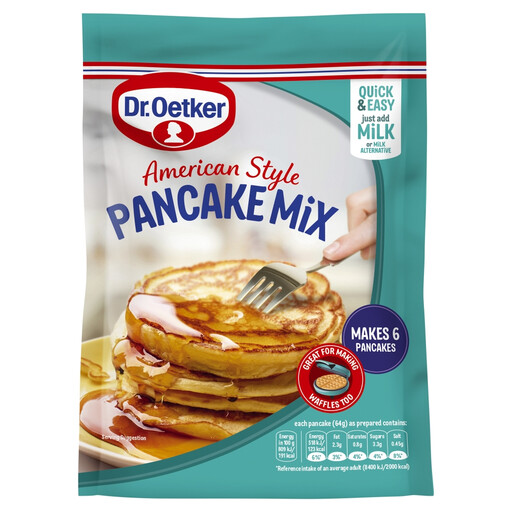 No image available
A mix to consider if you want to cook and portion American-style pancakes rather than open a ready-made pack. It needs preparation and cooking; check the pack’s recipe for the ingredients and utensils to have ready.
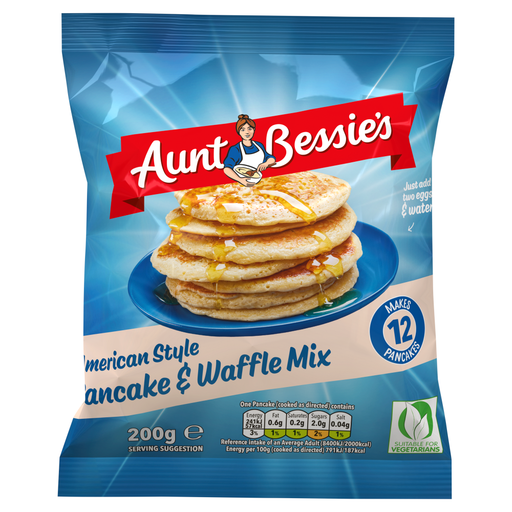 No image available
This mix is labelled for both pancakes and waffles, which may matter if you plan to make either. Pancakes still require preparation and cooking, so check the recipe and the equipment and additions it calls for.
Follow the particular pack. ASDA says its Bakery Scotch pancakes are ready to eat hot or cold, while Sainsbury’s gives microwave and grill warming directions for its buttermilk four-pack. A dry mix needs preparing and cooking.
Check the selected pack’s directions. ASDA says to freeze its Bakery six-pack before the date mark; Waitrose says to freeze its Essential Scotch pancakes on the day of purchase. Both specify use within one month and say to defrost fully and not refreeze after defrosting.
No. GOV.UK explains that a use-by date concerns food safety, while a best-before date concerns quality. Read the date mark and storage directions on the pack you receive.
Check the actual product label, including ingredients and precautionary statements, when buying for an allergy. Food Standards Agency guidance for England, Wales and Northern Ireland and Food Standards Scotland guidance distinguish how allergen information is provided for prepacked, prepacked-for-direct-sale and loose food.