
24/7 Customer Support

Free returns

Same-day & Next-day Delivery

Quality Guaranteed

Unlock Your Welcome Offers: FREE Delivery | Up to 80% OFF | Free 30-day JoyPlus trial
Download the APP
For many of us, from busy professionals to students juggling deadlines, ready meals are a modern necessity. They promise a hot, satisfying meal without the time commitment of cooking from scratch. However, the convenience can sometimes come with compromises. Navigating the world of quick meals for one often means sifting through options that don't quite live up to their packaging.
As a Joybuy Product Recommendation Officer, my role is to help you identify the common pitfalls and find products that genuinely deliver on their promise. Let's look at a few frequent issues and how to sidestep them.
microwave meals are marketed as convenient, but can be loaded with surprisingly high levels of salt, sugar and saturated fats, undermining your efforts to eat well.By knowing what to look for, you can easily find a convenient instant lunch or dinner that is also genuinely enjoyable.
Instead of being swayed by marketing claims, focus on a few key details on the packaging. This will give you a much clearer picture of the meal you're about to purchase.
The term 'ready meal' covers a wide range of products, each suited to different situations. Understanding the type is the first step to satisfaction.
pasta pots and noodle cups. They only require a kettle, making them a staple for students, campers, or anyone with minimal kitchen facilities.Don't just look at the 'per 100g' column, as this can be misleading. The most important information is the 'per serving' or 'per pot' value. Pay close attention to:
vegetarian ready meals or specific Asian ready meals, where ingredient quality is key to the flavour profile.Based on these practical criteria, here are a few options that align with different needs and lifestyles.
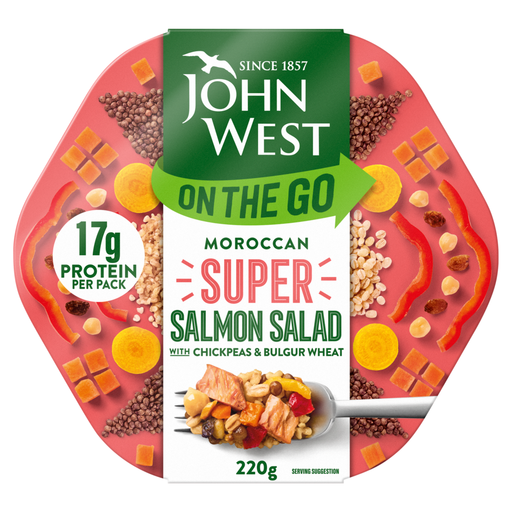
Why This Fits Their Persona: This is the ultimate solution for a desk lunch or a meal during a commute. It requires no heating, comes in a self-contained pot, and provides a balanced mix of protein, carbs and vegetables.
It's a `ready to eat meal` with clear, whole ingredients like salmon, chickpeas and bulgur wheat, avoiding the flavour disappointment of overly processed options. The portion is designed as a complete single serving.
A good source of protein (17g per pack) and fibre. Requires zero preparation or kitchen equipment.
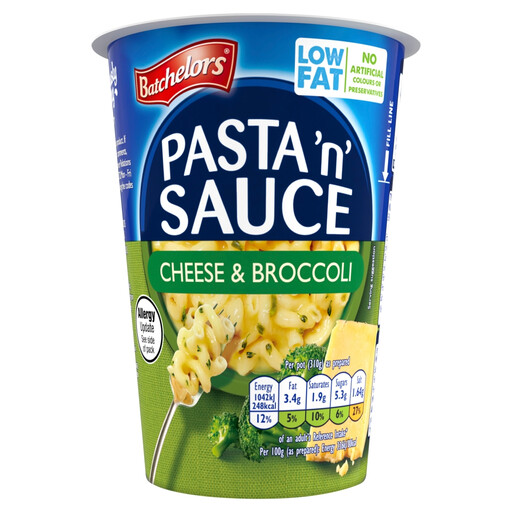
Why This Fits Their Persona: When you need a hot, comforting meal for under a pound and only have a kettle, this is a classic choice. It's a simple, no-fuss `instant lunch` that's perfect for a study break or a quick bite between lectures.
This `pasta pot` manages expectations perfectly. It delivers exactly what it promises: a quick, creamy pasta dish. There are no misleading claims of gourmet quality, just reliable convenience.
Ready in moments with just boiling water. It's also low in fat and suitable for vegetarians.

Why This Fits Their Persona: For those who want to try authentic Korean street food without the fuss, this Yopokki cup is an excellent choice. It offers a specific, trendy flavour profile that's a world away from standard ready meal fare.
This `Asian ready meal` sidesteps the "bland flavour" trap by delivering a distinct sweet, spicy and cheesy taste. The chewy texture of the rice cakes is a key feature that sets it apart from typical pasta or noodle dishes.
Offers an authentic Korean street food experience. It's a `microwave meal` that's ready in just 2-3 minutes.
We have compiled a complete, real-time list of products that fully satisfy these strict selection criteria and UK safety regulations.
1. Can you store ready meals after opening? It depends on the type. For ready to eat meals like salads or canned goods, once opened, any leftovers should be transferred to an airtight container, refrigerated and consumed within 24-48 hours as per the packaging instructions. For just-add-water pots or microwave meals intended for a single serving, it's generally advised to consume them immediately and not store leftovers.
2. Are microwave meals a nutritious option? The nutritional value of microwave meals varies significantly. While some can be high in salt and saturated fat, many brands now offer well-balanced options with controlled portion sizes, lean proteins and plenty of vegetables. The key is to read the 'per serving' nutritional information to see how it fits into your daily intake.
3. What is the difference between 'ready to eat' and 'ready to cook'? 'Ready to eat' means the product can be consumed safely without any further cooking, either cold or hot (e.g., a tuna salad pot or a can of congee). 'Ready to cook' or 'ready to heat' means the ingredients are prepared, but the meal requires heating in a microwave or oven to be cooked through and safe to eat (e.g., a chilled lasagne or a frozen curry).