
24/7 Customer Support

Free returns

Same-day & Next-day Delivery

Quality Guaranteed

Unlock Your Welcome Offers: FREE Delivery | Up to 80% OFF | Free 30-day JoyPlus trial
Download the APP
Ready-to-drink cocktails make home entertaining simpler: chill the can or bottle, open it and serve. They can suit a quiet evening, barbecue, picnic, birthday gathering or last-minute gift. However, attractive packaging and phrases such as “bar-quality” do not always tell you whether a drink suits your taste, strength preference or budget.
Before choosing pre-mixed cocktails, check the information behind the marketing. A smaller can may contain nearly the same alcohol as a much larger lower-strength drink, while a fruity flavour may also mean a higher sugar content. The right choice depends on the occasion, serving size and how much preparation you want to avoid.
A 125ml cocktail at 14.9% ABV can contain approximately 1.9 UK units, while a 250ml can at 5% ABV contains around 1.3 units. The larger can is not necessarily the stronger option overall.
Look for both ABV and UK units per can, bottle or serving. This makes it easier to plan a mixed drinks selection for a party or compare a single-serve cocktail with a sharing bottle.
Terms such as premium, crafted and natural can describe positioning rather than a consistent nutritional standard. Ingredients vary considerably between alcoholic ready-to-drink drinks. For example, some products list fruit juice or purée, while others use flavourings, sweeteners or concentrates.
If sweetness matters, compare the sugars per 100ml and read the ingredients list. A drink with a sharp citrus profile may taste less sweet than a tropical cocktail, but the label remains the more reliable comparison.
Some canned cocktails are designed to be served chilled, while others benefit from pouring over ice or gently shaking before opening. Nitrogen-infused drinks may require specific handling to create their intended texture. Bottled cocktails may also need refrigeration after opening.
Check the storage instructions, best-before information and serving guidance before buying a larger pack. This helps avoid waste, especially when purchasing bottled cocktails for occasional use.
For UK shoppers, ABV indicates the percentage of alcohol by volume, while UK units indicate the amount of pure alcohol. As a general calculation, units are based on drink volume and ABV, so both figures are useful.
Available examples range from 0.0% ABV alcohol-free cocktails to approximately 14.9% ABV martini and margarita formats. Lower-strength options around 3% to 6% ABV can work for longer social occasions, while stronger 125ml serves are more compact but need careful portion awareness.
The UK Chief Medical Officers advise adults not to regularly exceed 14 units per week. Alcohol should be avoided during pregnancy, and nobody should drink before driving or operating machinery.
Choose the cocktail family before the brand. Fruity options include passion fruit martini, raspberry, mango, pineapple and strawberry daiquiri. Citrus-led choices include margarita and lemon chu-hi, while coffee-forward espresso martini suits after-dinner occasions. Mojito, whisky highball and spritz formats offer different balances of fizz, sweetness and spirit character.
Also consider whether you want a single-serve can, a 4-pack or a 75cl bottle. Cocktail cans are convenient for individual servings, while a larger bottle can be more practical for sharing when the serving size is clear.
Read the label for sulphites, milk, cereals containing gluten and other declared allergens. Some products are listed as suitable for vegans or vegetarians, but this should be confirmed on the individual packaging. Alcohol-free does not automatically mean sugar-free: the Funkin alcohol-free passion fruit martini lists 11g of sugars per 100ml.

Why This Fits Their Persona: A familiar fruity profile in a single 250ml can suits casual home drinking, small gatherings and shoppers comparing approachable pre-mixed cocktails.
The listing states 4.5% ABV and approximately 1.125 units per can, making strength easier to compare than relying on the can size alone.
Raspberry and lemonade flavour; serve chilled, over ice or directly from the can.

Why This Fits Their Persona: A compact cocktail for shoppers who want a more concentrated passion fruit martini serve for date nights, gifting or polished hosting.
Its 125ml size and stated 14.9% ABV clearly signal a stronger, portioned drink rather than a casual low-strength serve.
Made with vodka, passion fruit and vanilla; listed at approximately 1.9 UK units per can.
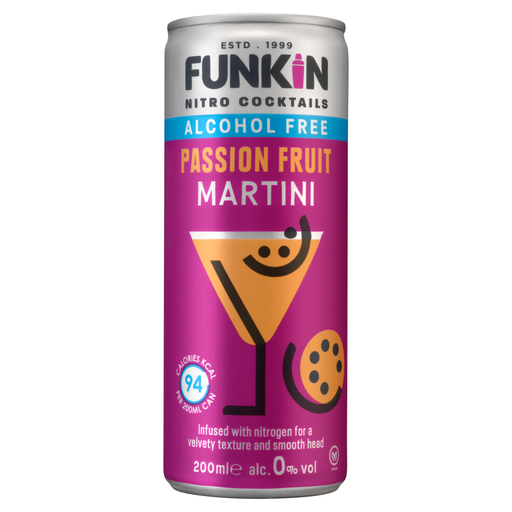
Why This Fits Their Persona: A practical option for hosts who want alcohol-free cocktails available alongside alcoholic drinks at parties, BBQs or family occasions.
The listing specifies 0.0% ABV and 0.0 UK units. It also states that the drink should be chilled and consumed promptly after opening.
Nitrogen infusion; suitable for vegans and vegetarians; 200ml single-can format.
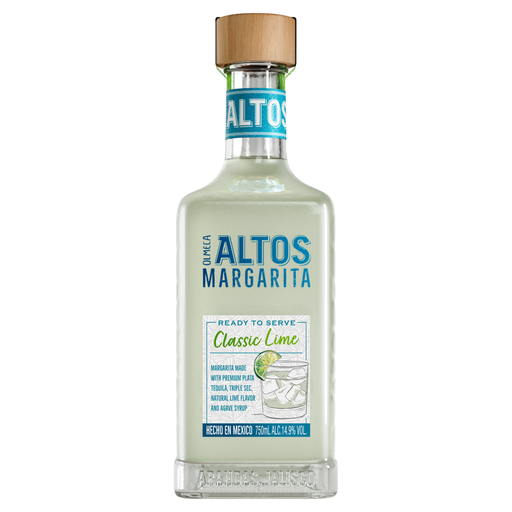
Why This Fits Their Persona: The 750ml bottle is suited to entertaining several adults, making margaritas for a gathering or serving alongside Mexican-style food.
The product information identifies a 14.9% ABV drink and recommends refrigeration after opening, helping planners manage serving and storage.
750ml sharing format; lime margarita style; designed to pour over ice.
We have compiled a complete, real-time list of products that fully satisfy these strict selection criteria and UK safety regulations.
For citrus refreshment, Kirin Honshibori Premium 4 Lemons & Hyuganatsu is listed at 6% ABV in a 350ml can. Suntory Tako Highball offers a 6% whisky highball format. For fruit-led occasions, options include Malibu & Pineapple, Malibu & Cola, Bacardi Mango Mojito, Bacardi Raspberry Mojito and Malibu Strawberry Daiquiri.
Coffee drinkers can compare Served Espresso Martini 125ml, also listed at 14.9% ABV and approximately 1.9 units per can. For spritz-style serving, Aperol Spritz 4 x 200ml provides a four-bottle pack at 9% ABV. Always check the current product label because formulations, pack details and nutritional values can change.
They can reduce the cost of buying multiple spirits, mixers, fruit and garnishes, particularly for one or two servings. However, a sharing bottle or multi-pack may offer a different value calculation from individual cocktail cans. Compare the price per serving, not just the shelf price.
Follow the product label. Many unopened cans can be stored in a cool, dry place away from direct sunlight, then chilled before serving. Once opened, carbonation and flavour can deteriorate, so consume promptly unless the packaging gives different instructions.