
24/7 Customer Support

Free returns

Same-day & Next-day Delivery

Quality Guaranteed

Unlock Your Welcome Offers: FREE Delivery | Up to 80% OFF | Free 30-day JoyPlus trial
Download the APP
Ready-to-eat chestnuts can be a practical cupboard staple for UK households. They work as a portable chestnut snack, a quick office bite or a shortcut for stuffing, soups, cakes and savoury dishes. However, product descriptions do not always make pack size, processing method and storage requirements immediately clear.
Before buying, look beyond phrases such as “naturally sweet” or “premium quality”. The important details are whether the chestnuts are genuinely cooked and peeled, how much food you receive after opening, and whether the ingredients suit your dietary needs.
Some packs contain peeled chestnuts that can be eaten immediately. Others contain whole or split-shell chestnuts with a cut made to help remove the shell. These can still be convenient, but they may require more handling and are less suitable when you need a quick snack on public transport, during a hike or at your desk.
Check the wording carefully:
A simple ingredient list is useful, but “natural” is not a substitute for reading the label. Many products contain chestnuts: 100%, while some roasted chestnuts include sugar or other additions. For example, roasted peeled chestnuts with sugar have a different ingredient profile from plain chestnut kernels.
UK shoppers should check:
Chestnuts are tree nuts for allergen purposes. Even where a listing states no allergens, always check the physical packaging if you have an allergy or are buying for someone else.
A sealed pouch may be suitable for cupboard storage, but the guidance can change once opened. Several ready-to-eat products advise consuming soon after opening. Merchant Gourmet whole chestnuts, for instance, state that unused contents should be refrigerated in a sealed container and consumed within three days. Roasted chestnuts with sugar specify refrigeration and consumption within two days after opening.
This matters when comparing a large chestnut multipack with smaller single-serve packs. Larger packs may offer more food for recipes, while individually packed portions can reduce leftovers and make storage simpler.
For immediate snacking, choose cooked chestnuts that are peeled and ready to eat. Soft, slightly mealy textures are typical of prepared chestnuts, while roasted chestnuts may have a deeper aroma and firmer surface.
For cooking, whole kernels are useful because they can be stirred into:
If you want to bake with chestnuts, plain kernels without added sugar or seasoning offer greater flexibility.
Small packs between 50g and 120g suit lunchboxes, commuting and occasional snacks. Larger formats, such as 300g or 400g bags, can work for families or regular cooking. A 1kg pack divided into ten 100g sachets may be more practical for frequent use because each portion remains sealed until needed.
Compare the total net weight, not just the number of bags. Also check whether the listed weight refers to drained contents where applicable.
Chestnuts are naturally higher in carbohydrate than many conventional nuts. Product information in this range shows approximately 170–210 kcal per 100g, with relatively low fat levels and varying carbohydrate, sugar and fibre values. These figures are product-specific, so use the nutrition panel on the pack when tracking intake.
For a simple chestnut snack, look for:
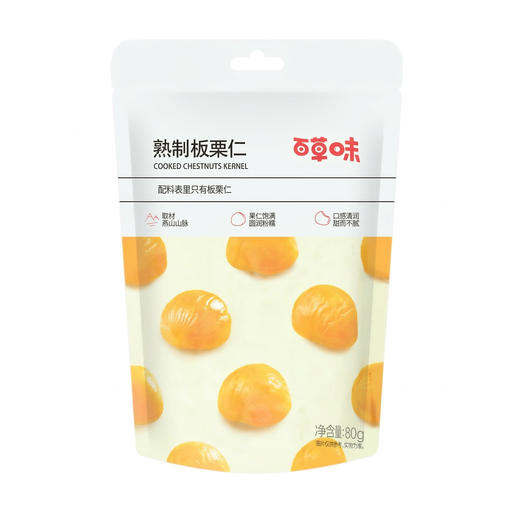
Why This Fits Their Persona: An 80g portion offers a straightforward way to try ready-to-eat chestnuts without committing to a large multipack. It suits desk drawers, short journeys and occasional tea-time snacking.
The listing identifies chestnut kernels as the sole ingredient and states that the product is ready to eat upon opening.
80g net weight; 100% chestnut kernels; listed at 185 kcal and 1.9g fat per 100g.
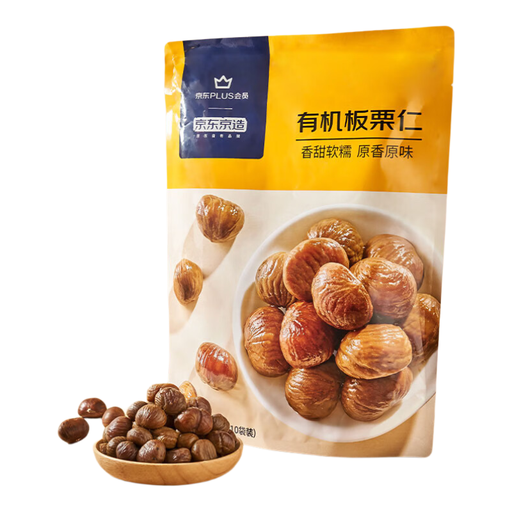
Why This Fits Their Persona: Ten individually sealed 100g sachets suit households that want a substantial supply while keeping each portion unopened until required.
The format avoids repeatedly opening one large bag, while the ingredient declaration states chestnut kernels at 100%.
1kg total weight; ten 100g sachets; ready to eat upon opening; listed at 191 kcal per 100g.
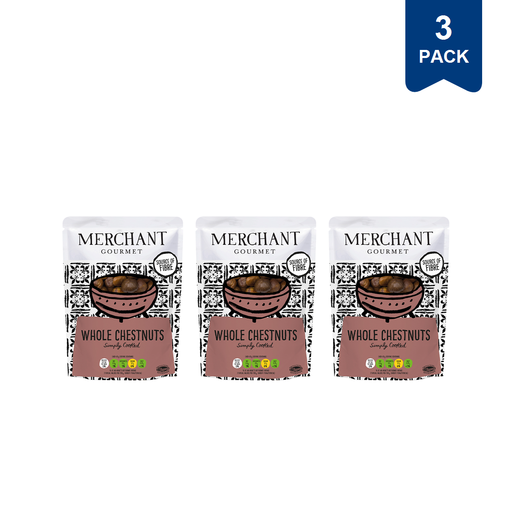
Why This Fits Their Persona: Home cooks can use these whole cooked and peeled chestnuts in stuffings, stews, soups, cake mixes and desserts without shelling raw chestnuts.
The listing clearly identifies the product as pre-cooked and peeled, and provides specific refrigeration guidance after opening.
Three 180g packs; one ingredient; 5.3g dietary fibre per 100g; suitable for direct use or gentle heating.
Keep unopened packs in a cool, dry place away from direct sunlight, unless the label states otherwise. Once opened, follow the manufacturer’s timing carefully. Transfer leftovers to a sealed container if refrigeration is required, and do not heat a pouch directly in a microwave unless the instructions explicitly permit it.
For a quick snack, eat the kernels straight from the pack. For cooking, fold them into stuffing, blend them into soup or chop them into a cake mixture. Plain natural chestnuts are particularly versatile, while sweetened roasted chestnuts are more suited to snacking or desserts.
We have compiled a complete, real-time list of products that fully satisfy these strict selection criteria and UK safety regulations.
Most products labelled ready to eat are pre-cooked, roasted or otherwise prepared before packing. Always check the usage instructions. Split-shell products may still need the shell removed, even when described as ready to eat.
It depends on the product. Some labels advise consuming them as soon as possible, while pouch products may require refrigeration and consumption within two or three days. Follow the storage instructions on the individual pack rather than relying on a general rule.
Yes. Plain, cooked and peeled chestnuts can be chopped into cakes, blended into fillings or added to desserts. Check the ingredients first, as chestnuts with added sugar may alter the flavour and sweetness of a recipe.