Who needs which features?

Hands-free loft checkers

If you need your hands available near the hatch or while checking stored items, look for a hook, a stable base or a magnetic mount that suits an actual surface in your loft. Ledlenser and Goal Zero show these as different placement options across their lantern lines; a feature on one model does not mean it appears on every model.

Detailed-condition inspectors

If you are looking around stored items, insulation or visible building surfaces, choose light you can adjust and move to inspect shadowed areas. The Health and Safety Executive notes in its construction-lighting guidance that shadows can obscure hazards; that practical warning does not make the guidance a domestic-loft rule.

Preparedness-minded home users

If the lantern will also be kept for occasional outages, check its runtime at the setting you would use and how you will keep it ready between uses. Follow its charging and storage instructions rather than leaving a rechargeable light permanently in a loft that may experience temperature extremes.

What matters when choosing?

Start with light placement and the areas you need to see, then compare runtime at a usable brightness. Treat compact storage and extra power features as secondary to a safe position for the lantern.

Concern What to check Who this matters to
Footing and shadows Look for adjustable area light and a position from which you can move the lantern to reveal shadows. I need to see the hatch edge and the area I am inspecting without glare hiding detail. Around 36% of consumers put controllable visibility first.
Hands-free placement Check for a suitable hook, loop or stable base; use a magnet only with an appropriately placed ferrous-metal surface. When I need my hands free near the hatch or stored items, I want the light to stay securely in place. For around 29% of consumers, hands-free positioning is the primary need.
Runtime and readiness Compare claimed runtime by brightness setting and check how you will confirm the lantern is charged. I do not want the light to fade before I have finished a planned check or returned through the hatch. Runtime and readiness come first for around 21% of consumers.
Storage and battery care Consider the size you can store conveniently and follow the maker’s temperature and charging instructions. For an occasional check, I want a light that is easy to retrieve without leaving its battery in unsuitable conditions. Around 14% of consumers prioritise compact storage and battery care.

Mistakes to avoid

  • Choosing by maximum lumens alone

    A maximum-output figure does not tell you how long that setting lasts or whether a single position will illuminate the spaces behind joists and stored items.

    Compare runtime at the brightness you plan to use. Choose adjustable output where useful, and move the light when shadows obstruct your view.

  • Assuming a magnet will attach anywhere

    A magnetic mount needs a suitable ferrous-metal surface in the right position; timber will not hold it.

    Check your intended placement before buying. A hook, loop, folding legs or stable base gives you another way to position the lantern.

  • Charging or storing the lantern in a hot loft

    Battery care matters between inspections as well as during use. London Fire Brigade advises avoiding very high or low battery temperatures, while Electrical Safety First advises uncovered, ventilated charging rather than leaving battery packs charging overnight or unattended.

    Charge in a suitable indoor place using the supplied or a genuine compatible charger. Check the lantern and cable for damage, and follow the model’s storage-temperature instructions.

  • Treating better light as fall protection

    A lantern can help you identify an edge, but it cannot make an unprotected hatch or a surface not designed to bear weight safe.

    Assess access and footing before entering. Avoid stepping onto unsupported areas, and seek competent help if the task goes beyond a simple visual check.

Relevant lantern brands for reference

Ledlenser

The ML4 and ML6 illustrate different ways to carry and position a rechargeable lantern for a loft check.

  • Ledlenser lists a carabiner-style handle and rechargeable or AA operation for the ML4. Its ML6 listing describes a hook, magnet, removable stand and adjustable output.
  • Check each model’s runtime at the intended brightness and whether its mounting options suit your loft; a maximum-output figure alone will not settle either question.

Goal Zero

The Lighthouse Mini illustrates a lantern with several placement options and adjustable light direction.

  • Goal Zero lists fold-down legs, a hook, magnets, adjustable brightness and direction, USB charging and an exchangeable internal 18650 battery for this model.
  • Its long low-setting runtime should not be read as runtime at a brighter inspection setting. Confirm the supplied charging equipment and applicable support terms before purchase.

Olight

The Olantern Stretch illustrates a larger lantern with a battery pack and device-charging outputs.

  • Olight’s manual describes adjustable height, two light sources, a 16,000mAh lithium-ion battery pack and two output ports.
  • Decide whether those extra functions are useful for your other tasks. The manual warns against storage where temperatures may exceed 60°C and gives charging and discharging temperature ranges to follow.

Joybuy products for a loft check

This portable ambient lamp is a possible light for a short loft check only if its coverage and placement work in your space. Check those points before relying on it to inspect the loft.
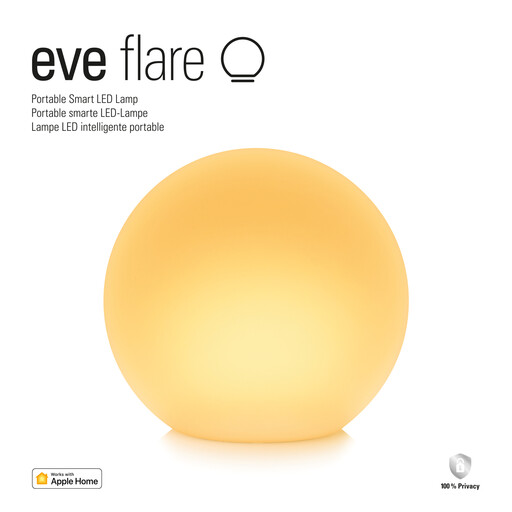
White Eve Flare Portable Smart LED Lamp

Eve Flare Portable Smart LED Lamp, White

For a short check, consider this portable lamp only if it lights the areas you need to inspect and can be placed securely. It is described as an ambient lamp rather than a loft-inspection lantern.

The product name lists 90 lumens, IP65, Bluetooth and Thread. Check light coverage and runtime at the brightness you would use before relying on it in the loft.

View on Joybuy

Questions about loft lighting

How bright should a rechargeable lantern be for a dark loft?

Choose enough adjustable light to see your route and inspection area, rather than selecting by the highest lumen figure alone. Check runtime at the setting you expect to use and move the lantern when a joist or stored item casts a shadow; the Health and Safety Executive notes in its construction-lighting guidance that shadows can obscure hazards.

Is a magnetic lantern useful in a loft?

A magnetic lantern is useful only where a suitable ferrous-metal surface is securely positioned for the light. If you expect to place it near timber framing, look for a usable hook, loop, folding legs or stable base as well.

Can I leave a rechargeable lantern charging in the loft?

Charge it in a suitable, ventilated place rather than leaving it covered, unattended or exposed to temperature extremes in the loft. Electrical Safety First advises against charging battery packs overnight or while you are out, and London Fire Brigade advises using the supplied or a genuine compatible charger.

Can a lantern make loft access safe on its own?

No. Portable light helps you see an opening or surface, but it does not protect you from a fall or make unsupported areas safe to step on. Check the access arrangement and where you can safely stand before entering; seek competent help if you cannot carry out the visual check safely.