Start with a 13- or 14-inch laptop if you need to arrange recipe pages, photographs and reference material without taking over a small desk. A 16:10 screen, 16GB memory and SSD storage are useful starting points for comparing the cited configurations, but check your layout software before ordering. Choose a convertible laptop if you will actually annotate or sketch by touch; consider a larger screen only if your desk can accommodate it.
Who needs which setup
Small-desk recipe-book creator
You need to see recipe text, photographs and page placement while leaving room for notes or a paper proof. A 13- or 14-inch laptop with a 16:10 screen is a starting point; an external display is worth considering only if it fits the desk.
Touch-first recipe annotator
You mark up recipe PDFs or sketch early page ideas by hand. A convertible model such as the ASUS Vivobook 14 Flip TP3407 is relevant when you will use its touchscreen and stylus support, not simply because those features are available.
Colour-conscious food-photo layout user
You place and adjust food photographs for publication. Check the exact panel specification and plan to proof important colours: ASUS lists a 100% DCI-P3 panel for the Vivobook 14 Flip TP3407, while Lenovo lists a 45% NTSC panel for the cited ThinkPad T14 Gen 6 configuration.
What matters when choosing
Decide how much of the desk the laptop can occupy, then check whether its screen and connections suit the way you assemble pages. Confirm software and peripheral compatibility for the exact configuration before committing to macOS, conventional Windows or a touch-enabled Windows model.
| Concern |
What to check |
Who this matters to |
| Layout workspace |
Compare screen size, resolution and aspect ratio; check the exact panel specification for image work. |
If I work on page spreads and food photographs, I need enough visible space to judge the layout without constantly rearranging windows. Around 42% of consumers put workspace and display characteristics first. |
| Desk footprint |
Measure chassis width and depth, then check ports against the accessories you use. |
I want room beside the laptop for recipe notes, a mouse or a paper proof, without adding a dock unless I need one. For around 33% of consumers, preserving desk space is the primary concern. |
| Workflow compatibility |
Check your layout and photo apps, fonts and peripherals against the operating system; decide whether pen input is useful. |
If my files and tools depend on a particular setup, I need that workflow to function before I choose a screen style. Compatibility comes first for around 25% of consumers. |
Buying pitfalls
-
Choosing by screen size alone
A larger display gives you more on-laptop room, but the chassis must still fit alongside anything else you use for layout work. A compact laptop may also need adapters for existing equipment.
Compare resolution, aspect ratio, chassis dimensions and ports—not just the diagonal screen measurement.
An external monitor or dock also needs a place on the desk.
-
Expecting a wide-gamut screen to guarantee print colour
A stated display gamut describes the panel specification; it does not tell you how the finished recipe book will look in print.
Check the exact panel for the configuration you are buying, and use the printer’s profile and proofs for colours that matter.
-
Using operating-system minimums as a layout-work target
Microsoft’s Windows 11 minimum requirements establish an operating-system baseline, not how your chosen page-layout and photo applications will handle your project.
List the apps, fonts, photo files and peripherals you will use, then check each software publisher’s current requirements. Adobe publishes separate technical requirements for InDesign.
-
Ordering a near-match without checking the configuration
Similar laptop names can cover different memory, storage, display or processor variants. A listing you saw earlier may also change availability.
Check the full model and configuration on the product page immediately before ordering, along with availability, seller and warranty details.
Brands and relevant laptop lines
Apple
The 13-inch MacBook Air is a compact macOS option if your layout and photo tools work with macOS.
- Apple lists a 13.6-inch, 2560 × 1664 display, 16GB unified memory and 512GB SSD for the cited M5 entry configuration.
- Its two Thunderbolt 4 ports mean HDMI, USB-A or SD-card equipment may require an adapter or dock.
ASUS
The Vivobook 14 Flip TP3407 is a 14-inch Windows convertible for people who will annotate or sketch by touch.
- ASUS lists a 1920 × 1200 OLED touchscreen with stylus support and 100% DCI-P3 coverage for the cited configuration.
- ASUS specifies a maximum of 16GB system memory for this model, so check that limit if your future workload may require more.
Lenovo
The cited ThinkPad T14 Gen 6 configuration is a conventional 14-inch Windows option for keyboard-and-mouse layout work.
- Lenovo lists a 1920 × 1200 anti-glare, non-touch display, 16GB DDR5 memory and a 512GB SSD for configuration 21QC002KUK.
- That panel is specified at 45% NTSC; check the exact screen option before using a T14 for colour-sensitive work.
Dell
The XPS 16 is a larger-screen Windows option to consider when the desk and page-layout workflow allow a 16-inch laptop.
- Dell offers configurable Intel Core Ultra processors in the XPS 16 line.
- Check the finished configuration and its physical footprint before choosing it for a small desk.
Joybuy laptops for recipe-book layout
These laptops offer different ways to work on a constrained desk: compact conventional designs, touch-enabled models and a dual-screen option. Match their exact configuration to your software, connections and available desk space.
 No image available
HP OmniBook Ultra Flip 14-fh0006na 2-in-1, 16GB, 1TB SSD
Consider this convertible if marking up recipe drafts by touch is part of your layout process.
The listed configuration has 16GB RAM, a 1TB SSD and Windows 11 Home. Confirm the exact graphics configuration and compatibility with your chosen creative apps before ordering.
View on Joybuy
 No image available
ASUS Vivobook 14 X1407QA-LY003W, Snapdragon X, 16GB, 512GB SSD, Quiet Blue
This 14-inch model is worth considering for a conventional keyboard-and-mouse layout workflow on a small desk.
The listed configuration has a Snapdragon X processor, 16GB memory and a 512GB SSD. Check that your exact layout and photo applications, fonts and peripherals work with its Windows-on-ARM configuration.
View on Joybuy
 No image available
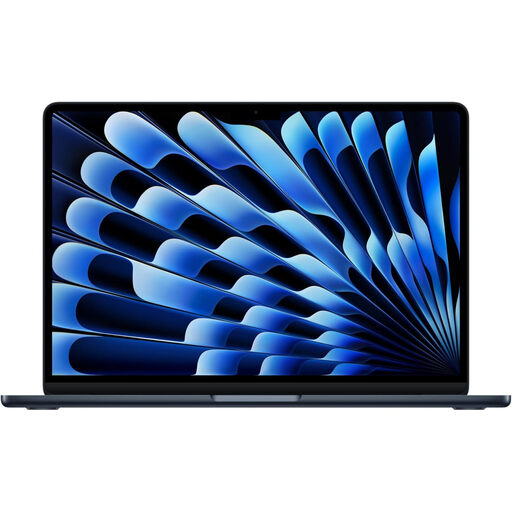
Apple MacBook Air 13-inch M5, 10-core CPU, 8-core GPU, 16GB, 512GB SSD, Midnight
This is a compact choice if your recipe-book software and peripherals fit a macOS workflow.
Apple lists a 13.6-inch, 2560 × 1664 display for the matching M5 configuration. The two Thunderbolt 4 ports may call for an adapter or dock if you use HDMI, USB-A or SD-card equipment.
View on Joybuy
 No image available
ASUS Zenbook DUO UX8406CA-QL135W, dual 14-inch OLED touchscreens, 16GB, 1TB SSD
The dual-screen arrangement may suit a workflow that keeps a recipe draft and reference material visible together, provided the keyboard and screens fit your desk.
The listed model has an Intel Core Ultra 7 255H processor, 16GB memory and a 1TB SSD. Confirm the resolution of both panels before choosing it for detailed page work.
View on Joybuy
 No image available
ASUS ZenBook UX3404VC-M3130W, 14.5-inch OLED touch, Core i9, 16GB, 1TB SSD, RTX 3050
Consider the 14.5-inch screen if you want more on-laptop layout space while checking that its footprint still leaves room for your notes and proofs.
The listed Windows 11 Home configuration has 16GB memory and a 1TB SSD. Check the exact chassis dimensions, ports, display specification and software compatibility for your setup.
View on Joybuy
Common questions
What laptop size should I start with for recipe-book layout on a small desk?
Start by comparing 13- and 14-inch laptops with 16:10 screens, then measure the space each chassis leaves for a mouse, notes and proofs. A 15- or 16-inch model makes more sense if you rely on its built-in display for extended layout work and have room for it.
Is 16GB memory enough for a recipe-book project?
16GB is a useful starting configuration to compare when page-layout software, photo files and browser references will be open together, but it is not a guarantee for every project. Check the current requirements of your exact layout and photo applications; Adobe publishes technical requirements for InDesign.
Do I need a touchscreen or stylus?
You need touch input only if hand-annotating PDFs or sketching page ideas is part of how you work. If you assemble pages with a keyboard and mouse, compare conventional laptops without treating a convertible hinge as a requirement.
What should I check about returns when ordering a laptop online?
Check the retailer’s current change-of-mind return terms and the exact product configuration before ordering. Keep those terms distinct from remedies for a faulty, damaged or misdescribed laptop, and check any manufacturer warranty separately.


