For straightforward 45 RPM singles playback, choose an automatic turntable with a suitable line-level output if you use powered speakers. Choose a manual deck if cueing control, adjustable settings or additional record speeds matter more. Whichever route you take, check the 45 RPM adapter and speaker connections, and keep the turntable level and away from speaker vibration; wall clearance is primarily a speaker-placement decision.
Who is this for?
Listeners with speakers near a wall
If room depth limits speaker placement, plan the available clearance and give the turntable its own level position away from vibration. Fluance offers speaker-placement starting points, while Audio-Technica advises keeping its AT-LP70XBT away from speakers that cause vibration.
Listeners who want simple singles playback
If you mainly play 45 RPM singles, automatic operation can spare you manual cueing. Check the exact deck's speed, adapter and output against your records and speakers.
Listeners who prefer manual control
If you want to cue records yourself or adjust the setup, compare the controls and supported speeds of individual models. Audio-Technica's AT-LP120XBT-USB offers adjustable anti-skate and three speeds; Rega's Planar 1 takes a different, wired-system approach.
What matters when choosing?
Start with the speakers you already have and where the deck can sit. Then choose the playback controls and connections that suit your singles, rather than treating near-wall placement as a turntable feature.
| Concern |
What to check |
Who this matters to |
| Speaker position and turntable isolation |
Check the speaker maker's wall-clearance advice and find a separate, rigid, level position for the deck. Fluance suggests starting bookshelf or stand-mounted speakers 1–2 feet from a wall where possible; that is not a rule for every speaker. |
If my room is shallow, I need a workable speaker position without putting the record player where vibration reaches it. Around 28% of consumers put placement and isolation first. |
| 45 RPM singles playback |
Confirm 45 RPM support and whether a centre adapter is supplied or available for large-hole singles. Decide whether automatic operation matters to you. |
When I put on singles often, I want the right speed and an adapter ready, with less handling if I prefer automatic playback. Roughly 28% of consumers make singles-playing convenience their primary concern. |
| Speaker connections |
Identify powered or passive speakers and their available inputs. Check whether the deck supplies the required phono- or line-level signal; passive speakers also need an amplifier. |
If I'm keeping my existing speakers, I need a connection that works with them rather than assuming a phono preamp can drive them. Around 22% of consumers prioritise system compatibility. |
| Manual control and flexibility |
Check the exact model for adjustable settings, additional speeds, USB or compatible replacement styli only if you expect to use them. |
If I want to cue records myself or play formats beyond 33-1/3 and 45 RPM, extra controls may justify a more involved setup. Approximately 22% of consumers put control and flexibility first. |
Buying pitfalls
-
Assuming a phono preamp powers passive speakers
A phono preamp prepares the turntable's signal for a suitable line input; it does not supply the power passive speakers need.
Check whether your speakers are powered. If they are passive, plan for an amplifier or receiver as well as the correct turntable connection.
A passive-speaker setup may need an additional amplifier or receiver.
-
Choosing the deck to solve a wall-placement problem
Moving speakers towards a wall can affect their bass balance, while vibration from nearby speakers can interfere with a turntable.
Follow the speaker maker's placement guidance where the room allows, and place the deck on a separate, rigid, level surface away from the speakers.
-
Assuming every 45 RPM deck comes with the same accessories
Speed support, centre adapters and automatic controls vary by model. A large-hole single needs a suitable adapter even when the deck offers 45 RPM.
Check the exact model's speed selector, adapter contents and start-and-return operation before choosing it.
Brands to consider for these turntable routes
Audio-Technica
Its relevant models span automatic 33/45 RPM playback and a manual deck with additional controls. Compare models rather than treating their features as interchangeable.
- Audio-Technica lists a switchable phono preamp on the AT-LP70XBT and selectable phono output, adjustable anti-skate and 33/45/78 RPM operation on the AT-LP120XBT-USB.
- An automatic 33/45 RPM model is not a substitute for the manual model if you need its 78 RPM speed or adjustable anti-skate.
Sony
The PS-LX310BT represents a straightforward automatic option for 33-1/3 and 45 RPM records, with Bluetooth and selectable phono/line output.
- Sony specifies one-step automatic playback and a built-in phono preamp for the PS-LX310BT.
- If 78 RPM playback or manual anti-skate adjustment matters, check a model that explicitly offers those features instead.
Rega
The Planar 1 and Planar 1 Plus suit a manually operated, wired turntable setup, but they require different phono-connection plans.
- Rega specifies preset bias and a factory-fitted Carbon cartridge for the Planar 1; the Planar 1 Plus adds a built-in MM phono stage.
- The standard Planar 1 needs an appropriate phono stage. Neither model should be treated as an automatic deck.
Joybuy product choices
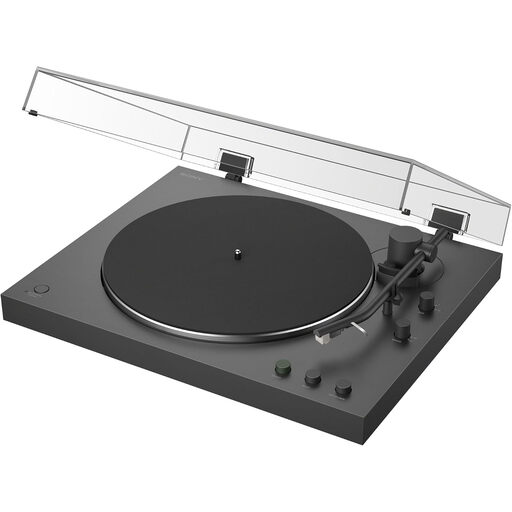
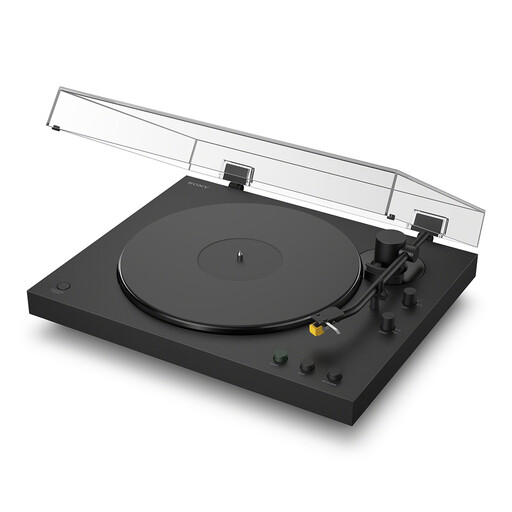
These Sony turntables suit listeners considering automatic playback and Bluetooth for jazz singles. Check each model's 45 RPM support and adapter arrangements against your records, and plan speaker connections and turntable placement separately.
 No image available
Sony PS-LX3BT Automatic Bluetooth Turntable
Consider this model if you want automatic operation and a Bluetooth option for listening to singles. Confirm the 45 RPM setting and suitable output for your speakers, and keep the deck on a level surface away from speaker vibration.
View on Joybuy
 No image available
Sony PS-LX5BT Automatic Bluetooth Turntable
Consider this model if automatic operation and Bluetooth fit your listening setup. Confirm that you have a suitable 45 RPM adapter for large-hole singles, check the speaker connection and position the deck away from speaker vibration.
View on Joybuy
Common questions
Can a record player connect directly to my speakers?
It can connect directly to suitable powered speakers if the turntable supplies a line-level signal and the speakers have a matching input. Passive speakers need an amplifier or receiver; a phono preamp alone cannot power them.
What should I check before playing jazz singles?
Check each record's stated speed and choose a turntable that supports it; 45 RPM singles need a 45 RPM setting. For a large centre hole, check whether a compatible adapter is supplied or available. Audio-Technica lists an adapter with the AT-LP60XBT and in the AT-LP70XBT setup contents.
How close to the wall can the speakers sit?
Follow the guidance for your particular speakers and listen to how the available position affects bass. Fluance suggests starting bookshelf or stand-mounted speakers 1–2 feet from a wall where possible, but that distance is not a universal requirement for every speaker or room.
Can the record player share furniture with the speakers?
Keep the turntable away from furniture that carries speaker vibration where you can. Audio-Technica advises placing its AT-LP70XBT on a flat, level surface away from speakers that cause vibration.
What should I check for longer-term ownership?
Check the exact model's replacement-stylus part, compatibility and repair arrangements before buying. Also read the applicable retailer and manufacturer warranty terms rather than assuming they are the same across turntables.


