Who this suits

Listeners who want easy album playback

If you play live albums regularly and would rather not cue the tonearm by hand, consider automatic operation. If you also want wireless listening, check that the turntable can connect to your speakers or headphones.

Owners of powered speakers or an amplifier

Your existing equipment determines which turntable output you need. Check whether it accepts Bluetooth, has a phono input, or needs a line-level signal from a built-in or separate phono stage.

Listeners planning a more adjustable system

If replacing a stylus or developing a separate hi-fi system matters to you, check the exact cartridge, compatible replacement parts and connections before choosing a deck.

What matters when choosing

For live albums in a hobby room, settle the connection to your speakers first, then decide how much handling you want during playback and whether future stylus replacement matters to you.

Concern What to check Who this matters to
Speaker connections Match Bluetooth or wired output to your speakers or amplifier; check whether a phono stage and cables are needed. If my hobby-room speakers are already in place, I want a turntable that connects to them without rebuilding the system; around 40% of consumers put connection compatibility first.
Ease of playback Check automatic start and return, and whether the deck supports the 33 1/3 or 45 RPM speed marked on your records. When I play album sides often, I would rather start playback simply and have the tonearm return at the end; roughly 30% of consumers prioritise low-effort operation.
Stylus and system changes Identify the fitted cartridge and manufacturer-compatible replacement styli; check the required phono connection. If I plan to keep developing my vinyl system, I want to know which parts I can replace and what equipment they require; about 30% of consumers place that flexibility first.

Buying mistakes to avoid

  • Buying the deck before checking the audio chain

    Bluetooth, line output and phono output call for different receiving equipment. Sony states that its PS-LX310BT, for example, has no built-in speakers.

    Check the inputs on your speakers or amplifier and the turntable’s outputs before choosing how they will connect.

    Depending on what you already own, you may also need powered speakers, an amplifier, a separate phono preamp or suitable cables.

  • Assuming Bluetooth means built-in speakers

    The Bluetooth connection described for the cited Audio-Technica and Sony models sends audio to compatible wireless equipment; it does not make those turntables self-contained speaker systems.

    Confirm that your speakers or headphones can receive Bluetooth audio, and check the wired outputs if you may use a different system later.

  • Choosing a replacement stylus by appearance

    Stylus options depend on the exact model and cartridge. Audio-Technica specifies a replaceable stylus for the AT-LP60XBT and VM95-series stylus compatibility for the AT-LP70XBT.

    Identify the fitted cartridge and use the manufacturer’s compatibility information before ordering a replacement.

  • Assuming private-listening arrangements cover public use

    GOV.UK says playing recorded music in public or at a business usually requires a licence. PPL PRS also says organisations playing music for employees or customers will usually need TheMusicLicence.

    If the hobby room will be used for organised, public or business listening rather than private playback, check the particular use with PPL PRS.

Brands and models to consider

Audio-Technica

Audio-Technica’s AT-LP60XBT and AT-LP70XBT are relevant when you want automatic operation and Bluetooth listening.

  • Audio-Technica specifies 33 1/3 and 45 RPM playback for these models, plus a switchable built-in phono preamp and VM95-series stylus compatibility for the AT-LP70XBT.
  • Check stylus options against the exact model; the AT-LP70XBT’s stated compatibility should not be assumed for the AT-LP60XBT.

Sony

Sony’s PS-LX310BT is an example of a Bluetooth-capable, fully automatic turntable.

  • Sony specifies automatic playback and return, 33 1/3 and 45 RPM speeds, and a built-in phono preamp with line output for the PS-LX310BT.
  • Sony’s operating instructions say the PS-LX310BT has no built-in speakers, so it needs a suitable external listening setup.

Rega

Rega’s Planar 1 and Planar 1 Plus are relevant to listeners considering a wired turntable setup.

  • Rega specifies a factory-fitted Carbon cartridge and pre-set bias for the Planar 1; the Planar 1 Plus has an integrated MM phono stage.
  • Check the input on your speakers or amplifier and the requirements of the particular Planar model rather than assuming both connect in the same way.

Pro-Ject

Pro-Ject’s Debut EVO 2 is a component-oriented model for listeners prepared to plan a separate audio system.

  • Pro-Ject specifies a carbon-fibre tonearm, electronic 33/45 RPM speed change, belt drive and an RCA output box for the Debut EVO 2.
  • Check how the deck’s output will connect to the phono stage, amplifier and speakers you intend to use.

Automatic Bluetooth turntables on Joybuy

These Sony models suit listeners considering Bluetooth and automatic playback for live albums. Check each model’s connection options against your own speakers or headphones; the specifications discussed for other Sony models above do not automatically apply to these decks.
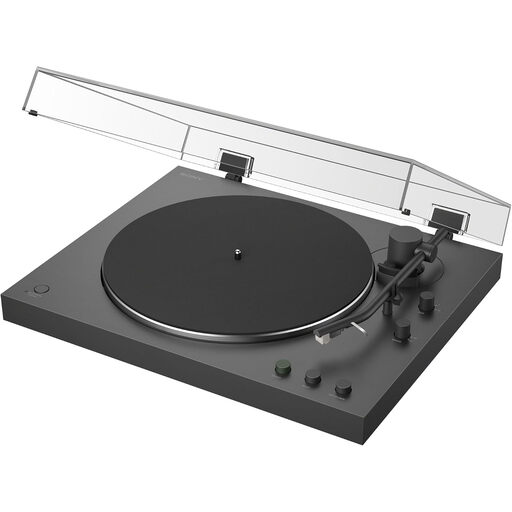
Sony PS-LX3BT Bluetooth turntable with auto playback

Sony PS-LX3BT Bluetooth Turntable with Auto Playback

A choice for live-album listeners who want Bluetooth and automatic playback. Confirm that your receiving audio equipment is compatible, and check the exact stylus and wired-connection requirements if those matter to your setup.

View on Joybuy
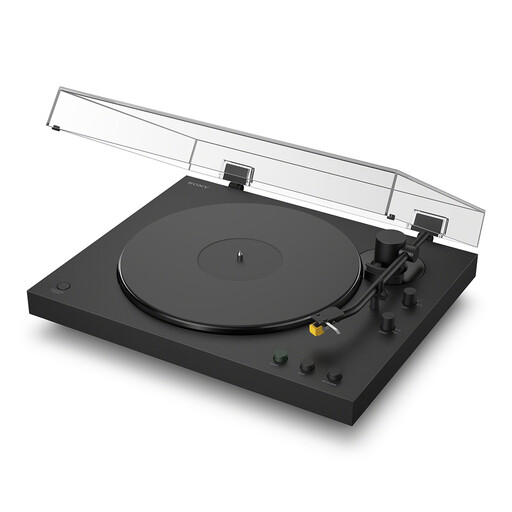
Sony PS-LX5BT Bluetooth turntable with auto playback

Sony PS-LX5BT Bluetooth Turntable with Auto Playback

A choice for regular album listening if Bluetooth and automatic playback are your priorities. Match it to suitable audio equipment, and confirm compatible replacement-stylus options before planning future changes.

View on Joybuy

Common questions

Do I need separate speakers for a record player?

You need a suitable listening path, so check whether the particular turntable has speakers or must connect to other equipment. Sony says its PS-LX310BT has no built-in speakers; Bluetooth models can send audio to compatible wireless speakers or headphones, while a suitable wired output can connect to matching audio equipment.

When does a turntable need a phono preamp?

A conventional turntable signal needs a compatible phono stage before it reaches a line-level input, but the stage can be built into the deck or provided elsewhere in the system. Audio-Technica specifies a switchable built-in preamp for the AT-LP70XBT, Sony lists a built-in preamp and line output for the PS-LX310BT, and Rega specifies an integrated MM phono stage for the Planar 1 Plus.

Is automatic playback useful for live albums?

Automatic playback is useful if you want simpler starts and, on models with automatic return, less handling when a side ends. Sony specifies automatic return for the PS-LX310BT, but you will still need to turn over a multi-side album and select the speed marked on the record.

Can I replace a worn stylus without replacing the deck?

You can do so when a compatible replacement is specified for the exact model and cartridge. Audio-Technica identifies a replaceable stylus for the AT-LP60XBT and VM95-series replacement and upgrade styli for the AT-LP70XBT; check the fitted cartridge before ordering.

Do I need a music licence for a hobby room in the UK?

A licence is usually needed if recorded-music playback becomes public or part of a business, according to GOV.UK. PPL PRS says organisations playing music for employees or customers will usually need TheMusicLicence; if your hobby room will be used beyond private listening, check the particular arrangements with PPL PRS.