Volunteer oral-history interviewer
You want to start recording without a complicated setup and check that an unexpected change in speaking level has not disrupted the interview.


For a close-seated local-history interview in a quiet hall, a handheld recorder with built-in microphones keeps setup simple, provided you can position it well and make a sound check. If room noise, distance or uneven speaking levels make separate voice control important, choose a recorder with two XLR/TRS inputs and two compatible close microphones; allow for the extra equipment and setup. Plan the recording agreement and archive arrangements before the session.
You want to start recording without a complicated setup and check that an unexpected change in speaking level has not disrupted the interview.
You want a close microphone for each speaker so you can handle different voice levels and reduce reliance on sound picked up across the hall.
You need a way to transfer and identify recordings, manage access and retention, and keep each interview linked to its participation agreement.
Decide where the microphones will sit before choosing recording features: a shared tabletop recorder and two separately connected close microphones create different editing and setup options.
Choose when: Two people can sit close together in a quiet space and the interviewer needs a quick setup.
Trade-off: One recorder picks up both speakers along with more of the room, leaving less control over each voice.
Choose when: The hall is acoustically difficult or you need to record each speaker separately for later balancing.
Trade-off: Compatible microphones, cables and mounts take more equipment and preparation.
| Concern | What to check | Who this matters to |
|---|---|---|
| Speech clarity in the hall | Check microphone placement and whether two XLR/TRS inputs are available if close microphones are needed. | If the hall has chatter or reverberation, I need the voices to remain understandable; around 36% of consumers put speech clarity first. |
| Separate voice control | Check the number and type of microphone inputs and whether each source can be recorded on its own track. | When one speaker is much quieter than the other, I want to adjust their recordings separately; that is the primary need for around 29% of consumers. |
| Simple operation | Check the recording indicator, controls, monitoring options and power plan for the full session. | While leading the conversation, I need to know the recorder is running without managing a complex setup; around 21% of consumers prioritise ease of operation. |
| Archive workflow | Check file export and transfer options, then plan file identification, backups and agreement-linked access. | If I am responsible for the archive, I need to retrieve and manage the interview after recording; this comes first for around 14% of consumers. |
32-bit float can make input-level setting less demanding, but it cannot remove room echo, distant speech or handling noise.
Seat speakers and position microphones before the interview, then make and listen to a short test recording in the hall.
A recorder with one shared pickup does not provide the separate voice control of two close microphones connected to independent inputs.
Decide whether you need a shared microphone or two separate ones, then check input types, track recording and any power requirements of the chosen microphones.
Local-history interviews can contain identifiable information and may later be archived or shared. Norfolk Record Office advises giving interviewees a participation agreement for approval before recording; the Information Commissioner's Office says consent must be specific and informed when consent is the lawful basis.
Explain the intended recording, storage and access arrangements before the session, and keep the agreement linked to the interview record. Check which lawful basis and retention arrangements apply to your project.
Zoom offers both a compact built-in-microphone route and a model with separate microphone inputs.
The DR-07XP is a handheld option for a shared-microphone interview setup.
The ICD-UX570 is a compact voice-recorder option where straightforward recording and file transfer matter most.
These voice recorders are options to consider for a straightforward interview setup. Check their microphone placement and file-handling options against your project's needs before choosing one for a community hall.
 No image available
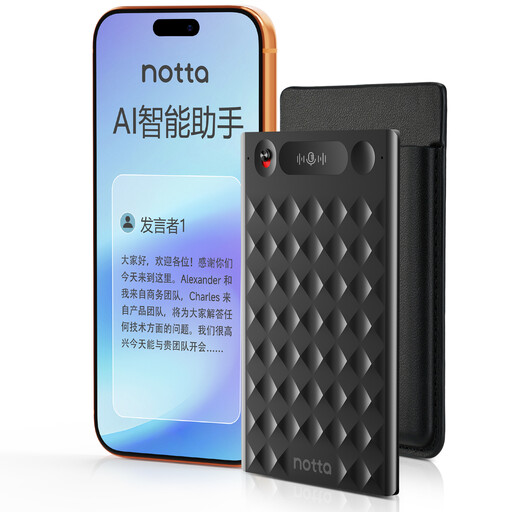
Consider this for a volunteer-led interview where straightforward recording is the priority, rather than assuming it will provide separate control of both voices.
The product title specifies 32GB storage, a case, one-press recording and a 30-hour battery figure. Check how recordings can be exported and stored under your archive arrangements, and whether the microphone and track options suit your seating plan.
 No image available
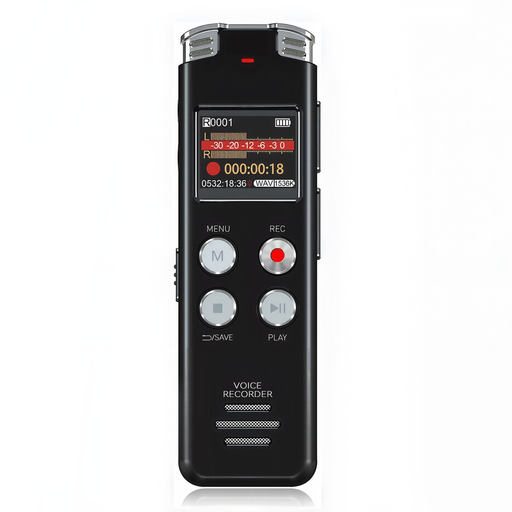
Consider this for a simple, portable interview kit if a shared recorder suits the room and your editing plans.
The product title specifies 128GB storage and an LCD screen. If changing voice levels or separate editing control are important, check its recording format, microphone inputs and track options before buying; test the intended placement in the hall.
Not necessarily: a well-positioned built-in-microphone recorder can suit two people seated close together in a quiet hall. Use two compatible close microphones with a two-input recorder when room sound, seating distance or the need to edit each voice separately makes a shared pickup unsuitable; Zoom specifies two XLR/TRS inputs on the H4essential.
No. Although Zoom and Tascam describe 32-bit float as reducing the need for precise level setting on their cited models, it cannot fix distant microphones, echo or a recording that never started. Make a short test in the actual hall and listen back before the interview.
Check that you have compatible recording media, a way to transfer files and a power plan for the entire session. Tascam specifies up to 17½ hours of continual use for the DR-07XP with two AA alkaline batteries under its stated conditions, while Sony specifies 4 GB internal storage and microSD expansion for the ICD-UX570; plan for your actual settings and workflow rather than relying on a headline figure alone.
Yes, plan a clear participation or recording agreement before the interview: Norfolk Record Office advises giving it to the interviewee for approval before recording. If the organisation uses consent as its UK GDPR lawful basis, follow the Information Commissioner's Office guidance on specific, informed consent and withdrawal; the appropriate lawful basis and project arrangements need to be determined for the organisation.
Set out how identifiable recordings will be named, transferred, backed up, retained and accessed, keeping the relevant agreement with the interview record. The Information Commissioner's Office identifies transparency, purpose limitation, storage and security among the applicable UK GDPR principles; any later archive access or publication should be checked against what participants were told and the arrangements for the project.