
24/7 Customer Support

Free returns

Same-day & Next-day Delivery

Quality Guaranteed

Unlock Your Welcome Offers: FREE Delivery | Up to 80% OFF | Free 30-day JoyPlus trial
Download the APP
Recycled plastic garden planters can provide the appearance of stone, timber or ceramic without the weight and maintenance associated with those materials. They are useful for patios, balconies, entrances, conservatories and indoor planting displays, but product descriptions can make comparison difficult.
Before buying, look beyond colour and decorative finish. The most suitable planter should match your available space, planting requirements and exposure to British weather.
A stone effect planter may look substantial in a photograph but still be too small for a shrub or mature ornamental plant. Conversely, a large container can overwhelm a narrow balcony or make watering awkward.
Always check the stated width, diameter and height. For example, a 40cm-wide by 52cm-high square tapered planter has a noticeably different footprint and planting capacity from a 36cm-wide by 39cm-high model. Measure the intended position, including space needed to walk around the planter or open nearby doors.
Traditional stone, terracotta and concrete planters can be difficult to move once filled. However, some shoppers assume that lightweight outdoor planters will crack or become unstable in poor weather.
Recycled plastic can offer a practical middle ground. It is easier to reposition for seasonal displays and does not carry the same breakage risk as some rigid mineral-based materials. Stability still depends on the shape, planting medium and location, so tall containers may need careful positioning in exposed areas.
Outdoor containers face rain, frost, sunlight and temperature changes. A listing that simply says “for outdoor use” gives less useful information than one that identifies weather resistance, UV resistance and frost resistance.
You should also check whether the planter has drainage holes or whether you need to create or manage drainage yourself. Waterlogged compost can damage plant roots even when the container itself is unaffected by rain or frost.
Recycled plastic garden planters are generally easy to wipe clean and do not require sealing, painting or wood treatment. An oak effect barrel planter can provide a timber-inspired appearance without the routine treatment associated with real wood.
When assessing sustainability, look for clear material information rather than relying only on green marketing language. “Made from recycled plastic” describes the construction, but it does not automatically explain the product’s end-of-life recycling options. Consider choosing a durable planter that you expect to use for several seasons and dispose of responsibly when it is no longer suitable.
For containers left outside throughout the year, frost-resistant planters are a practical choice. Repeated freezing and thawing can be problematic for certain porous materials, while UV exposure may fade some plastics over time.
Look for stated UV-resistant planters if the container will sit in full sun. This is especially relevant on south-facing patios, balconies and entrances. No finish should be assumed to remain unchanged indefinitely, but these specifications indicate that the product is designed with outdoor exposure in mind.
Different shapes suit different plants and layouts:
Check the planter’s internal space as well as external dimensions. Root-bound plants may need a larger container, while annual flowers and herbs can often be accommodated in smaller pots. Use suitable compost and confirm that excess water can drain away.
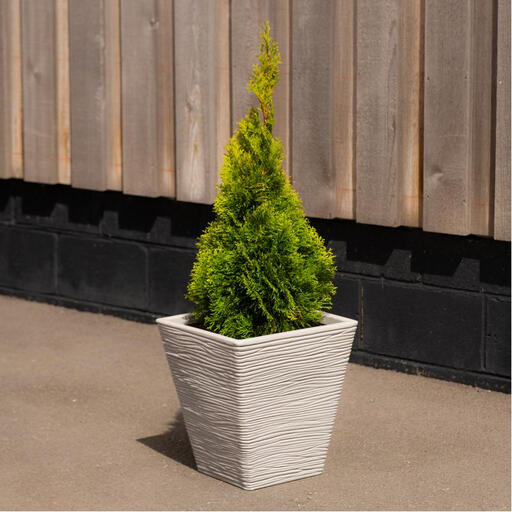
Why This Fits Their Persona: Its compact square footprint suits first-time gardeners, smaller patios and balconies where floor space is limited. The stone colour can work with herbs, flowers and trailing foliage.
The stated 36cm width and 39cm height make it easier to plan placement before purchase, while recycled plastic avoids the weight of a comparable stone-style container.
Recycled plastic construction; lightweight format; suitable for indoor and outdoor decorative planting.
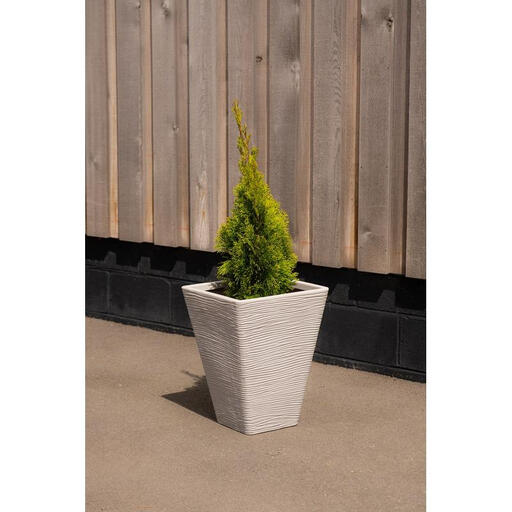
Why This Fits Their Persona: This larger stone effect planter is suited to homeowners who want a defined entranceway feature, patio focal point or coordinated pair of containers.
Its published 40cm by 52cm measurements help prevent choosing a visually appealing container that lacks the intended presence or planting space.
Stone-style appearance; recycled plastic material; described as weather and UV resistant for outdoor use.
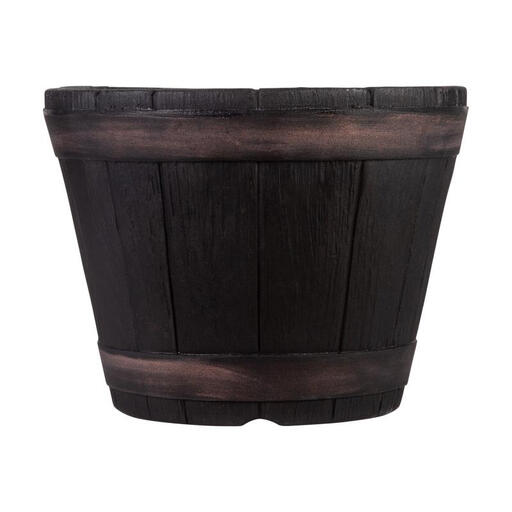
Why This Fits Their Persona: The rounded barrel profile suits gardeners creating rustic patio displays with herbs, flowers, grasses or compact shrubs.
The oak effect offers a timber-inspired look without the warping, rotting or regular treatment associated with real wood.
34cm diameter and 25cm height; recycled plastic; weather-resistant and UV-stable finish described for outdoor planting.
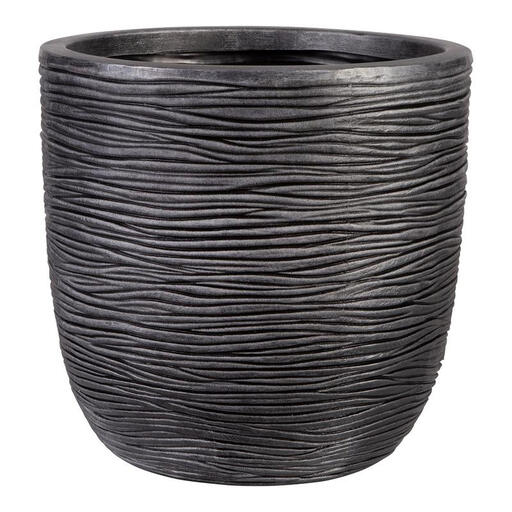
Why This Fits Their Persona: Its round 35cm footprint is suitable for a single statement plant on a patio, balcony or conservatory floor where a softer shape is preferred.
The published diameter and height make it easier to judge whether the container will fit a restricted area before ordering.
Round profile; pewter finish; recycled plastic construction; suitable for indoor and outdoor decorative planting.
Use a container liner or saucer indoors to protect floors and furniture from escaping water. Outdoors, raise the planter slightly where possible so drainage holes do not become blocked by paving or soil.
For balconies, confirm the surface is level and avoid placing heavy, water-filled planters where they could create a trip hazard. If a container will hold a shrub or small tree, allow room for the mature plant rather than selecting solely for its current size.
We have compiled a complete, real-time list of products that fully satisfy these strict selection criteria and UK safety regulations.
Many are designed for outdoor use and may be described as frost resistant, but check the individual product specification rather than assuming every recycled plastic container has the same performance. Prevent blocked drainage and avoid leaving standing water in the planter.
Some products include UV resistance or UV stability to help manage exposure to sunlight. Even so, colour change can vary according to placement, finish and duration of exposure. Check the listing for a stated UV-resistant specification.