
24/7 Customer Support

Free returns

Same-day & Next-day Delivery

Quality Guaranteed

Unlock Your Welcome Offers: FREE Delivery | Up to 80% OFF | Free 30-day JoyPlus trial
Download the APP
Choosing recycled plastic garden planters can be more complicated than it first appears. Product photos often emphasise attractive finishes, while important details such as drainage, planting depth and outdoor durability receive less attention. The wrong planter may look suitable online but prove awkward to move, too shallow for the plant or difficult to maintain.
This guide explains what UK homeowners, balcony users and gardeners should check before buying, then matches several options to different planting needs.
An attractive decorative garden planter is not automatically suitable for every plant. A shallow container may work for seasonal flowers but restrict the roots of shrubs, grasses or small ornamental trees. Check the external height and width, then consider how much usable internal space remains after allowing for the planter walls and drainage layer.
Lightweight planters are useful on balconies, decking and patios, but low weight can create concerns about stability in exposed gardens. Consider the planter’s shape, base width and intended position. A tall, narrow pot may need a heavier plant, sheltered location or additional stabilisation, particularly on windy sites.
Oak-effect and stone-effect finishes provide a particular look without the weight or maintenance of natural materials. However, buyers should still check whether the product is made for outdoor use, whether it is described as weather-resistant and whether the finish is designed to resist UV exposure. This helps avoid paying for an indoor decorative pot that may fade or deteriorate outside.
Recycled plastic planters offer a practical alternative to timber, terracotta and stone. The products featured here are made from recycled plastic and are described as lightweight, durable and suitable for outdoor planting.
Compared with real wood, a plastic planter does not require regular staining or sealing. The oakwood-effect models are described as resistant to warping, rotting and moisture absorption. The stone-effect models are described as resistant to cracking, weather fading and frost damage. These features can reduce routine maintenance, but the planter should still be positioned correctly and kept free from blocked drainage.
For exposed areas, look for weather-resistant planters with a stated UV-resistant or UV-stable finish. This is particularly relevant for south-facing patios, balconies and front entrances that receive prolonged sunlight.
Dimensions should be matched to the mature size of the plant rather than only its current pot. A barrel planter can provide useful depth for mixed displays, herbs and shrubs, while a square tapered planter may suit formal arrangements or grouped patio planters.
Before ordering, measure:
A planter that is lightweight when empty may become substantially heavier after adding growing medium and water.
Adequate drainage is essential for container planting in the UK, where persistent rain can leave compost saturated. Check the product listing for drainage-hole information before purchase. If a planter is used indoors, place it on a waterproof saucer or protective mat and confirm that excess water can be managed without damaging flooring.
For balconies, check the property’s loading restrictions and keep containers securely positioned away from edges. On patios and decking, use a level surface and avoid placing pots where standing water may collect underneath.
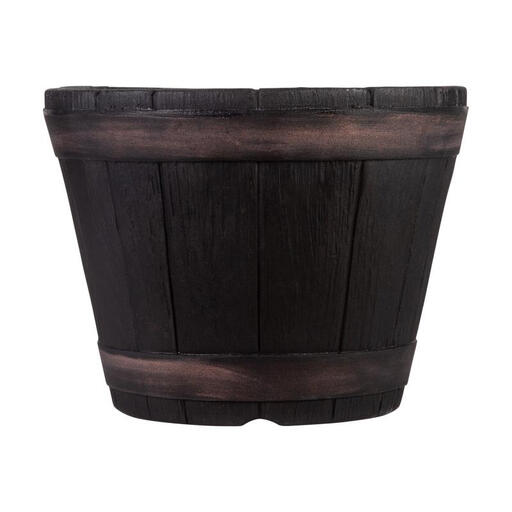
Why This Fits Their Persona: Its compact 34cm diameter and 25cm height suit first-time container gardeners creating a small patio, decking or entrance display.
The recycled-plastic construction provides an oakwood effect without the warping, rotting or treatment associated with real timber.
Compact barrel form; lightweight recycled plastic; suitable for flowers, herbs and decorative planting.
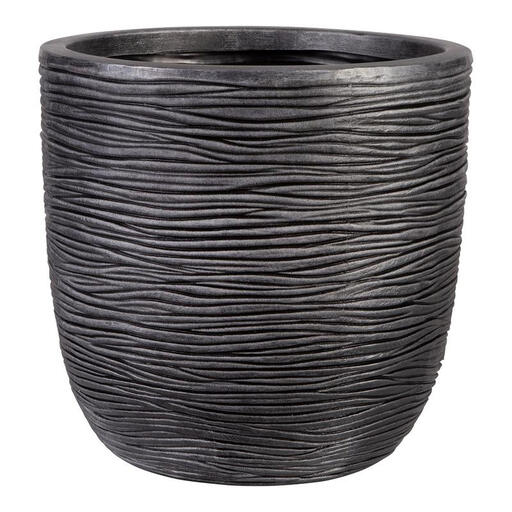
Why This Fits Their Persona: The taller round profile and pewter colour provide a more refined focal point for a front entrance, patio or contemporary garden scheme.
It combines a wood-inspired appearance with recycled plastic, avoiding the ongoing sealing and moisture concerns of genuine wood.
35cm diameter; 34cm height; oakwood-effect texture described as weather-resistant and UV-stable.
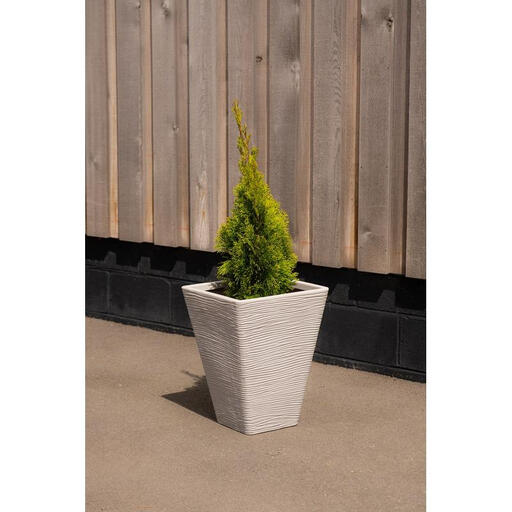
Why This Fits Their Persona: The larger 40cm width and 52cm height suit substantial feature planting beside paths, entrances and patio seating areas.
Its listed outdoor-resistant construction addresses concerns about cracking, frost exposure and fading, while remaining easier to handle than solid stone.
Large square tapered silhouette; stone-effect recycled plastic; suitable for shrubs and structured displays.
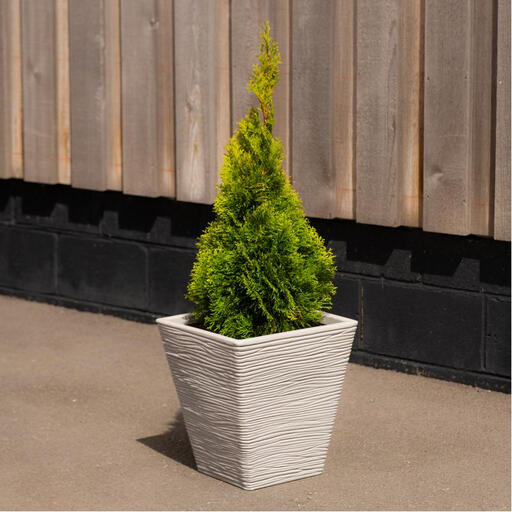
Why This Fits Their Persona: Its 36cm width and 39cm height offer a manageable option for balconies, conservatories and smaller patio arrangements that need a clean, structured shape.
The lightweight recycled-plastic body makes it easier to reposition for changing sunlight or seasonal layouts than a comparable stone container.
Square tapered design; neutral stone colour; described as weather- and UV-resistant for indoor or outdoor use.
We have compiled a complete, real-time list of products that fully satisfy these strict selection criteria and UK safety regulations.
They can be suitable for outdoor use when the product is specifically described as weather-resistant and designed for outdoor planting. The featured options are described as suitable for year-round outdoor use, with the oak-effect models listed as UV-stable and the stone-effect models described as resistant to weather fading and frost damage. Correct drainage and a stable position remain important.
Plants generally need a way for surplus water to escape, particularly in the UK climate. Check the individual product listing for drainage-hole details before ordering. If the planter is used indoors, consider a suitable liner or saucer to protect floors while still managing excess water.
Some are, provided they offer enough depth and width for the shrub’s root system and are placed securely. The larger square tapered planter provides a 40cm width and 52cm height, while the taller round model measures 35cm in diameter and 34cm high. Always compare these dimensions with the plant’s expected mature size and the container’s usable internal space.