
24/7 Customer Support

Free returns

Same-day & Next-day Delivery

Quality Guaranteed

Unlock Your Welcome Offers: FREE Delivery | Up to 80% OFF | Free 30-day JoyPlus trial
Download the APP
Recycled plastic planters can offer the appearance of timber or stone without the weight and upkeep associated with traditional materials. They are useful for UK gardens, patios, balconies and indoor displays, but not every lightweight planter is equally suitable for long-term planting.
The main buying mistakes usually come from focusing on appearance alone. A pot may look attractive online but have limited planting depth, inadequate drainage or dimensions that do not suit its intended position. Before choosing from a range of outdoor planters, check these common pitfalls.
Wood-effect planters and stone-effect planters can create a convincing garden feature, but the finish does not tell you how the planter will perform. Real timber can warp, rot and require treatment, while stone can be difficult to move once filled with compost.
Recycled plastic is generally easier to reposition and does not require wood preservative. Look for clear information about the material, weather resistance and intended use rather than relying on phrases such as “stone look” or “rustic style” alone.
A lightweight planter is easier to carry when empty, but compost, water and a mature shrub add considerable weight. This matters particularly for balcony planters, roof terraces and raised decking.
Check the planter’s width, height and planting capacity before buying. For larger shrubs, a stable base and suitable placement are important. Lightweight planters may also need positioning where strong winds are less likely to catch them.
Excess water is a frequent cause of failed container planting, especially during wet UK winters. A planter should either have drainage holes or be suitable for use with an inner pot, liner or drainage layer designed for the product.
Do not block drainage holes with compacted soil. Use a suitable container compost for the plant, raise the planter slightly where necessary and check that water can escape from the base.
For outdoor planters, look for objective details such as recycled plastic construction, UV resistance, resistance to moisture and suitability for year-round outdoor use. These features can help a planter remain practical through rain, changing temperatures and seasonal repositioning.
A weather-resistant planter still needs sensible care. Avoid placing it where water can freeze solid inside the container, and follow the product instructions for cleaning and drainage. A wipe-clean surface is useful for patio planters near doors and high-traffic areas.
Measure the available space before choosing between round planters, square planters and trough planters. The stated external dimensions do not always equal the usable planting area, so consider the internal cavity as well when growing shrubs, grasses or herbs.
For balcony gardens, compare the planter’s empty weight, filled weight and footprint with the space available. Renters may also prefer lightweight planters that can be moved when rearranging a balcony or changing accommodation.
Check whether the product is supplied with drainage holes, a saucer or a water reservoir. Self-watering plant pots can reduce the frequency of watering, but they are not maintenance-free. The reservoir still needs checking, and roots or compost must not obstruct the self-watering mechanism.
For indoor plant pots, use a saucer or watertight liner to protect shelves, windowsills and flooring. Outdoor containers may need more direct drainage, particularly when exposed to heavy rainfall.
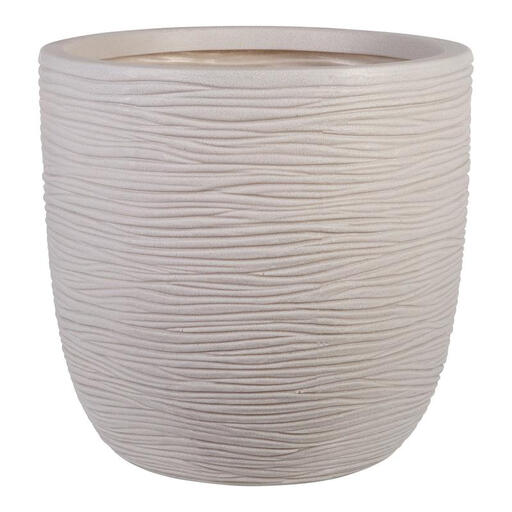
Why This Fits Their Persona: Its 35cm diameter and 34cm height provide a manageable starting point for flowers, herbs and compact foliage on a patio, entranceway or balcony.
The recycled plastic construction avoids the regular treatment associated with real wood, while the compact size helps limit compost and repositioning demands.
Lightweight recycled plastic; stone-effect finish; suitable for indoor and outdoor decorative planting.
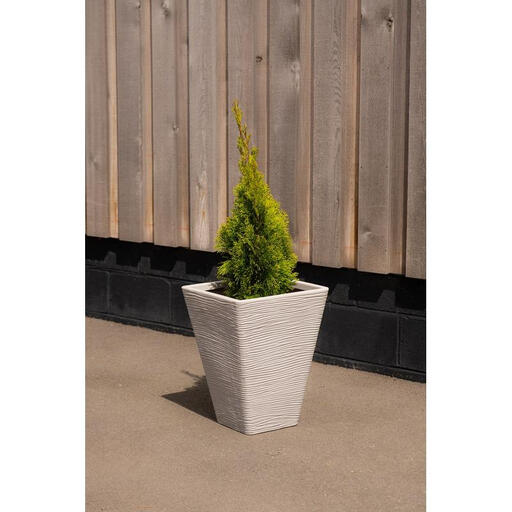
Why This Fits Their Persona: The 52cm height creates a more substantial feature for entrances, patios, conservatories and contemporary garden layouts.
The stated 40cm width and 52cm height make space planning clearer than choosing by appearance alone. Its recycled plastic body is lighter than a comparable stone container.
Weather and UV resistance; neutral stone-effect colour; suitable for indoor and outdoor planting.
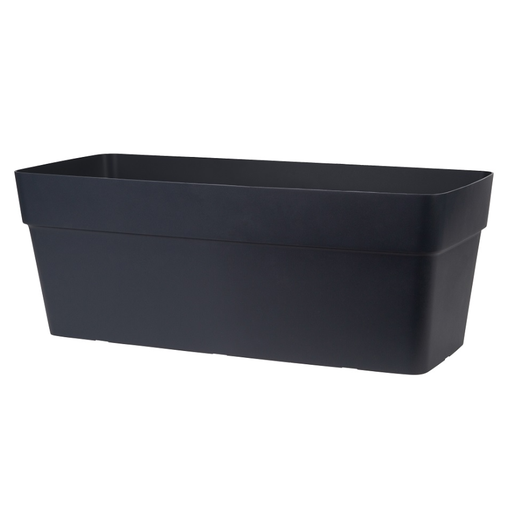
Why This Fits Their Persona: The 60cm-long, 25cm-wide format suits grouped herbs, trailing plants and flower displays along balcony edges, patio walls and pathways.
Its dimensions and listed 45L capacity help buyers assess planting volume, while the recessed base is designed to support drainage.
45L capacity; long rectangular planting space; recycled plastic with weather- and fade-resistant properties.
For a traditional look, the Strata Barrel Planter Round D:34cm x H:25cm Oakwood Effect uses recycled plastic with a textured wood-grain appearance. Its barrel shape works for flowers, herbs and decorative foliage without the treatment associated with real timber. The larger Strata Amalfi Planter Round Small D:35 x H:34cm Pewter provides a deeper, rounded format for patio or entrance planting.
If watering consistency is your main concern, a set of 3 Self-Watering Plant Pots, 16.5cm Diameter, Beige Resin Flower Pots with Bottom Trays includes three pots and matching trays with water reservoirs. They are designed for small to medium plants, herbs and succulents on windowsills, patios or balconies. Check the reservoir regularly and keep the priming system clear of roots and soil.
For indoor decorative use, the Interiors by Premier Indoor Planter Fara White Large is a dolomite planter with a distressed white finish and raised three-legged base. It is specified for indoor use only, making it more suitable for shelves, tables and window sills than exposed outdoor planting.
We have compiled a complete, real-time list of products that fully satisfy these strict selection criteria and UK safety regulations.
Many are designed for outdoor use and may be weather-resistant, UV-resistant or frost-resistant according to the product description. Always check the individual listing, provide effective drainage and avoid allowing water to freeze inside the container.
Plants generally need excess water to escape, but the exact setup depends on the planter. Use drainage holes, an inner pot or a suitable liner as specified. For indoor plant pots, place a saucer underneath to protect furniture and floors.
They do not require electricity, so there is no separate power cost. Their main benefit is a water reservoir that can reduce watering frequency for suitable plants. You still need to monitor the water level and clean the pot when required.