
24/7 Customer Support

Free returns

Same-day & Next-day Delivery

Quality Guaranteed

Unlock Your Welcome Offers: FREE Delivery | Up to 80% OFF | Free 30-day JoyPlus trial
Download the APP
Choosing recycled plastic garden planters is not simply a matter of picking a colour you like. UK gardens, patios and balconies face rain, frost, wind and changing sunlight, so an attractive planter also needs suitable dimensions, reliable drainage and a finish that remains practical outdoors.
The right recycled plastic planter can provide the appearance of timber or stone without the weight and maintenance associated with those materials. However, product descriptions can make similar planters sound identical. Before buying, check the details that affect everyday use.
A shallow container may look suitable for a shrub or small tree but leave too little room for roots. This can restrict planting choices and make watering more frequent. Check the planter’s height and internal planting space, not just its external width.
Barrel planters generally provide useful depth for shrubs, ornamental plants, herbs and seasonal displays. By contrast, some slim trough planters are better suited to flowers, trailing plants, grasses and herbs with shallower or spreading root systems.
Recycled plastic does not require timber treatment and will not rot in the same way as real wood. Nevertheless, outdoor planters still need sensible positioning and occasional cleaning. Standing water, algae and accumulated compost can affect appearance over time.
Look for clearly stated features such as UV resistance, resistance to moisture damage and suitability for year-round outdoor use. These terms describe useful product characteristics, but they do not remove the need for correct planting and drainage.
Lightweight garden planters are easier to move around a patio or balcony, but a light empty container may be more vulnerable to strong winds once positioned in an exposed area. Consider whether the planter will stand beside a door, on a roof terrace, near a railing or in an open garden.
For balconies, confirm that the combined weight of the planter, compost and mature plant is suitable for your space. Product dimensions alone do not indicate the load-bearing capacity of a balcony.
Recycled plastic can offer a practical alternative to wood, concrete and natural stone. It is generally easier to handle and does not need the regular staining or sealing associated with timber. The products featured here use recycled plastic and include oakwood-effect, stone-effect and charcoal finishes.
For a natural look, wood-effect planters can add warmth to cottage-style borders, decking and entranceways. Stone-effect planters offer a neutral appearance that works with colourful flowers, foliage and contemporary planting schemes.
Treat appearance claims realistically. A textured finish can imitate wood grain or carved stone visually, but it will not have exactly the same surface feel as the natural material.
Match the planter to both the plant and available floor area:
Always check the listed width, depth, height and capacity. A 45-litre planter, for example, requires considerably more growing medium than a compact decorative pot.
Good drainage is essential for most outdoor planting. Check whether drainage holes are included or need to be created, and use a saucer or suitable base indoors to protect floors. The Strata Soho trough has a recessed base and a stated 45-litre capacity, but planting setup should still be matched to the needs of the chosen plants.
On patios and decking, raise containers slightly where possible so excess water can escape. On balconies, avoid placing large containers where runoff could affect people or property below.
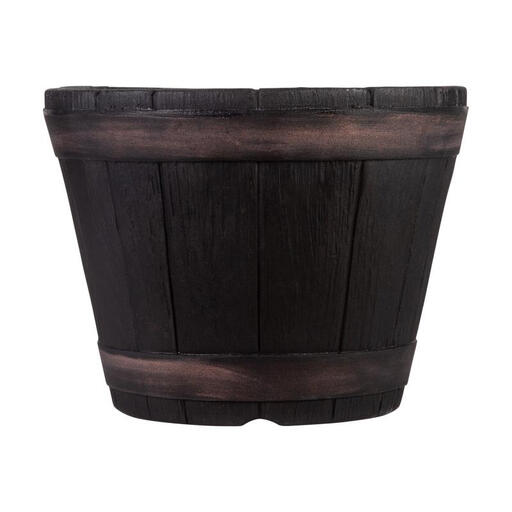
Why This Fits Their Persona: Its compact 34cm diameter suits first-time container gardeners, small patios and entrance areas where a single decorative planter is required.
The recycled plastic construction provides an oakwood appearance without the warping, rotting or regular treatment associated with genuine timber.
Lightweight recycled plastic; round shape suitable for flowers, herbs and decorative planting.
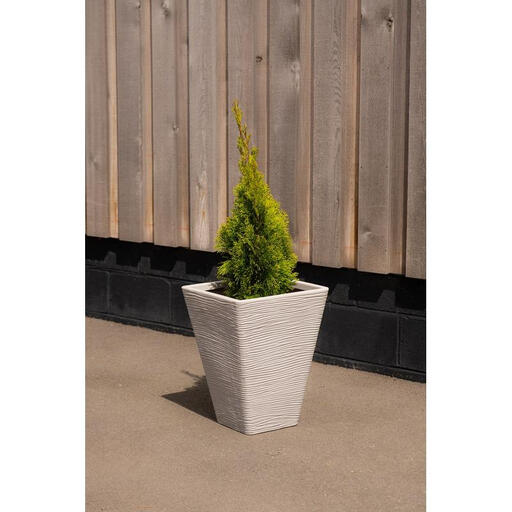
Why This Fits Their Persona: The 52cm height and stone-effect finish suit shoppers creating a more structured patio, entranceway or garden designer-style display.
It delivers a stone-inspired look without the handling difficulty of a heavy natural-stone container, making layout changes more manageable.
Square tapered profile; recycled plastic with stated weather and UV resistance.
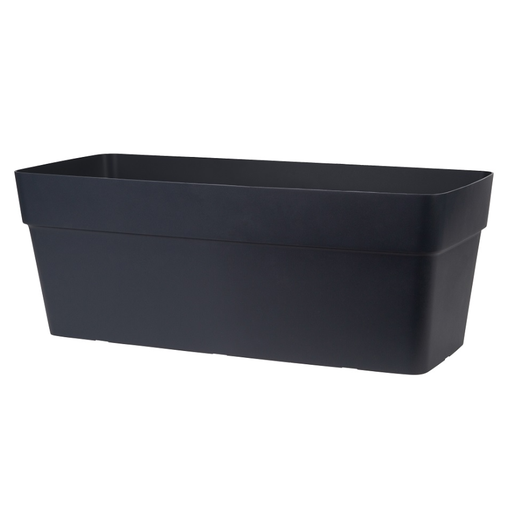
Why This Fits Their Persona: Its 60cm-long planting area and 45L capacity suit grouped flowers, edible herbs and repeated displays along patios, balconies and pathways.
The dimensions and stated capacity make its intended planting volume clearer than choosing a trough based on appearance alone.
45L capacity; charcoal finish and elongated form for modern patio planters or balcony displays.
For a small front step, balcony corner or compact patio, the Strata Amalfi Planter Round Small D:35 x H:34cm Pewter offers an oakwood-effect appearance in a manageable format. Its recycled plastic construction is described as lightweight, weather-resistant and UV-stable.
The Strata Barrel Planter Trough L:60.5 x W:34 x H:25cm Oakwood Effect is suited to narrow planting arrangements, including herbs, trailing flowers and mixed seasonal displays. Its trough shape can fit beneath windows or along a fence where a round container would use space less efficiently.
For a coordinated arrangement, consider combining round, square and trough forms rather than buying several identical containers. A large square planter can provide height, while lower troughs create continuity along a patio edge.
We have compiled a complete, real-time list of products that fully satisfy these strict selection criteria and UK safety regulations.
Many are designed for outdoor use and may include stated weather-resistant or UV-resistant properties. Always check the individual specification, position the planter securely in exposed locations and provide suitable drainage during wet periods.
Most plants require excess water to escape, particularly during rainy UK conditions. Check the product design before filling the container. If drainage is not specified, follow the manufacturer’s instructions rather than assuming holes are present. Use a liner or saucer indoors where appropriate.
They can be useful where moving containers or managing floor space matters, but the total loaded weight still needs consideration. Include the planter, compost, retained water and mature plant when assessing suitability. Keep containers stable and away from edges or areas where falling objects could cause harm.