
24/7 Customer Support

Free returns

Same-day & Next-day Delivery

Quality Guaranteed

Unlock Your Welcome Offers: FREE Delivery | Up to 80% OFF | Free 30-day JoyPlus trial
Download the APP
Choosing recycled plastic garden planters can make it easier to refresh a patio, balcony, entranceway or garden border without the weight and upkeep associated with traditional materials. However, product descriptions often focus on appearance while leaving out details that affect everyday use.
Before buying, check the planter’s dimensions, planting format, drainage arrangements and outdoor suitability. A convincing finish is useful, but it should support practical planting rather than disguise a container that is unstable, difficult to move or unsuitable for the space.
Wood-effect and stone-effect planters can create the visual character of heavier materials, but the finish does not tell you whether the planter will suit your plants or location. A narrow wooden-effect planter may be ideal beneath a window, while a deep barrel planter could be more suitable for a shrub or larger herb arrangement.
Always compare the external dimensions with the available space. Remember to allow room around the planter for watering, pruning and cleaning.
Many outdoor containers are described as weather-resistant, UV-resistant or fade-resistant. These features can be useful for year-round outdoor planting, but exposure varies considerably between a sheltered balcony and an uncovered garden facing strong sunlight and wind.
Look for clear material information, such as recycled plastic, and follow the care instructions. A low-maintenance planter still needs suitable drainage, occasional cleaning and a stable position.
A lightweight outdoor planter is easier to carry when empty, but soil and water add considerable weight. This matters on balconies, raised decking and paved patios. Conversely, a very light empty container may need careful positioning in exposed areas.
Check whether the design includes drainage openings or whether you need to create or manage drainage yourself. Use a suitable liner where recommended, and avoid allowing containers to sit permanently in standing water.
Recycled plastic offers a practical alternative to timber, ceramic and stone. It does not require wood treatment and is not affected by rot in the same way as untreated timber. Several of the planters featured here are described as resistant to cracking, moisture damage, seasonal weathering and UV fading.
These terms should be read as product features rather than guarantees of unlimited lifespan. Positioning, frost exposure, cleaning products and physical impact can all affect long-term appearance.
For environmentally conscious shoppers, check that the product description specifically states recycled content. “Eco-friendly” is a broad marketing phrase; recycled plastic construction is more useful information when comparing products.
The shape should match the plants and available floor area:
Measure both width and height. A taller planter may improve visibility at an entrance, while a lower container can be easier to reach on a balcony or patio.
Lightweight planters are useful when you change displays seasonally or need to move containers towards sunlight. The Strata Soho charcoal trough, for example, measures 60cm long, 25cm wide and 30cm high, with a stated 45-litre capacity. This gives buyers a clearer idea of the planting area than a general claim about generous space.
For larger plants, consider how much compost is required and whether the base will remain stable in wind. A wide, well-positioned container is generally more practical than a tall, narrow design in an exposed location.
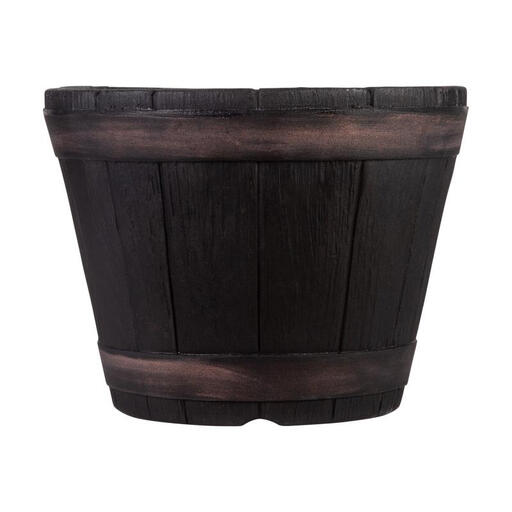
Why This Fits Their Persona: Its 34cm diameter and 25cm height provide a manageable starting point for flowers, herbs or a compact decorative display on a patio, decking area or front entrance.
The stated recycled plastic material and oakwood-effect finish offer timber-style appearance without requiring regular wood treatment.
Round profile; lightweight recycled plastic construction; suitable for flowers, shrubs and decorative container planting.
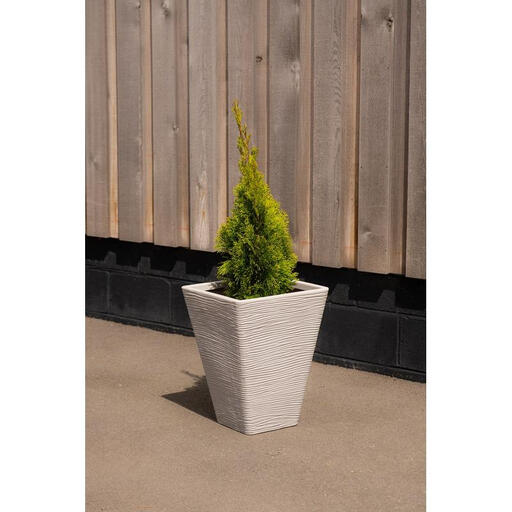
Why This Fits Their Persona: The 52cm height creates a clear architectural feature for a contemporary entrance, patio corner, conservatory or garden path.
Its dimensions and recycled plastic material are stated clearly, helping buyers assess scale and handling rather than relying only on a stone-effect appearance.
40cm square footprint; 52cm height; stone-effect recycled plastic described as weather- and UV-resistant.
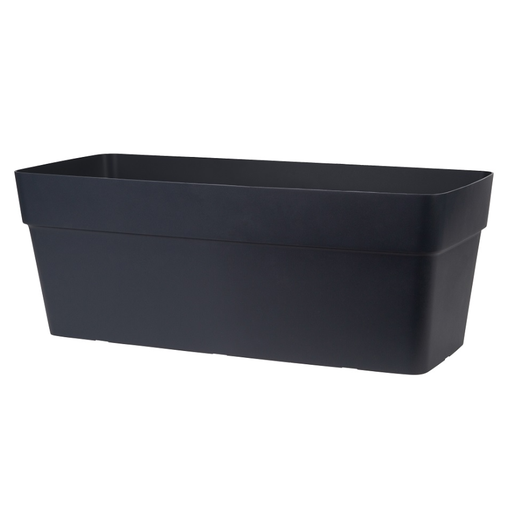
Why This Fits Their Persona: The long 45-litre planting area is suited to repeated displays of herbs, trailing plants, flowers or foliage along a balcony, patio edge or pathway.
The published dimensions and capacity make it easier to plan compost quantities, while the recessed base is described as supporting drainage.
60cm-long format; 45L capacity; charcoal colour; lightweight and described as weather- and fade-resistant.
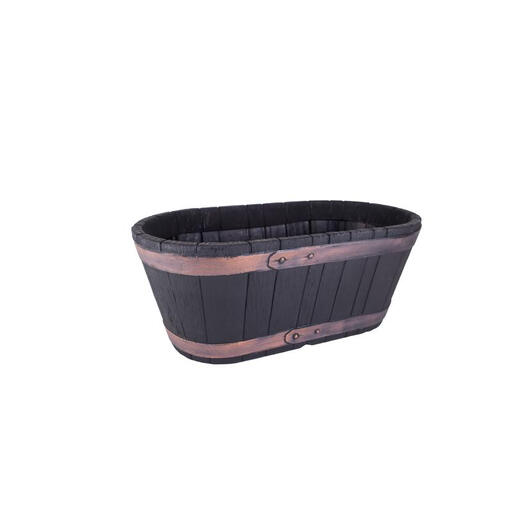
Why This Fits Their Persona: This lower, elongated planter works beneath windows, along fences or on patio walls where a round container may waste available space.
Its stated recycled plastic build avoids the rot and splitting associated with untreated timber, while the elongated shape uses narrow planting areas efficiently.
60.5cm length; oakwood-effect finish; lightweight format for repositioning seasonal arrangements.
Use a compost mix suited to the plant rather than filling every container with ordinary garden soil. Herbs generally need a free-draining growing medium, while shrubs and ornamental grasses may require more root space.
For outdoor use:
If you are choosing planters for herbs, browse the wider herbs pots range to compare formats for windowsills, patios and balconies.
We have compiled a complete, real-time list of products that fully satisfy these strict selection criteria and UK safety regulations.
Many are designed for outdoor use and may be described as weather-resistant or UV-resistant. Check the individual product information, then consider local exposure to frost, wind and direct sunlight. Correct drainage and a stable position are also important for year-round use.
They may need stabilising in exposed gardens, balconies and roof terraces, particularly when they contain tall plants. Add weight only in a way that remains safe for the surface and does not block drainage. A low, wide planter can offer a more suitable footprint than a tall narrow container in windy conditions.
Lifespan depends on the plastic formulation, sunlight exposure, frost, impact and maintenance. Products described as UV-resistant and weather-resistant are intended to handle outdoor conditions, but no container should be treated as immune to fading or damage. Avoid dragging filled planters and clean them with suitable non-abrasive products to preserve the finish.