
24/7 Customer Support

Free returns

Same-day & Next-day Delivery

Quality Guaranteed

Unlock Your Welcome Offers: FREE Delivery | Up to 80% OFF | Free 30-day JoyPlus trial
Download the APP
A washing-up bowl can look like a simple purchase, but the wrong design may become awkward to use within weeks. A poor fit can waste sink space, thin plastic may flex when lifted and a glossy finish can lose its appearance if cleaned with abrasive products.
For UK households looking to reduce their use of virgin plastic, a recycled plastic washing-up bowl offers a practical alternative. However, “eco” wording alone does not tell you how much recycled material the bowl contains or whether it will cope with everyday kitchen tasks. Before buying, check the material percentage, capacity, dimensions and heat guidance.
Some products use sustainability language without clearly stating the recycled content. Check whether the description specifies a percentage. A bowl made from 100% recycled plastic provides clearer information than one described only as environmentally friendly or green.
It is also worth checking where the product is made if UK manufacturing is important to you. The Addis Eco washing-up bowl is described as made in the UK and part of the brand’s Eco Range.
A stated litre capacity does not show how much room the bowl occupies in your sink. A large round bowl may leave unused corners, while a rectangular washing-up bowl can make better use of the available basin area.
The 9.5L washing-up bowl discussed here measures 38cm long x 32cm wide x 14cm high. Compare these measurements with the internal dimensions of your sink, including any raised draining board or tap fittings.
A bowl described as heat-resistant still needs to be used sensibly. The Addis Eco bowl is specified as heat-resistant up to 100°C, which is suitable for hot-water washing and soaking tasks within that limit. Do not assume this means it is suitable for boiling liquids, direct heat or sudden temperature changes unless the manufacturer specifically states so.
Use care when moving a bowl filled with very hot water, particularly when it is near its maximum capacity.
For shoppers prioritising lower reliance on virgin plastic, look for an explicit material statement. The Addis Eco model is described as made from 100% recycled household plastic. This does not mean the product is impact-free, but it does provide a clear basis for comparing recycled-content options.
Also check whether the material is suitable for the task. A washing-up bowl needs to hold water, crockery and cookware without becoming difficult to lift or clean.
A 9.5-litre capacity is suitable for routine washing-up, soaking utensils and handling smaller loads without filling the entire sink. Using a separate bowl can support more controlled filling, which may help reduce water use compared with filling a full sink for a small number of items.
A rectangular washing-up bowl is often convenient in modern UK sinks because it can sit closer to the basin’s straight edges. Nevertheless, measure first rather than relying on product photographs.
Frequent contact with plates, pans and cutlery can leave marks on lower-quality plastic. A scratch-resistant washing-up bowl may retain its appearance for longer, although care still matters. The Addis Eco bowl has a high-gloss finish and is described as scratch-resistant.
For maintenance, rinse the bowl after use and clean it with mild detergent. Avoid abrasive powders, scouring pads and harsh cleaners, which may dull or damage the surface. A smooth finish can make wiping away food residue more straightforward, but it should not be treated as self-cleaning.
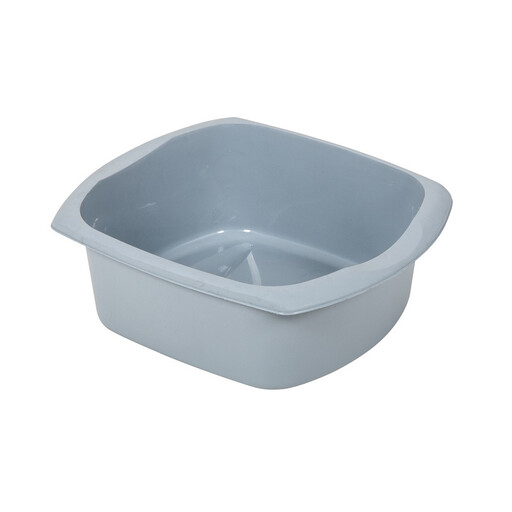
Why This Fits Their Persona: A straightforward everyday bowl for renters, first homes and households wanting a practical kitchen essential with clearly stated recycled content.
The listing states 100% recycled household plastic, a 9.5L capacity and exact dimensions, avoiding vague sustainability wording and guesswork about sink fit.
Made in the UK; light grey colour; scratch-resistant surface; heat resistance specified up to 100°C.
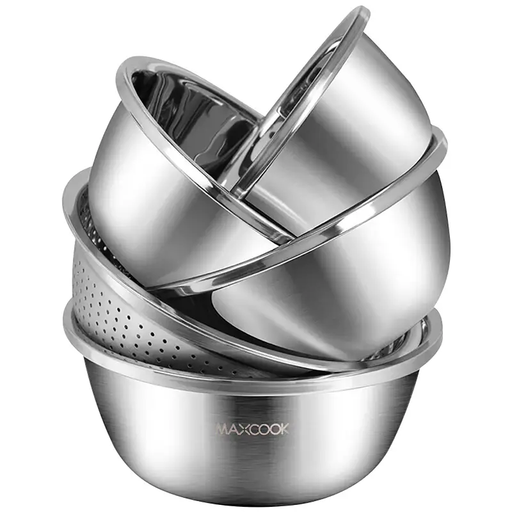
Why This Fits Their Persona: Suitable for shoppers who want one set for rinsing vegetables, draining ingredients and preparing food rather than a dedicated plastic washing-up bowl.
Its stated 304 stainless steel construction avoids unclear plastic specifications, while the included sieves add functions beyond basic bowl use.
Five-piece set; 30cm main bowl; sieves for rinsing and draining; non-slip silicone ring on the draining board.
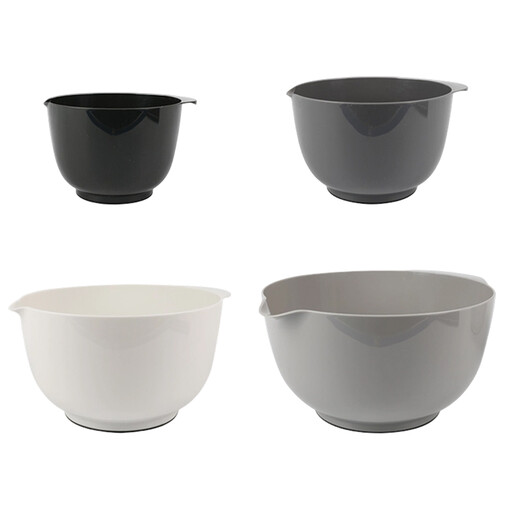
Why This Fits Their Persona: A useful option for busy kitchens needing reusable bowls for baking, meal preparation and salads alongside ordinary washing-up equipment.
A four-piece set gives clearly defined quantities and sizes, helping avoid buying several mismatched bowls for separate kitchen tasks.
Reusable set; stackable design; non-slip bottoms; BPA-free material stated in the product name.
It depends on the product specification. The Addis Eco bowl is listed as heat-resistant up to 100°C, making it suitable for hot-water washing within that stated limit. Use caution with very hot water and never place the bowl on a hob or other direct heat source unless explicitly approved.
A bowl can help control how much water you use because you fill a defined container instead of the entire sink. Actual savings depend on the bowl’s capacity, how full you make it and the number of items being washed. A 9.5-litre model may suit smaller everyday loads without requiring a full basin.
Lifespan depends on material quality, frequency of use, cleaning methods and how the bowl is handled. A scratch-resistant construction may help maintain its surface, while avoiding abrasive cleaners can reduce visible wear. Replace the bowl if it develops cracks, sharp edges or structural weakness.