
24/7 Customer Support

Free returns

Same-day & Next-day Delivery

Quality Guaranteed

Unlock Your Welcome Offers: FREE Delivery | Up to 80% OFF | Free 30-day JoyPlus trial
Download the APP
Choosing recycling bins is less straightforward than picking a colour and capacity. A bin may look suitable online but prove awkward in a narrow kitchen, difficult to clean or too small for a busy office. The right choice depends on how many waste streams you separate, who will use the bin and how often it needs emptying.
This guide covers the main buying pitfalls, the specifications worth checking and a selection of recycling bins for different UK households and workplaces.
A “40L recycling bin” may contain two 20-litre compartments, while another 40L model may be one open container. These designs suit different routines. A dual-compartment recycling bin supports separation at the point of disposal, but each section may fill at a different rate.
Similarly, a product described as a 60L bin may contain two 30L compartments rather than one large 60L bucket. Check the capacity breakdown before ordering.
Pedal and sensor bins need enough clearance for the lid to open. Measure the area around cupboards, worktops and walls, not just the floor footprint. A tall bin can fit neatly under a worktop but become impractical if the lid cannot open fully.
Open-top commercial recycling bins avoid this issue and are convenient in busy shared areas. However, they offer less protection from odours and visible waste than a lidded kitchen recycling bin.
Stainless steel recycling bins can look smart, but polished or dark finishes may show fingerprints, dust and water marks. A satin-coated or wipe-clean surface can be more practical for daily use. Removable inner buckets are also important where food waste or leaking liners are possible.
Before buying, check whether the outer body is steel, stainless steel or plastic and whether the internal buckets can be removed independently.
For a small flat or home office, a 30L recycling bin can provide a compact general-waste solution without taking up excessive floor space. Families may prefer a 40L or 42L sensor bin to reduce emptying frequency.
For sorting, common layouts include:
UK councils do not all collect the same materials. Check your local authority’s recycling rules before labelling compartments, particularly for food packaging, glass and soft plastics.
A pedal recycling bin offers hands-free access without batteries, making it suitable for kitchens and busy households. Soft-close lids can reduce noise and help keep waste covered.
Sensor bins open automatically when a hand approaches the sensor. This can be convenient when carrying rubbish, although batteries and sensor clearance need to be considered. Keep the sensor clean and avoid placing the bin where people constantly pass close to it, as unintended opening may increase battery use.
Open-top bins are quick to use in commercial settings, but they should be positioned clearly with suitable signage. A consistent layout can make it easier for visitors, pupils, staff and customers to use waste separation bins correctly.
A stainless steel recycling bin or steel pedal bin should have a stable base and a finish that can be wiped with a soft cloth and mild detergent. Avoid abrasive cleaners and steel wool, which may mark the surface.
Removable PP plastic inner buckets are useful because they can be lifted out for cleaning and liner replacement. Check the dimensions as well as the capacity: a tall, narrow bucket may hold 30L but require specially sized liners.
Do not overload compartments, place heavy objects on lids or use household bins for hot or hazardous materials. For schools, workplaces and hospitality environments, positioning and supervision are as important as the bin itself.
The following options match different usage profiles rather than claiming one universal solution.
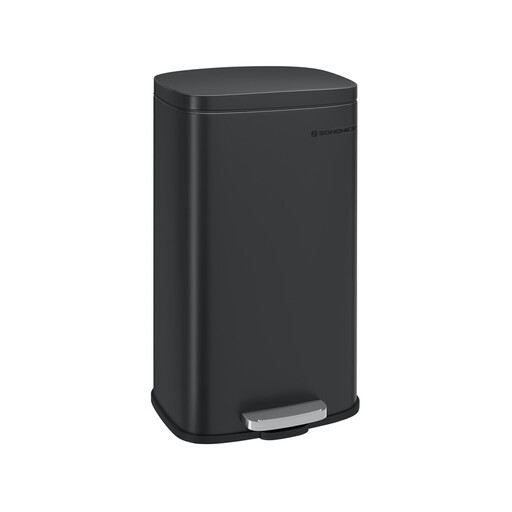
Why This Fits Their Persona: Its 30L capacity and 34.8 x 29.7 x 63.3cm footprint suit smaller UK kitchens, bathrooms, home offices and flats where floor space matters.
The stated 30L capacity is clear, while the removable inner bucket makes liner changes and cleaning more manageable.
Foot-pedal opening, soft-close lid, odour-sealing design and a two-year warranty listed in the product details.
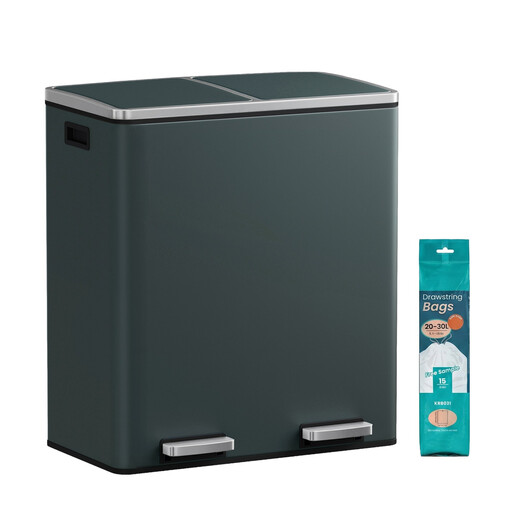
Why This Fits Their Persona: Families and open-plan households can sort two waste streams in one unit, with a modern metal exterior suited to visible kitchen areas.
The listing identifies two separate 30L compartments, rather than leaving buyers to interpret a single total-capacity figure.
Two pedal-operated soft-close lids, removable inner buckets and 15 included waste bags.
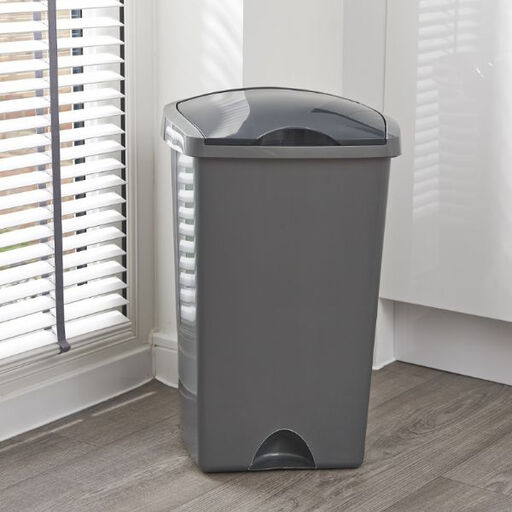
Why This Fits Their Persona: The 40L open format is designed for quick disposal in offices, schools, catering areas, shared buildings and other high-traffic locations.
Its open-top design avoids lid clearance issues and supports a clearly marked recycling station, subject to the site’s waste policy.
40L capacity, polypropylene construction, wipe-clean surface and metallic grey finish.

Why This Fits Their Persona: A 42-litre format and touch-free opening suit busy family kitchens where users frequently have full or messy hands.
The product details state the required power source—four AA batteries, not included—so running requirements are visible before purchase.
Motion-sensor lid, retaining ring for securing liners and corrosion-resistant coated stainless steel construction.
Place bins where waste is created rather than hidden far away. In a kitchen, keep the recycling compartment close to food preparation areas. In an office or school, use consistent labels and colour coding across every floor.
Do not assume a dual-bin layout automatically improves recycling. The labels should match the materials accepted by your local council or commercial waste contractor. Empty each compartment according to its fill level and clean inner buckets regularly to reduce residue and unpleasant smells.
For outdoor or garden use, check the construction and weather suitability separately. Indoor kitchen bins are not automatically appropriate for exposure to rain or frost. Browse the wider range of garden rubbish receptacles if you need a collection point for garden waste.
We have compiled a complete, real-time list of products that fully satisfy these strict selection criteria and UK safety regulations.
They can be useful when you regularly separate two waste streams and have enough room for the bin’s width and lid clearance. Check your local council’s collection rules first, as the two compartments may not match the materials collected in your area.
Lifespan depends on frequency of use, load weight, cleaning and care of the pedal and hinge mechanism. Avoid forcing soft-close lids, overloading buckets and using abrasive products. Steel and stainless steel exteriors should be wiped dry after cleaning.
Sensor bins require batteries, so their ongoing cost depends on battery type, usage frequency and how often the lid activates. A pedal bin has no battery requirement, while a sensor model may offer additional touch-free convenience for busy kitchens.