
24/7 Customer Support

Free returns

Same-day & Next-day Delivery

Quality Guaranteed

Unlock Your Welcome Offers: FREE Delivery | Up to 80% OFF | Free 30-day JoyPlus trial
Download the APP
Creating a Thai red curry at home that rivals your favourite restaurant can feel like a challenge. The secret often lies in one key ingredient: the curry paste. With so many options on the shelf, from small sachets to large tubs and with varying ingredients, choosing the right one can be confusing.
As a Joybuy Product Recommendation Officer, my role is to help you navigate these choices. This guide offers practical advice on what to look for in a red curry paste and presents a few carefully selected options to help you bring the authentic flavours of Thailand into your kitchen.
Finding the perfect paste comes down to understanding your needs, from dietary requirements to how often you plan on cooking Thai food. Here are a few points to consider.
An authentic Thai curry paste is a complex blend of aromatic ingredients. Key components typically include dried red chillies, lemongrass, galangal, garlic, shallots and kaffir lime peel. Many traditional recipes also include shrimp paste to provide a deep, savoury umami flavour. This is a critical point for anyone with dietary restrictions. If you follow a plant-based diet or have a shellfish allergy, it's essential to look for a vegan red curry paste that omits this ingredient.
Red curry pastes are available in various sizes, and the right one for you depends on your cooking habits.
Brands formulate their pastes differently. Some may include flavour enhancers like monosodium glutamate (MSG) to boost the savoury taste. Others, like Mae Ploy red curry paste, pride themselves on being free from MSG, preservatives and artificial colours. Neither approach is inherently better; it simply comes down to personal preference and what you look for in your food products.
Based on factors like ingredient quality, value and suitability for different dietary needs, here are our recommendations.
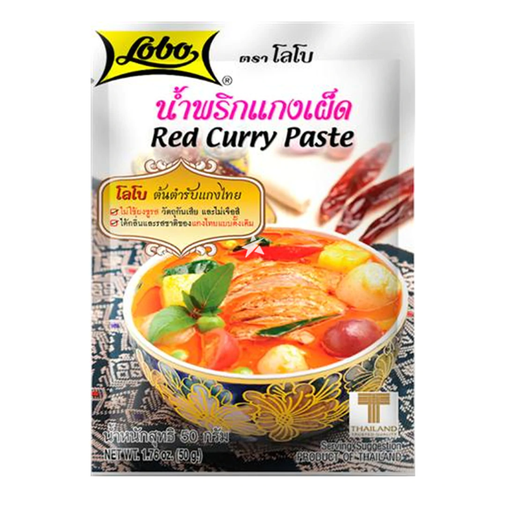
Why It Stands Out: The Lobo Red Curry Paste is all about convenience without compromising on a classic, robust flavour. Its ingredient list includes traditional components like shrimp paste, delivering a spicy and aromatic profile that forms an excellent base for a quick and flavourful curry.
Pros:
Who is it for? This is a great choice for beginners, busy individuals or anyone who wants to cook an authentic-tasting Thai curry without committing to a large container of paste. Please note, this product contains shrimp and MSG.
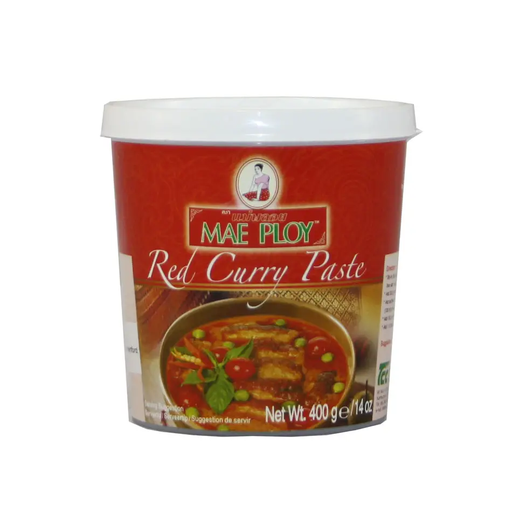
Why It Stands Out: Mae Ploy is a household name for a reason. This Thai red curry paste is celebrated for its authentic taste, crafted without MSG, preservatives or artificial colouring. The large, resealable tub makes it a pantry staple for those who love to cook.
Pros:
Who is it for? This is ideal for food enthusiasts and frequent home cooks who want a reliable, high-quality paste that delivers consistent results. Note that this paste contains shrimp paste and is not suitable for vegans.
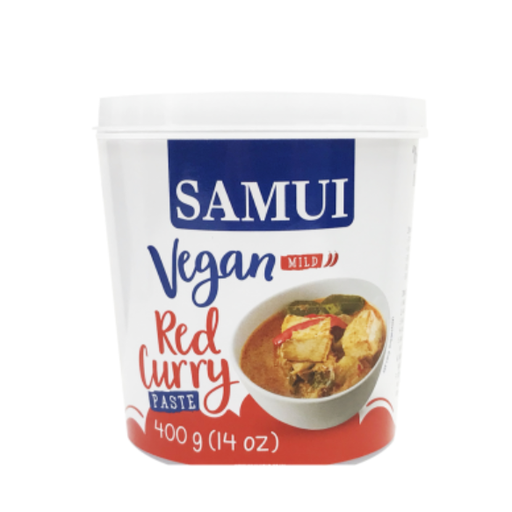
Why It Stands Out: This vegan red curry paste from SAMUI proves that you don't need animal products to create a deeply flavourful and authentic Thai curry. It masterfully balances red chilli, herbs and spices to replicate the traditional taste, making it a fantastic choice for plant-based kitchens.
Pros:
Who is it for? Perfect for vegans, vegetarians and anyone with a shellfish allergy who wants to enjoy the rich, complex flavours of a traditional Thai red curry without compromise.
These selections represent a starting point for different needs, but the world of curry paste is vast. If you're searching for a different heat level, brand or ingredient profile, there are many other choices available.
Explore our full range of Red Curry pastes to find the perfect match for your pantry.
The most common method is to start your red curry recipe by frying a tablespoon or two of the paste in a little oil or the thick cream from the top of a can of coconut milk. Cook for about a minute until it becomes fragrant. Then, stir in the rest of your coconut milk, followed by your choice of protein (like chicken, beef or tofu) and vegetables. Simmer until everything is cooked through.
The primary difference lies in the type of chillies used.
Yes. While an unopened container can be stored in a cool, dry pantry, you must refrigerate the paste after opening. To ensure it stays fresh, seal the container tightly. It's generally best to use it within a few weeks, but always check the packaging for specific storage instructions.