
24/7 Customer Support

Free returns

Same-day & Next-day Delivery

Quality Guaranteed
Download the APP
Categories
Achieving a truly vibrant, rich red in your baking can be a challenge. Many home bakers have experienced the frustration of a red velvet cake turning out more pinkish-brown, or a festive buttercream developing a bitter aftertaste. The key to avoiding these pitfalls lies in choosing the right colouring agent. A high-quality red food colouring gel can make all the difference, providing intense colour without compromising the texture or taste of your creations.
As the Joybuy Product Recommendation Officer, my role is to help you navigate the options. This guide is designed to provide practical advice on what to look for in a red food colouring and to highlight a couple of dependable choices for your next baking project.
Before you add a product to your basket, consider these key factors. They will help you select a colouring that is fit for your specific purpose, whether you're making a show-stopping cake or simply colouring some icing.
The most significant difference between food colourings is their form. Standard liquid colourings are water-based and have a low pigment concentration. While suitable for very light pastel shades, adding enough to achieve a deep red can thin out your batter or icing, affecting the final texture.
A concentrated food gel, on the other hand, has a much thicker, gel-like consistency with a high concentration of colour. This means you only need a tiny amount to achieve a bold, vibrant hue. This makes it the preferred choice for projects requiring intense colour, such as red velvet cakes, fondant and buttercream.
Not all food colourings are created equal when it comes to heat. If your project involves baking, such as a cake or coloured biscuits, you need a bake stable food colouring. These formulations are designed to withstand high oven temperatures without fading or changing colour. Using a non-bake-stable colour in a cake batter can result in a dull, disappointing shade after it comes out of the oven. Always check the product description for this feature if you plan to colour anything that needs baking.
It's always wise to check the ingredients list, especially if you or someone you are baking for has dietary requirements. For those seeking a vegan red food colouring, it is important to look out for carmine (E120), a common red pigment derived from insects. Many modern gel formulas use alternative, plant-based or synthetic colours. Additionally, check for other allergens and certifications like gluten-free if required.
Based on their formulation and suitability for common baking tasks, here are a couple of reliable options to consider.
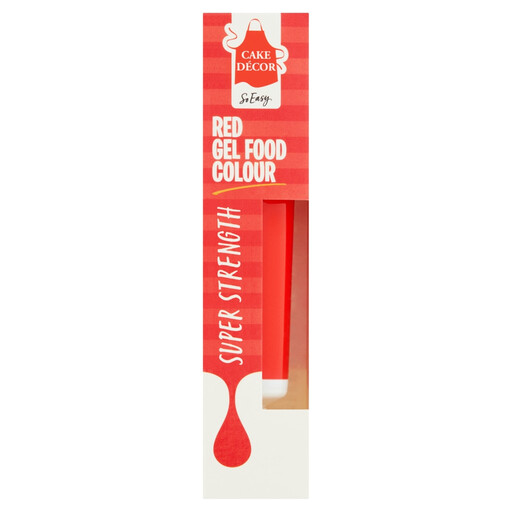
Why It Stands Out
This professional-strength gel is designed for bakers who need reliable, intense colour. Its highly concentrated formula means a very small amount delivers a deep, true red. A key feature is its bake stable property, making it an excellent choice for red food colouring for cakes like red velvet, where colour retention during baking is crucial. The packaging is also practical, with a fine nozzle for precise, drop-by-drop application.
Pros
Who is it for? This is a great all-rounder for both enthusiastic home bakers and semi-professionals. It's particularly well-suited for anyone making baked goods that require a strong red colour or those catering to vegan and gluten-free diets.
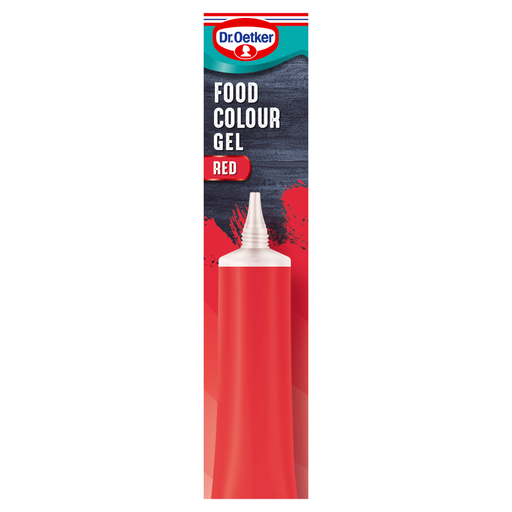
Why It Stands Out
From a widely recognised baking brand, this colour gel is a convenient and accessible option for everyday baking projects. It's particularly effective as a red icing colour, blending easily into buttercream, royal icing and glazes. The gel consistency allows you to build colour from a soft pastel pink to a brighter red without making your mixture runny.
Pros
Who is it for? This is a solid choice for home bakers focusing on decorating tasks like colouring buttercream for cupcakes or creating colourful icings for biscuits. It's a handy staple to have in the cupboard for adding a splash of colour to unbaked elements. Note that its ingredients include Carmine (E120), so it is not suitable for vegetarians or vegans.
If these recommendations don't quite match what you're looking for, or if you're interested in exploring other shades and brands, we have a wider selection available.
️ Explore our full range of food colouring gel
1. How do I get a deep red colour without a bitter taste? The bitter taste often comes from using large quantities of lower-quality liquid colouring. To avoid this, use a concentrated food gel. Start with a very small amount—the tip of a toothpick is a good measure—and mix it in completely before adding more. This gradual approach allows you to achieve a deep red without overloading your recipe with colouring.
2. What is the best red food colouring for cakes? For cakes that are coloured before baking, such as a red velvet cake, a bake stable food colouring gel is the most suitable choice. This ensures the colour remains vibrant and doesn't fade or turn brown in the oven. For colouring frosting or icing after the cake is baked, any high-quality concentrated gel will work well.
3. Can I make red food colouring vegan? You don't need to make it yourself; you can purchase it. Many brands now offer vegan red food colouring. The key is to check the ingredients list and avoid products containing carmine (E120), which is a red dye derived from cochineal insects. Look for products that explicitly state they are suitable for vegans.