
24/7 全天候客户支持

免费退货

当日/次日达

品质保障

开启新人专享福利: 全场免邮 | 低至 2 折 | 免费试用 30 天 JoyPlus 会员
下载 Joybuy
Whether you are marking pupils’ work, annotating documents, labelling storage boxes or working on timber and metal, the right red pens and markers need to match the surface and the job. Choosing by colour alone can lead to smudged notes, dried-out tips or marks that disappear outdoors.
This guide highlights common buying traps, explains the specifications that matter and matches practical options to different UK users.
A red gel pen or red fineliner pen is designed primarily for paper. It may write smoothly in a notebook but fail on plastic, glass, metal or dusty timber. Conversely, a red permanent marker can bleed through thin paper and may be unsuitable for temporary office notes.
Always check whether the ink is intended for:
A stated 0.7 mm tip does not necessarily create a 0.7 mm line. For example, some rollerball pens with a 0.7 mm tip produce an approximate 0.35 mm line. Fine tip red pens are useful for forms and detailed annotation, while chisel tips offer both broad and narrow marks.
Check the actual line width where it is provided, rather than comparing tip measurements alone.
Pens often dry out because caps are left loose or retractable tips are stored extended. Markers may also need horizontal storage, depending on the manufacturer’s instructions. For frequent users, buying bulk red pens or compatible red pen refills can cost less per use than repeatedly replacing individual pens.
Before ordering, check:
Water-based gel ink is commonly suited to writing, proofreading and schoolwork. Red gel pens generally provide a bright line and smooth flow, but drying time varies. Quick-drying formulations can be more convenient for left-handed writers or anyone who frequently rests a hand on the page.
Permanent ink is more appropriate for durable labelling. Red permanent markers may write on paper, plastic, metal and wood, but ink can stain skin, clothing and porous surfaces. Use solvent-based products in a well-ventilated area and follow the product warning.
Paint markers and paint sticks are designed for more demanding surfaces. Oil-based paint marker pens can provide visible marks on materials such as metal and wood, while solid paint sticks offer an alternative where a no-drip format is useful.
For boards and signage, distinguish between red whiteboard markers and wet-erase liquid chalk markers. Dry-erase ink is intended for whiteboards, whereas wet-erase products are designed for non-porous surfaces and may require a damp cloth for removal.
A metal-encased fineliner tip can be useful with rulers and stencils. For work on uneven materials, tip durability and the ability to apply controlled pressure are more important than a very fine line.
A 12-pack suits classrooms, offices and shared workspaces where pens are used frequently. Smaller packs may be more suitable for personal use or occasional DIY jobs. Mixed-colour sets can provide useful contrast, although they may offer fewer red pens per pound than a dedicated red pack.
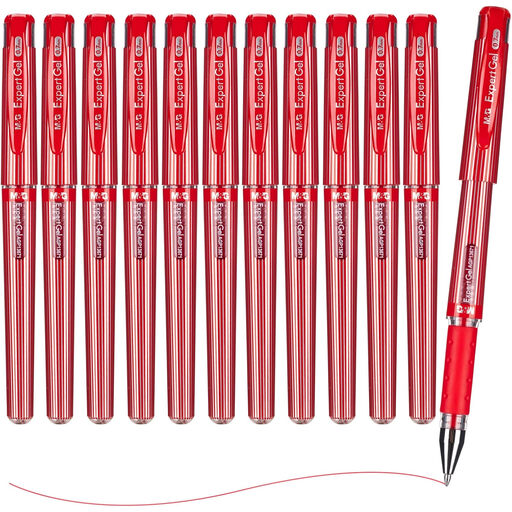
Why This Fits Their Persona: A 12-pack with a 0.7 mm medium point is practical for students, home offices and shared stationery drawers.
The pack quantity reduces the risk of running out during regular office or school use, while the capped design helps protect the ink between sessions.
0.7 mm medium point, anti-slip grip and quick-drying gel ink.
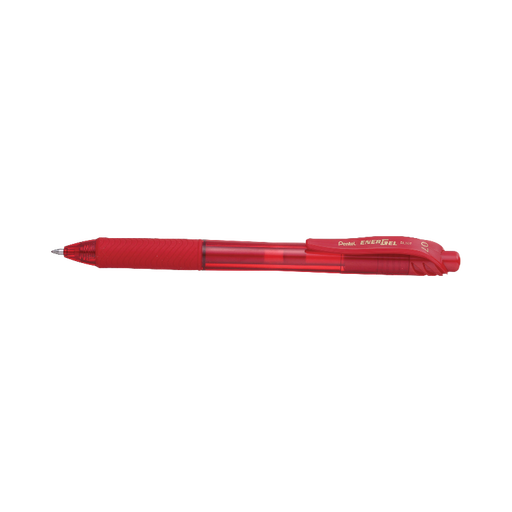
Why This Fits Their Persona: Suitable for office workers and students who want a retractable pen for frequent note-taking without a separate cap.
The transparent barrel lets you view the remaining ink, helping prevent unexpected run-outs, while the retractable tip can be protected after use.
Quick-drying ink, latex-free grip and approximate 0.35 mm line width from a 0.7 mm tip.
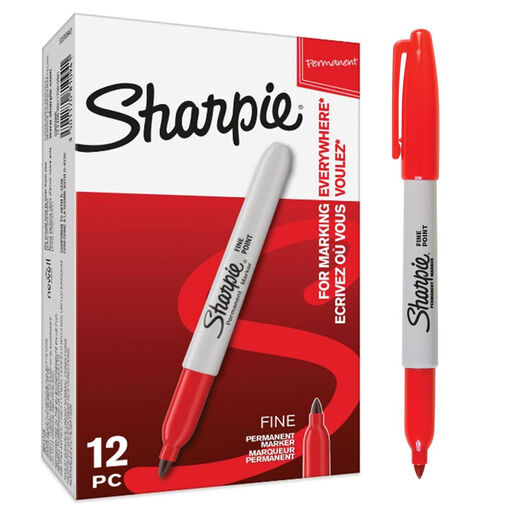
Why This Fits Their Persona: The dedicated 12-pack is suited to classrooms, stockrooms, artists and teams that need repeatable red marking on multiple materials.
It is clearly identified as a fine-tip permanent marker, so buyers can select it for durable marking rather than expecting erasable office ink.
Fine felt tip and stated use on paper, plastic, metal and wood.
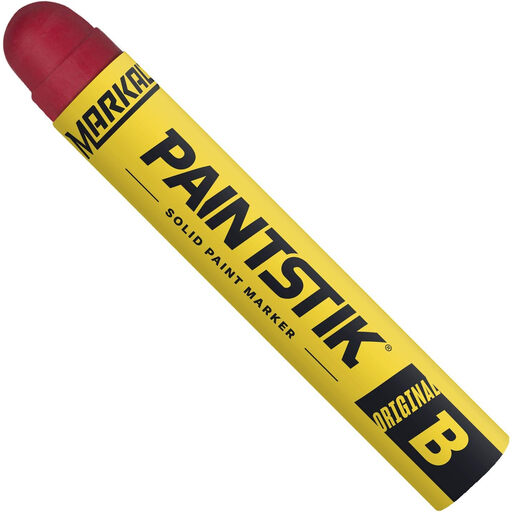
Why This Fits Their Persona: Carpenters, builders, DIY users and industrial workers can apply the solid marker directly to materials such as metal, wood, plastic and concrete.
The solid, no-drip format avoids the mess associated with liquid paint, while the stated surface range helps prevent using an ordinary paper marker for trade work.
Solid paint-stick construction and stated suitability for indoor and outdoor marking.
We have compiled a complete, real-time list of products that fully satisfy these strict selection criteria and UK safety regulations.
They can be useful for annotations, proofreading and internal paperwork, but suitability depends on the document’s requirements. Check whether a permanent, archival or document-proof ink is required before signing or completing important records.
Lifespan depends on ink volume, writing frequency, tip pressure and storage. A capped gel pen used occasionally may last considerably longer than a marker used daily on rough surfaces. Retractable pens should be clicked closed, while capped markers should be sealed promptly after each use.
Not necessarily. Paint marker and permanent ink products can stain skin, clothing and porous materials. Check the product description and test first. For temporary writing on glass or other non-porous surfaces, a suitable wet-erase marker may be more appropriate than a permanent paint marker.