Who is this choice for?

Budget shoppers checking fat

If cereal bars are part of your regular cupboard shop, check the exact pack for a reduced-fat claim rather than relying on a small serving or a “light” name. Pack weight and the number of bars matter when deciding how much to buy.

Portion-conscious snackers

If you mainly want a small bar, compare fat per bar alongside fat per 100g. A small amount per bar answers a different question from whether the product is reduced fat.

Protein-bar shoppers checking fat

If protein, fibre or vegan suitability draws you to a bar, check its total fat and saturates too. The TREK and Nature Valley protein products described below illustrate why those features do not settle a fat-focused choice.

What should you compare?

Start with the claim on the exact flavour, compare nutrition figures on the same basis, then choose a pack size you can use.

Priority What to check Your needs
Reduced-fat claim Look for an explicit claim on the exact pack. Legislation.gov.uk’s Annex to Regulation (EC) No 1924/2006 sets a minimum 30% reduction for a reduced-nutrient claim; “light” branding alone does not show that comparison. I want a product making a reduced-fat claim, not just one with a small serving or a lighter-sounding name.
Nutrition label Compare total fat per 100g across bars, then fat per bar and the bar’s weight. Read traffic-light labels alongside the nutrition table rather than treating colour alone as a reduced-fat claim. I want to know what one bar contains without mistaking a smaller portion for a reduced-fat product. In the Food Standards Agency and Ipsos Northern Ireland’s 2024 survey of 611 people, 49% said they actively use traffic-light labelling when shopping for food; that figure is not specific to cereal bars.
Pack size Check the number of bars, weight per bar and total pack weight. Consider whether you will use the pack within its best-before date. A multipack needs to fit my regular shop and the number of portions my household will actually use.
Protein positioning Check total fat and saturates per 100g before comparing protein per bar. Use figures for the exact flavour and serving size. Protein may matter to me, but I do not want the word “protein” to stand in for checking fat.
Ingredients and allergens Read the current ingredients, allergen declaration and any may-contain statement for the exact variant. Do not transfer one flavour’s details to another. I need a bar whose ingredient and allergen information fits my requirements, regardless of its fat claim.

Common shopping mistakes

  • Treating “light” or a small bar as proof of reduced fat

    A smaller serving can contain less fat per bar without demonstrating a comparative reduction. Legislation.gov.uk’s Annex to Regulation (EC) No 1924/2006 specifies at least a 30% reduction for a reduced-nutrient claim.

    Check the exact pack for a reduced-fat claim, then read total fat per 100g and per bar. Do not decide from the name or calories per bar alone.

  • Choosing a protein bar before reading its fat figures

    TREK lists 19g fat per 100g for Original Oat and 22g per 100g for Cocoa Oat. The Joybuy listing for Nature Valley Protein Peanut & Chocolate states 28.3g per 100g. Protein positioning does not make these products reduced-fat choices.

    If fat is your deciding factor, check total fat, saturates and serving size before considering protein.

  • Judging a multipack by its bar count alone

    Packs with different numbers and weights of bars provide different amounts of food. A larger pack may also leave bars unused if it does not suit your household.

    Compare total pack weight and weight per bar, and consider how many you will use before the best-before date.

  • Assuming one variant’s allergen details apply to another

    Cereal bars can differ in ingredients and may-contain statements by flavour. A gluten-free statement does not replace checking the other allergen information on a pack.

    Read the current label for the exact bar each time, particularly if you change flavours.

Brand ranges to compare

Alpen

Alpen Light includes 19g cereal bars, so its flavours are useful examples of why portion and per-100g figures both matter.

  • Weetabix Cereals lists 0.8g fat per 19g Summer Fruit bar and 1.2g per 19g Chocolate & Fudge bar.
  • Those figures differ by flavour. Check the exact pack for any reduced-fat claim and its current allergen information; Weetabix Cereals says Chocolate & Fudge is not suitable for people with a nut allergy.

Kellogg’s

Nutri-Grain Apple is a soft baked breakfast bar with fruit filling, rather than a product selected here for a reduced-fat claim.

  • Kellogg’s UK lists 3.1g fat per 37g Apple bar and 8.3g per 100g, allowing a portion and per-100g comparison.
  • Check its exact claim and allergen declaration before treating it as a reduced-fat or suitable alternative.

Graze

Graze’s Oat Boost range consists of oat-based flapjacks with a sugar-focused brand position.

  • The range gives shoppers an oat-based option to compare by exact product.
  • A statement about sugar does not establish reduced-fat status. Read the chosen flapjack’s fat figures and pack claim.

Nature Valley

Nature Valley has crunchy cereal-bar multipacks and protein bars; the product type matters when checking fat.

  • Multipacks allow shoppers to compare bar count and pack weight for a regular cupboard shop.
  • Joybuy’s listing for Nature Valley Protein Peanut & Chocolate states 28.3g fat and 7.4g saturates per 100g. Do not use its protein name as evidence of reduced fat.

Eat Natural

Eat Natural UK lists fruit-and-nut, peanut-and-chocolate, vegan and protein products in its range.

  • The range offers different ingredient combinations to assess against your preferences.
  • Check fat, the exact claim and allergens on the chosen bar; a range-wide description cannot establish those details for every variant.

TREK

TREK’s protein oat bars are relevant when protein or vegan suitability matters alongside the fat comparison.

  • TREK describes Original Oat as vegan and lists 10g protein per bar.
  • TREK lists 19g fat per 100g for Original Oat and 22g per 100g for Cocoa Oat. Check the exact variant’s allergens and nutrition panel if fat is your priority.

Joybuy cereal-bar options

These small cereal-bar multipacks give you portion sizes to compare for a regular shop. Check each exact pack for a reduced-fat claim before choosing it for that requirement.
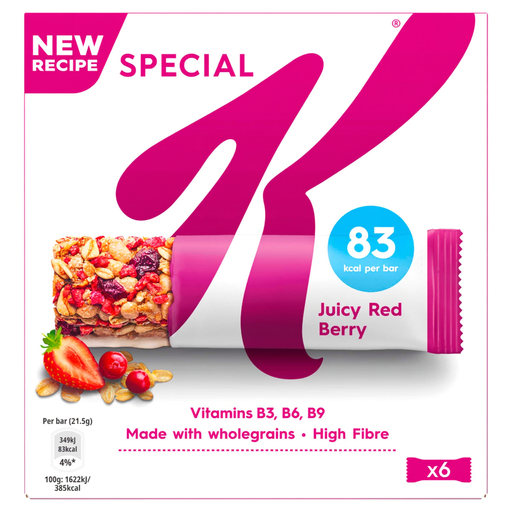
Special K Red Berry Cereal Bar, 6 x 21.5g

Special K Red Berry Cereal Bar, 6 x 21.5g

The six-bar pack provides 21.5g portions for comparing with other snack sizes. Read the Red Berry pack’s fat figures per bar and per 100g, and check its exact claim and allergen declaration.

View on Joybuy
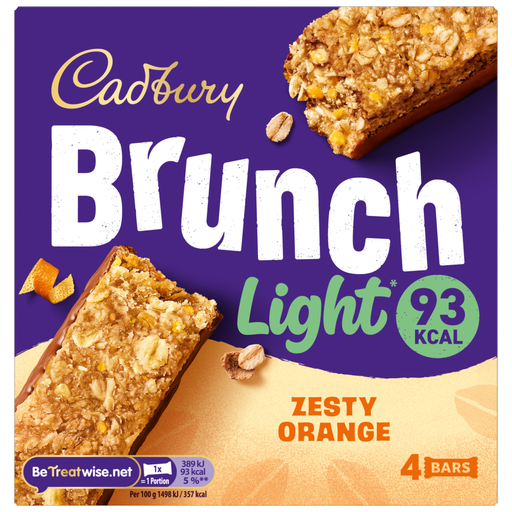
Cadbury Brunch Light Orange Cereal Bar, 4-pack 104g

Cadbury Brunch Light Orange Cereal Bar, 4-pack 104g

This four-bar pack weighs 104g in total. “Light” in the name does not establish a reduced-fat claim, so check the Orange bar’s nutrition panel, exact pack claim and allergen declaration.

View on Joybuy
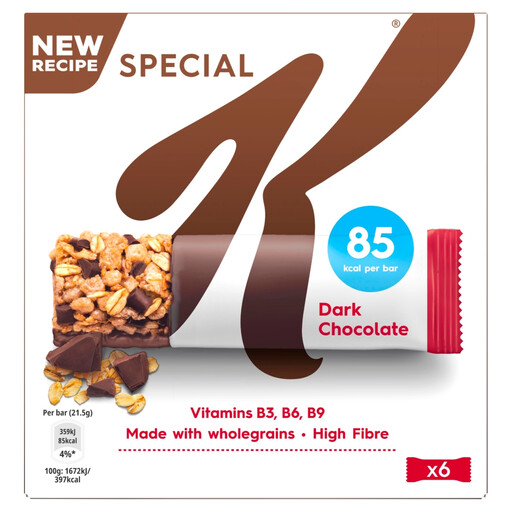
Special K Dark Chocolate Snack, 6 x 21.5g

Special K Dark Chocolate Snack, 6 x 21.5g

Six 21.5g bars make portion size straightforward to compare with the Red Berry pack. Check the Dark Chocolate variant’s own fat figures, reduced-fat claim and allergen declaration rather than assuming the flavours match.

View on Joybuy

Questions about reduced-fat bars

Does “light” mean a cereal bar is reduced fat?

No: the name alone does not establish a comparative reduced-fat claim. Legislation.gov.uk’s Annex to Regulation (EC) No 1924/2006 sets a minimum 30% reduction for a reduced-nutrient claim. Check the exact pack’s claim and compare fat per 100g as well as per bar.

Do Alpen Light flavours have the same amount of fat?

No. Weetabix Cereals lists 0.8g fat per 19g Summer Fruit bar, compared with 1.2g per 19g Chocolate & Fudge bar. Check the flavour you plan to buy; neither the “Light” name nor a small amount per bar alone establishes a reduced-fat claim.

Should I choose a protein bar when reducing fat?

Check its fat figures first. TREK lists 19g fat per 100g for Original Oat and 22g for Cocoa Oat, while Joybuy lists 28.3g per 100g for Nature Valley Protein Peanut & Chocolate. Protein addresses a separate preference and does not demonstrate reduced-fat status.

What matters when choosing a cereal-bar multipack?

Compare the number of bars, weight per bar and total pack weight, then consider how many your household will use before the best-before date. Check nutrition for the exact flavour rather than assuming two packs contain equivalent portions.

Does a gluten-free label cover every allergen concern?

No. The Food Standards Agency defines a gluten-free food as containing no more than 20mg/kg gluten, but that statement does not replace the full ingredient and allergen declaration. Read the current label for the exact cereal bar, including any may-contain statement.