Households buying repeat snacks
If you are stocking up on multipacks, compare fat per 100g as well as per bar. A smaller bar can have less fat per serving without having less fat on the same-weight basis.


For a large family shop, compare cereal bars by total fat per 100g, then check the portion each person will eat. A lower figure or a “light” name does not establish a reduced-fat claim: UK rules published on legislation.gov.uk require at least 30% less fat than a similar product. Check sugars, saturates and the current pack’s allergen statement before choosing a multipack for the household.
If you are stocking up on multipacks, compare fat per 100g as well as per bar. A smaller bar can have less fat per serving without having less fat on the same-weight basis.
If “reduced fat” is a firm buying condition, look for a current claim backed by a comparison with a similar product. A relatively lower fat figure alone does not answer that question.
Check the exact flavour’s current ingredients and allergen statement before choosing one multipack for everyone. Pack formats and dietary labels do not replace that check.
Start with the distinction between a reduced-fat claim and a lower listed fat figure. Then compare the full nutrition panel and the number of portions the pack provides.
| Priority | What to check | Your needs |
|---|---|---|
| Reduced-fat claim | Check for a current claim and its comparison with a similar product. UK rules published on legislation.gov.uk require at least a 30% reduction in fat; a “light” name is not the comparison itself. | If reduced fat is essential to my shop, I want to confirm what similar product the claim is measured against. |
| Total fat | Compare grams of fat per 100g, then grams in the portion you expect to serve. The NHS guide calls 3g fat or less per 100g low fat and more than 17.5g per 100g high fat. | I’m comparing bars of different sizes and do not want a small serving to obscure the per-100g figure. |
| Whole nutrition panel | Read total fat, saturates, sugars and salt on the same per-100g basis. Check fibre separately rather than treating a fibre claim as a statement about fat or sugars. | A bar may fit my total-fat comparison, but I still want to see its sugars and saturates before buying several packs. |
| Pack and allergens | Check portions per pack, bars per stated serving and the current ingredients and allergen statement for the exact flavour. Nature Valley’s Oats & Honey Family Pack, for example, states 20 portions with a two-bar serving. | Will this pack cover the snack occasions I have in mind, and can everyone who might eat it have this flavour? |
A small serving or a product name does not show the fat reduction against a similar bar required for a UK reduced-fat claim.
When the claim matters, check the current pack or manufacturer information for the explicit claim and its comparison basis.
Portions differ: Weetabix Cereals lists Alpen Light Summer Fruit as a 19g bar, while Kellogg’s lists a 27g serving for Special K Red Berry. Per-bar figures alone are not a like-for-like comparison.
Compare fat per 100g first, then calculate what the portion actually eaten contains. Check whether a stated serving includes two bars.
Lower listed total fat does not tell you the bar’s sugars, saturates or allergen suitability. In its 2025 review of 458 snack bars, Action on Salt and Sugar reported that 55% of the sampled products were high in saturated fat and 37% were high in sugars; these are product-sample findings, not measures of family preferences.
For each flavour on your shortlist, compare the full per-100g panel and read its current allergen statement.
These figures describe the named products, not every bar from each brand. They help with per-100g comparisons but do not establish that any named bar carries a qualifying reduced-fat claim.
Weetabix Cereals lists Alpen Light Summer Fruit as a 19g bar with 4.3g total fat per 100g.
The Waitrose & Partners listing for Soft Apple Fruit & Nut gives 4.9g fat and 55g sugars per 100g.
Kellogg’s lists 6.3g fat, 2.2g saturates and 28g sugars per 100g for its Special K Red Berry Bar.
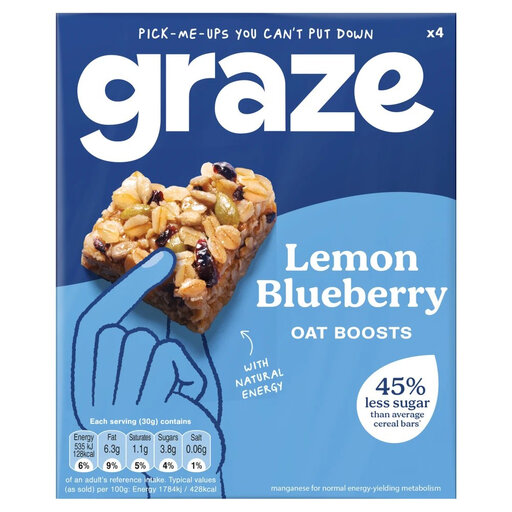
Graze discusses sugar and saturated-fat changes in its Oat Boost flapjacks.
Nature Valley lists 17.9g fat per 100g for Crunchy Apple & Cinnamon and 18.1g per 100g for its Oats & Honey Family Pack.
The Myprotein UK listing for Trek Original Oat Protein Flapjack states 20.4g protein and 19.6g fat per 100g.
These cereal-bar multipacks offer different flavours and pack sizes to consider for a family shop. Their names and pack formats do not establish a reduced-fat claim; compare each current nutrition panel before choosing.
 No image available
For a family shop, this four-pack gives you a stated pack size to compare with the number of snacks you need. Check its current fat per 100g and allergen statement; “Light” in the name does not establish a reduced-fat comparison.
 No image available
The six-bar format may suit a shop planned around individual snacks. Compare total fat, sugars and saturates per 100g on this flavour’s current label rather than using figures from a different Special K bar.
 No image available
This four-pack provides 30g bars for comparing with the household’s usual portions. Check this flavour’s total fat per 100g: Graze’s statement about saturated-fat changes across Oat Boost flapjacks does not establish a reduced-total-fat claim for it.
 No image available
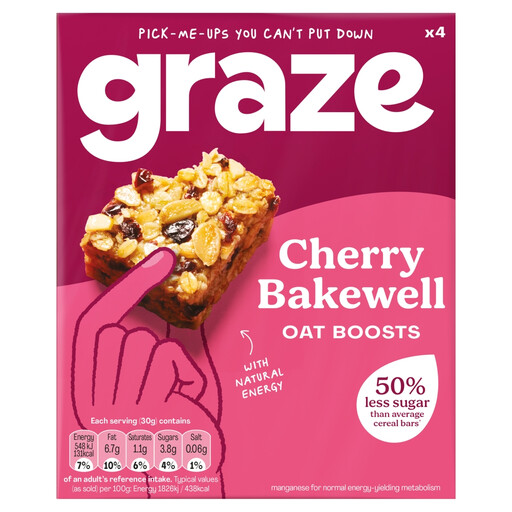
The four 30g bars offer another flavour in the same stated pack format as Lemon Blueberry. Compare their current panels flavour by flavour, including total fat, sugars and allergens, rather than assuming the formulations match.
A reduced-fat claim requires at least 30% less fat than a similar product under the UK rule published on legislation.gov.uk. Check the current product information for the claim and its comparison basis; a small portion or “light” name does not establish that basis.
No, not under the NHS guide of 3g fat or less per 100g. Weetabix Cereals lists Alpen Light Summer Fruit at 4.3g per 100g, while the Waitrose & Partners listing gives 4.9g for Eat Natural Soft Apple and Kellogg’s gives 6.3g for Special K Red Berry. These figures describe those specific products.
Compare nutrition per 100g first, then check the amount each person will actually eat. Read the stated serving size and portions per pack: Nature Valley’s Oats & Honey Family Pack, for instance, defines a serving as two bars.
Yes. Nature Valley lists 17.9g fat per 100g for its Crunchy Apple & Cinnamon bar, and the Myprotein UK listing gives 19.6g per 100g for Trek Original Oat Protein Flapjack. Both exceed the NHS high-fat guide of more than 17.5g per 100g; those figures do not describe every oat or protein bar.
Read the ingredients and allergen statement on the current pack for the exact flavour, including any “may contain” wording relevant to your household. Also check the number of portions and bars per serving rather than assuming one bar always equals one stated portion.