For a cereal bar to eat while watching the football, compare the fat listed per 100g and the amount in the portion you expect to eat; a smaller bar or a ‘Light’ name does not, by itself, establish that the food is low fat. Morrisons describes Skinny Crunch Light as containing at least 20% less fat than Skinny Crunch, but Tesco lists 4.2g fat per 100g for its Salted Caramel bar, above the 3g-per-100g condition for a low-fat claim on solid foods set out by legislation.gov.uk.
Who is this choice for?
Football viewers choosing a small sweet snack
An individually portioned bar makes it easier to check the nutrition for the amount you plan to eat during a match. Compare portions as well as nutrition per 100g, particularly when packs contain bars of different sizes.
Shoppers checking fat claims
If ‘less fat’ or ‘low fat’ matters to your choice, read the comparison behind the wording and the total fat per 100g. They answer different questions about the product.
People checking ingredients for dietary suitability
Read the current pack’s ingredient list, allergen information and precautionary statements before buying or sharing bars. Recipes and ingredients differ between products.
What should you compare?
Start with the claim and fat per 100g, then check the serving size and the rest of the nutrition panel for the bar you would actually eat.
| Priority | What to check | Your needs |
|---|
| Fat claim |
Identify what a ‘less fat’ claim compares the bar with. Check total fat per 100g separately: legislation.gov.uk sets out a limit of 3g per 100g for a low-fat claim on solid foods. |
I want to know whether the bar is lower in fat than a named comparator or meets the separate low-fat condition. |
| Portion size |
Compare fat per 100g, then check fat and energy for the portion. Tesco lists Skinny Crunch Light Salted Caramel at 0.8g fat per 19g bar; Nature Valley lists 7.6g per two-bar 42g serving of Crunchy Variety. |
For a match snack, the number of bars I expect to eat matters as much as the figures for one stated serving. |
| Other nutrition |
Read sugars and fibre alongside fat, using the same per-100g basis when comparing products. Tesco lists 32g sugars per 100g for Kellogg's Rice Krispies Squares Marshmallow. |
I do not want a decision based on fat alone; the sugars and fibre listed for the bar also matter to my comparison. |
| Ingredients |
Read the current ingredient list, highlighted allergens and ‘may contain’ statements. Check any animal-derived ingredients if they affect your choice. |
If I am buying for others during the match, I need to check each product’s current pack rather than assume the bars have the same ingredients. |
What is easy to overlook?
-
Taking ‘less fat’ to mean ‘low fat’
Morrisons describes Skinny Crunch Light as at least 20% lower in fat than Skinny Crunch. Tesco lists 4.2g fat per 100g for the Salted Caramel bar, above the 3g-per-100g low-fat condition for solid foods set out by legislation.gov.uk.
If meeting that condition is important, check fat per 100g; if a comparative reduction is enough, check which product the claim uses as its comparator.
-
Using wholegrain wording as a shortcut for fat content
Wholegrain oats do not establish that a bar is low fat. Nature Valley lists 18.1g fat per 100g for its Crunchy Variety pack.
Check the nutrition panel rather than using one front-of-pack feature to stand in for the figures you care about.
-
Comparing unlike portions
A 19g Skinny Crunch Light Salted Caramel bar and Nature Valley’s two-bar 42g serving represent different amounts of food. Their per-serving figures alone do not compare the products on the same weight basis.
Use per-100g figures to compare products, then check the figures for the portion you expect to eat.
-
Relying on an older listing
Alpen identifies Light Bars Chocolate & Orange as a product it no longer makes. An older listing is not a sound basis for choosing a current snack or checking its ingredients.
Check the current retailer listing before buying and read the pack’s nutrition and allergen information before eating or sharing it.
Brand and product-line references
These examples describe particular bars and lines, not every cereal bar made by each brand.
Skinny Bars
Skinny Crunch Light Salted Caramel has a comparative fat claim: Morrisons describes the Light bars as at least 20% lower in fat than Skinny Crunch.
- Tesco lists 4.2g fat per 100g and 0.8g per 19g Salted Caramel bar.
- That per-100g figure exceeds the 3g low-fat condition for solid foods set out by legislation.gov.uk.
Nature Valley
Crunchy Variety is an oat-based, two-bar serving option rather than a choice defined by a reduced-fat claim.
- Nature Valley gives nutrition for a stated serving of two bars weighing 42g.
- The pack lists 18.1g fat per 100g and 7.6g per two-bar serving.
Kellogg's
Rice Krispies Squares Marshmallow offers a cereal-square format; its nutrition should be assessed independently of lighter-labelled bars.
- Tesco lists the product as individual 28g bars.
- Tesco lists 12g fat and 32g sugars per 100g for this product.
Alpen
Alpen Light Bars Chocolate & Orange should not be assumed to be a current option: Alpen identifies the line among products it no longer makes.
- Check the current name and nutrition of any Alpen alternative rather than relying on figures from an older Light Bars listing.
Cereal bars on Joybuy
These individually portioned cereal bars offer options for a football-watching snack. Check each current pack’s fat per 100g and per bar if reduced fat is your priority; a product name alone does not establish a low-fat claim.
 No image available
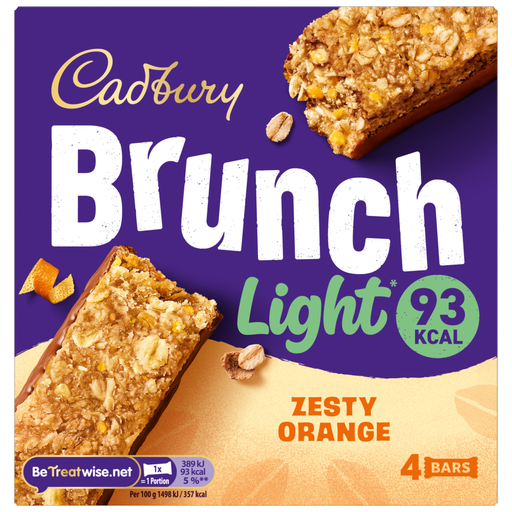
Cadbury Brunch Light Orange, 4 × 26g
The four-pack format lets you take one bar for the match. Check the current nutrition panel for fat per 100g and per bar; ‘Light’ in the name does not establish that it meets the low-fat condition.
View on Joybuy
 No image available
Special K Red Berry, 6 × 21.5g
The six individually sized bars are an option when you want to choose how many to set aside for the match. Compare the pack’s fat and sugars per 100g, then check the figures for one 21.5g bar.
View on Joybuy
 No image available
Special K Dark Chocolate Snack, 6 × 21.5g
Consider this chocolate-flavoured bar if that is the snack you want during the match, while checking its fat and sugars against other bars on the same per-100g basis. Read the current pack for ingredients and allergens before sharing.
View on Joybuy
Common questions
Does ‘reduced fat’ mean a cereal bar is low fat?
No: a comparative claim and a low-fat claim have different meanings. Morrisons says Skinny Crunch Light has at least 20% less fat than Skinny Crunch, while Tesco lists 4.2g fat per 100g for the Salted Caramel bar. That exceeds the 3g-per-100g condition for a low-fat claim on solid foods set out by legislation.gov.uk.
Should I compare cereal bars per bar or per 100g?
Use both: per 100g puts products on a common weight basis, while per-bar figures describe the stated portion. Tesco lists Skinny Crunch Light Salted Caramel at 0.8g fat per 19g bar; Nature Valley lists 7.6g for its two-bar 42g Crunchy Variety serving. Check how many bars you expect to eat.
Does a wholegrain-oat bar meet a low-fat requirement?
Wholegrain wording cannot answer that question; check total fat per 100g. Nature Valley’s Crunchy Variety pack lists 18.1g fat per 100g, so its oat-based format is not a substitute for checking the fat figure.
What should I check before sharing cereal bars?
Read each current pack’s ingredients, highlighted allergens and precautionary statements before sharing. Do not assume that different cereal bars—or an older listing and a current pack—have identical ingredients.
Can I rely on an older Alpen Light Bars listing?
No. Alpen identifies Light Bars Chocolate & Orange among products it no longer makes. For another Alpen bar, check its current product name and nutrition rather than carrying over details from the older line.


