Hosts with a reduced-fat brief
If “reduced fat” is a requirement, check the claim for the finished bar. A modest-looking fat value or an ingredient described as fat-reduced does not establish that claim.


If the street-party brief specifically calls for a reduced-fat cereal bar, check for a substantiated claim on the exact product rather than relying on a name such as “Light”. Business Companion’s February 2025 guidance says a “reduced” nutrient claim requires at least 30% less of that nutrient than in a similar product. If you are simply comparing bars, read their fat and saturates values on the same basis, then check portion size, ingredients and allergens before serving.
If “reduced fat” is a requirement, check the claim for the finished bar. A modest-looking fat value or an ingredient described as fat-reduced does not establish that claim.
If the aim is to compare the bars under consideration rather than require a particular claim, read total fat and saturates per 100g, then consider how much is in each bar.
Keep ingredient and allergen information accessible for each product. Relevant bar ranges include products containing cereals with gluten, milk, nuts, peanuts or soya; check the exact wrappers before putting them out.
Decide whether the brief requires a reduced-fat claim or a comparison of labelled values, then check whether each bar can be served with its ingredient information intact.
| Priority | What to check | Your needs |
|---|---|---|
| Reduced-fat claim | Look for a claim about the finished bar and its comparison with a similar product. Business Companion’s February 2025 guidance specifies at least a 30% reduction in the named nutrient. | The party brief says “reduced fat”, so I need more than “Light” in a product name or a fat-reduced ingredient. |
| Labelled fat values | Compare total fat and saturates per 100g across the bars you are considering; then read the values per bar and its serving size. A smaller number alone does not establish a reduced-fat claim. | I am choosing between several bars and want to compare their labels on the same basis. |
| Allergen information | Read the ingredients and allergen statement on each exact pack. Check for cereals containing gluten, milk, nuts, peanuts and soya where relevant. | Guests need to be able to identify a bar they can eat without guessing from its flavour or brand. |
| Serving format | Check the number and size of bars in each pack and whether individual portions retain their original wrappers. | For a self-serve table, I want portions that are straightforward to hand out while keeping product information with each bar. |
“Reduced fat” compares a product with a similar food; “low fat” is a different regulated claim. One does not automatically establish the other.
If the brief specifies reduced fat, check that claim on the finished product. Otherwise, compare the nutrition declarations without assigning a claim to a bar yourself.
Those descriptions do not tell you how much fat a bar contains. For example, a retailer’s listing for a TREK Protein Flapjack gives 21g fat per 100g; that figure applies to the listed product, not every TREK bar.
Read total fat and saturates on the exact pack, using the same per-100g basis when comparing products.
Once wrappers are removed, guests may no longer be able to connect a bar with its ingredients and allergen information.
Keep bars in their original wrappers and make it clear which information belongs to each product.
Alpen’s current FAQ identifies several former bar lines that are no longer made. A familiar name is therefore not a substitute for checking the product being served.
Confirm the ingredients, allergen statement and nutrition declaration on the current pack.
These examples show formats and ingredients worth checking; a brand name does not establish a reduced-fat claim for a particular bar.
Nature Valley UK lists crunchy, protein and other oat-bar formats.
Kellogg's UK lists Special K cereal bars and soft-baked Nutri-Grain fruit bars.
UK retailer listings include Graze Lemon Blueberry Oat Boosts as a four-pack of 30g oat flapjacks.
UK retailer listings include soft fruit-and-nut bars and individually wrapped Soft Peanut & Fruit bars.
TREK lists Cocoa Oat and Salted Caramel protein flapjacks in its UK range.
Alpen’s current UK product pages focus on muesli rather than the former bar lines named in its FAQ.
These cereal-bar multipacks offer different flavours, textures and portion counts for a street party. Compare the exact pack labels if you need a reduced-fat claim, a particular fat value or information for guests with allergies.
 No image available
The four-pack gives you a stated portion count for party planning. “Light” is part of this product’s name; check the finished bar’s pack for the precise claim, nutrition values and allergens before treating it as reduced fat.
 No image available
The six-bar pack provides a stated serving count for a party table. Kellogg's describes this variant as a rice, wheat and barley cereal bar with cranberry pieces and a yoghurt-flavour topping; read the exact pack for fat values and allergens.
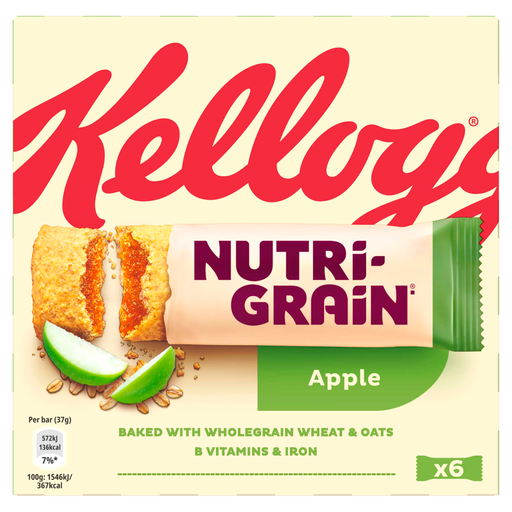 No image available
This six-pack offers a soft-baked apple-filled alternative to crunchy cereal bars. Kellogg's lists wheat, oats and barley in its description; check the pack’s full allergen statement and nutrition declaration before serving.
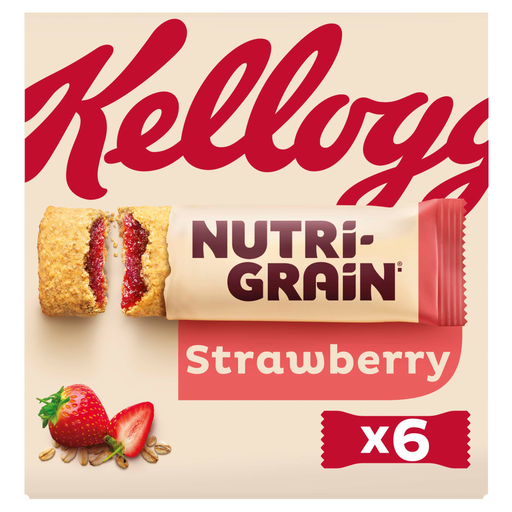 No image available
The six-pack is another portion-count option if guests prefer strawberry to apple. Compare its per-100g and per-bar nutrition values with the other packs, and check the wrapper for ingredients and allergens.
 No image available
This six-bar pack adds a dark-chocolate-flavoured option to the party selection. Flavour does not establish fat content or allergen suitability, so compare its nutrition declaration and read the exact pack before serving.
No. “Reduced fat” is a comparison with a similar product: Business Companion’s February 2025 guidance specifies at least 30% less fat. “Low fat” is a separate regulated claim, so check which wording applies to the finished bar rather than treating the two as interchangeable.
No. That wording describes an ingredient, not the fat content of the finished bar. Check the claim and nutrition declaration for the complete product.
Keep them in their original wrappers where practical, so guests can connect each bar with its ingredients and allergen information. This matters when offering different products that may contain cereals with gluten, milk, nuts, peanuts or soya.
Yes. GOV.UK and Food Standards Agency guidance says food supplied, sold or provided at community events such as street parties must be safe to eat. Food Standards Scotland also provides guidance for community-event organisers; keep the exact products identifiable so guests can check their ingredients.
No. “No added sugar” does not state how much fat a product contains. Read its fat and saturates values per 100g and per bar before comparing it with another option.