Tea-break snackers comparing fat
If total fat is your main concern, compare bars per 100g before checking what one bar contributes. “Reduced fat” describes a comparison; it does not by itself give you the bar's fat value.


For an afternoon tea break, compare total fat and saturated fat per 100g rather than choosing by a “reduced fat” claim alone. In the manufacturer examples examined here, Kellogg's Special K Red Berry Bar declares 6.3g total fat per 100g, against 18.4g for Nature Valley Crunchy Cocoa & Hazelnut; neither figure tells you how much is in the portion you plan to eat. If oats, fibre or protein matter more to you, check those alongside sugars, allergens and the exact bar's fat value.
If total fat is your main concern, compare bars per 100g before checking what one bar contributes. “Reduced fat” describes a comparison; it does not by itself give you the bar's fat value.
An oat-based bar may suit a preference for crunch or fibre, but those features do not establish that it is lower in total fat. Check both parts of the nutrition panel for the flavour you want.
Check the exact flavour's ingredients and allergen declaration. A brand's vegan or gluten-free range does not make every bar in that range suitable for the same diet.
Start with the per-100g panel to compare different-sized bars, then check the portion you would actually eat at your tea break.
| Priority | What to check | Your needs |
|---|---|---|
| Total and saturated fat | Compare both figures per 100g, then per bar. The NHS guide calls 3g total fat or less per 100g low fat and more than 17.5g high fat. | I want to reduce total fat, so I'll use the nutrition values rather than assume a “reduced fat” claim means low fat. |
| Sugars and portion | Read sugars and energy alongside fat; check whether the labelled serving matches the number of bars you will eat. | For a tea break, I want to know what my actual portion contains, not just what the front of the pack highlights. |
| Oats, fibre or protein | Check the stated fibre or protein value and the total fat for the exact recipe. Do not treat an oat or protein description as a fat measurement. | Crunch, oats or protein may be my reason for choosing a bar, even if it does not meet my lower-fat aim. |
| Dietary suitability | Read the current ingredients and allergen statement for the exact flavour, including any “may contain” wording. | If I need to avoid an ingredient, a suitable-sounding range name is not enough to choose my bar. |
A reduction is relative to another product. The NHS low-fat guide, by contrast, uses an absolute value of 3g total fat or less per 100g.
Use the claim as a reason to inspect the comparison, then decide from the bar's own per-100g and per-bar values.
Different serving sizes can make two packs difficult to compare directly, and a stated serving may differ from what you eat.
Compare the per-100g panels first; then check the values for your planned portion.
Nature Valley UK declares 18.4g total fat per 100g for its Crunchy Cocoa & Hazelnut bar, above the NHS high-fat guide of more than 17.5g per 100g. Its oat-bar format does not change that comparison.
Choose for oats or fibre if those are your priorities, but check total fat separately.
Ingredients and allergen statements apply to the particular recipe and pack, not to every bar from a brand.
Read the current declaration for the flavour you are buying, particularly if you must avoid an ingredient.
These brands illustrate different cereal-bar choices; compare the exact product rather than applying one bar's nutrition values to a whole range.
The Special K Red Berry Bar provides a manufacturer nutrition panel for a specific cereal-bar recipe.
Its Crunchy Cocoa & Hazelnut bar offers an oat-based option to compare with lower-total-fat cereal bars.
Oat Boost flapjacks are an oat-based alternative when comparing snack formats.
The UK range includes bars described as vegan, gluten-free or high in fibre.
Its protein flapjacks are an option to examine when plant-based protein is a priority.
For an Alpen product, assess the particular recipe rather than assuming that the brand name indicates its dietary suitability.
These cereal bars and oat snacks offer different routes for an afternoon tea break. Compare each exact pack's fat, sugars, portion and allergen information before deciding whether it fits a lower-fat aim.
 No image available
The 21.5g bar size gives you a stated portion to consider for a tea break. If reducing fat is your priority, compare this pack's current per-100g fat and saturated-fat values with other bars; check sugars and allergens as well.
 No image available
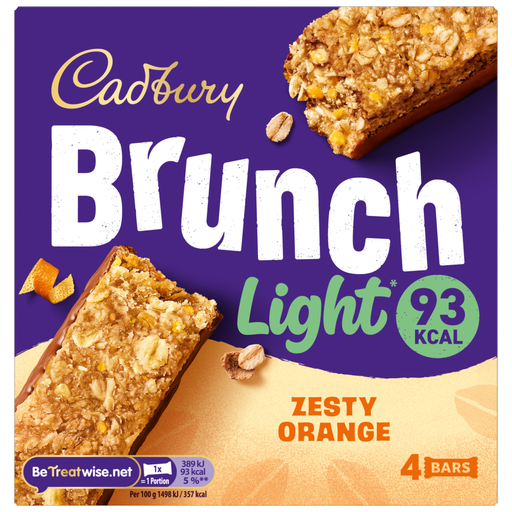
Consider this cereal bar if you want to compare an orange-flavoured option for your tea break. “Light” in its name is not a substitute for checking total fat, saturates and sugars on the pack.
 No image available
This dark-chocolate snack is another 21.5g-bar format to consider. Compare its own nutrition panel with the red-berry recipe rather than assuming the two flavours have the same fat or sugar values.
 No image available
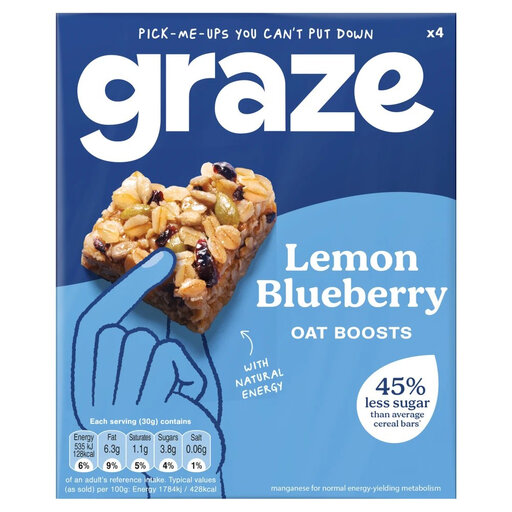
This 30g oat-bar format is worth considering if you prefer a flapjack-style tea-break snack. If lower total fat is the deciding factor, compare the lemon-and-blueberry pack's fat per 100g with the cereal bars rather than relying on its oat positioning.
 No image available
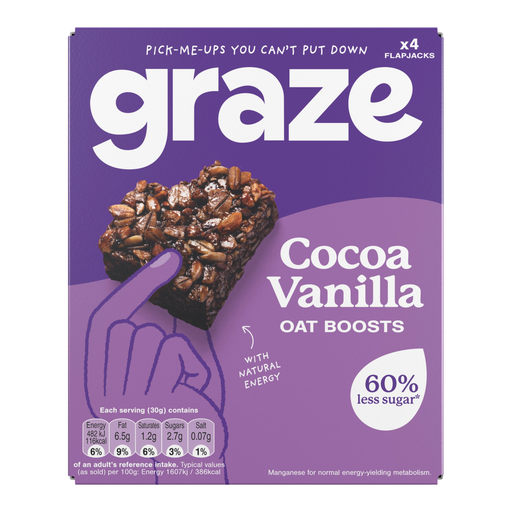
Choose this oat-square format to compare when protein is part of your snack decision. Its name does not establish a lower-fat result, so check the exact pack's total fat, sugars and allergen declaration.
No. “Reduced fat” compares a product with another, while the NHS food-label guide describes a food with 3g total fat or less per 100g as low fat. Read the exact bar's per-100g value before deciding whether it meets your aim.
Compare total fat, saturated fat, sugars and energy per 100g first, then check the values for the number of bars you expect to eat. Per-100g figures make different pack sizes easier to compare; per-portion figures show what your planned serving contains.
Yes. Nature Valley UK declares 18.4g total fat per 100g for its Crunchy Cocoa & Hazelnut bar, above the NHS high-fat guide of more than 17.5g per 100g. Check fat separately from oats, fibre or protein on any bar you are considering.
Read the current ingredients and allergen declaration for the exact flavour and pack. A vegan or gluten-free description elsewhere in a brand's range does not establish the suitability of the bar in your hand.