Parents of children under 2
A reduced-fat claim is not a reason on its own to pick a bar. NHS guidance places the gradual introduction of lower-fat foods from age 2, provided the child is eating well and growing well.


Do not choose a cereal bar for toddler snack time on a reduced-fat claim alone. NHS guidance says lower-fat foods can be introduced gradually from age 2 if a child is eating well and growing well; for a younger toddler, fat reduction should not be the starting point. If considering a bar, check its age marking, texture, full nutrition label and allergens, as well as any nursery or school food rules.
A reduced-fat claim is not a reason on its own to pick a bar. NHS guidance places the gradual introduction of lower-fat foods from age 2, provided the child is eating well and growing well.
Compare the portion and full label rather than relying on wording on the front of the pack. Consider whether the child can manage the bar’s texture.
Check the current ingredients and allergen statements against the child’s needs and the setting’s food policy before putting a bar in a bag.
Start with the child’s age and the bar’s texture, then compare the whole label and check where the snack will be eaten.
| Priority | What to check | Your needs |
|---|---|---|
| Age and fat | Check the age marking, fat and saturates per serving, and the serving size. NHS guidance allows lower-fat foods to be introduced gradually from age 2 if the child is eating well and growing well; that guidance does not make every reduced-fat bar suitable. | For a child under 2, I do not want a reduced-fat label to decide the snack for me. |
| Sugars and ingredients | Compare sugars per serving and per 100g on bars with similar serving sizes. Read the ingredients alongside claims such as “no added sugars”. | I want to know what the whole bar contains, not just what one claim says about it. |
| Allergens and setting rules | Read the current ingredients list, including emphasised allergens, and any precautionary wording. Confirm the nursery or school’s own policy; the Food Standards Agency says allergens present in prepacked food must be emphasised in its ingredients list. | Before packing a snack, I need it to fit the child’s allergen requirements and the setting’s rules. |
| Texture and occasion | Check any age or chewing warning on the pack and whether the child can manage the texture. For another option, NHS snack examples include fruit, vegetable sticks, plain unsweetened yoghurt and crackers; prepare food appropriately for the child’s age. | A wrapped bar would be convenient, but I also want a snack the child can eat comfortably. |
The claim does not tell you the bar’s sugars, portion size, allergens or texture. It is particularly unhelpful as a starting point for a child under 2.
Consider the child’s age first, then compare the full labels of similarly sized bars. A bar need not be the default snack.
The wording does not state the total sugars in a serving or establish that the bar suits toddler snack time.
Read sugars per serving and per 100g, along with the ingredients, before deciding.
Ingredients can change. A bar that fitted a child’s requirements on a previous purchase should not be assumed to have the same declaration now.
Check the current packet, including precautionary wording where relevant, and confirm the nursery or school’s policy before packing it.
Protein, high-fibre or on-the-go positioning does not establish an appropriate age, manageable texture or suitable ingredients for a toddler.
Check the specific product’s age and safety information, nutrition panel and allergens instead of relying on the range name.
These examples show why the exact bar and its current packet matter more than the brand name when choosing a toddler snack.
The UK Crunchy range includes oat-based bars, but its product information does not establish a reduced-fat or toddler-specific option.
Nutri-Grain includes soft baked bar varieties; the nutrition information needs checking for the particular product.
The Honey Oat Boosts listing presents an oat-based snack, rather than a toddler-specific reduced-fat bar.
Eat Natural identifies gluten-free options within its wider UK range, so the relevant details depend on the individual bar.
TREK Protein Flapjacks are positioned as plant-based oat snacks, not specifically as toddler snacks.
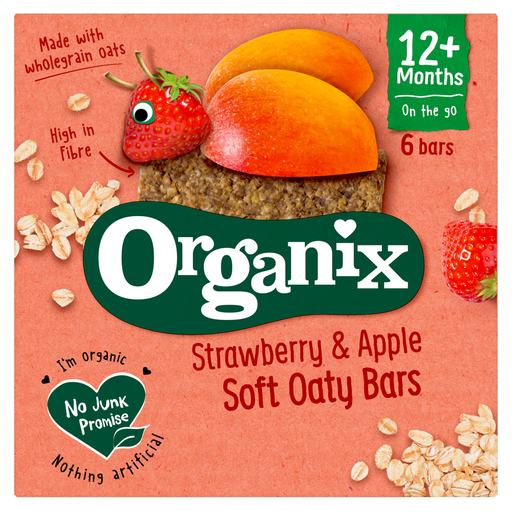
These two bars serve different shopping questions: one is labelled for children aged 12 months and over; the other has “Light” in its name but carries a reported choking warning for under-4s. Neither should be selected for toddler snack time on a reduced-fat assumption.
 No image available
The 12+ months marking and soft-oaty description make age and texture the starting checks for this bar. Check the current packet for sugars, gluten and precautionary nut, soya and milk wording before packing it for nursery; the age marking does not establish that it is reduced-fat.
 No image available
“Light” in the name is not enough to judge the bar’s fat content or its suitability for a toddler. Product information flags a choking warning for children under 4, so do not choose this bar for that age group. Check the current packet for the warning, full nutrition information and allergens.
No. The claim alone does not address sugars, allergens, texture or portion size. NHS guidance says lower-fat foods can be introduced gradually from age 2 if the child is eating well and growing well, so age matters when deciding how much weight to give a fat claim.
Compare serving sizes, then read sugars, fat, saturates and salt on the nutrition panel, along with the ingredients and allergens. Looking at both per-serving and per-100g figures helps when pack sizes differ; a front-of-pack claim cannot answer every question about the bar.
NHS examples for young children include fruit, vegetable sticks, plain unsweetened yoghurt, crackers and breadsticks. Choose and prepare an option that the child can manage at their age, and account for how it will be stored and served while out.
Read the current ingredients list and any precautionary allergen wording, then check the setting’s food policy. The Food Standards Agency says allergens present in prepacked food must be emphasised in the ingredients list; an earlier check is no substitute for reading the packet you are packing.