Lunch cooks comparing saturated fat
If coconut milk is going into your curry, soup or sauce, compare the saturates on cooking-milk labels rather than relying on a reduced-fat description alone.


For a lunch curry or soup, choose a reduced-fat cooking coconut milk if lowering saturated fat is your priority, but check the label: M&S Reduced Fat Coconut Milk lists 8.2g saturates per 100g, above the NHS threshold of more than 5g per 100g for a high-saturated-fat food. If a short ingredient list matters more, consider a coconut-extract-and-water tin; if sauce texture matters more, check coconut-extract content alongside saturates. A ready-to-drink coconut beverage is a different product from tinned cooking milk.
If coconut milk is going into your curry, soup or sauce, compare the saturates on cooking-milk labels rather than relying on a reduced-fat description alone.
If you prefer coconut extract and water without listed stabilisers, check the ingredients on the exact tin. Separation can occur with this type of product.
If you need an ingredient for a sauce, identify tinned cooking milk before comparing it with carton or bottled coconut drinks. Their formulations and intended uses differ.
Start with the product format, then compare the nutrition panel and ingredients for the lunch you plan to make. “Mature” alone does not describe a tin’s formulation or its use in cooking.
| Priority | What to check | Your needs |
|---|---|---|
| Saturated fat | Compare saturates on the same per-100g or per-100ml basis. Marks & Spencer lists 8.2g per 100g for its reduced-fat tin and 15.1g per 100g for its standard tin; the NHS classifies more than 5g per 100g as high. | I want coconut milk in my lunch but need to compare saturated fat, even when a tin says “reduced fat”. |
| Sauce texture | Check coconut-extract percentage and the product’s cooking description, then read its saturates. Extract percentage describes the listed recipe; it is not a nutrition score or a guarantee of texture. | A smaller amount of sauce needs to bring enough coconut flavour and body to my curry or soup. |
| Ingredients | Read the full list on the current tin. Sainsbury’s listing for Tropical Sun 100% Natural Coconut Milk names coconut extract and water; some other cooking milks list stabilisers or emulsifiers. | I prefer a short ingredient list and can accommodate natural separation if the pack says to shake the milk. |
| Cooking format | Look for a product sold as cooking coconut milk. The checked Joybuy Coconut Palm 1L product is listed as a ready-to-drink coconut drink and includes sugar. | I need an ingredient for a lunch sauce, not a beverage with a similar name. |
| Leftovers and allergens | Read the current pack’s refrigeration, use-after-opening and allergen instructions. The Sainsbury’s listing for Blue Dragon Coconut Milk carries a may-contain peanuts-and-nuts statement. | I may have milk left after lunch, or I need to check an allergen statement before cooking for someone. |
M&S Reduced Fat Coconut Milk lists 8.2g saturates per 100g. That is lower than the 15.1g per 100g on the checked standard M&S tin, but still above the NHS high threshold of more than 5g per 100g.
Compare the per-100g figures for those two tins, and decide how much coconut milk the lunch recipe needs.
The British Heart Foundation describes tinned coconut milk as a cooking ingredient. The checked Joybuy Coconut Palm 1L product is a ready-to-drink coconut drink with sugar in its ingredients.
Check that the product is sold for cooking before comparing its flavour or nutrition with a tin.
Sainsbury’s lists coconut extract and water for Tropical Sun 100% Natural Coconut Milk, alongside 10g saturates per 100g. Ingredient simplicity and saturated-fat content answer different questions.
Use the ingredients list for formulation preferences and the nutrition panel for saturated-fat comparisons.
Cooking-milk products can give different instructions for refrigerating and using leftovers. Allergen statements also need to be checked for the exact product.
Read the tin in hand before serving, and plan how to store any milk left from a 400ml tin.
These are label details for the specified cooking milks, not claims about every product from each brand.
Marks & Spencer lists standard and reduced-fat 400ml cooking coconut milks, allowing a comparison on the same per-100g basis.
The checked 100% Natural Coconut Milk 400ml is an option for shoppers who prefer a short ingredient list.
The checked 400ml cooking milk is worth considering when the recipe calls for a more coconut-forward sauce.
Sainsbury’s own-label Coconut Milk 400ml is a cooking-milk option for a lunch sauce or curry.
Tesco Coconut Milk 400ml is an own-label cooking milk for curries and sauces.
These two 400ml coconut milks offer a short-ingredient-list option and another cooking-milk option for a sauce. Check each tin’s current nutrition panel before choosing for a saturated-fat goal.
 No image available
For a lunch sauce where a short ingredient list matters, the listed ingredients are coconut extract and water. Check the current tin’s saturated-fat value and whether it is stated per 100g or per 100ml before comparing it with another product; shake and refrigerate as directed on the pack.
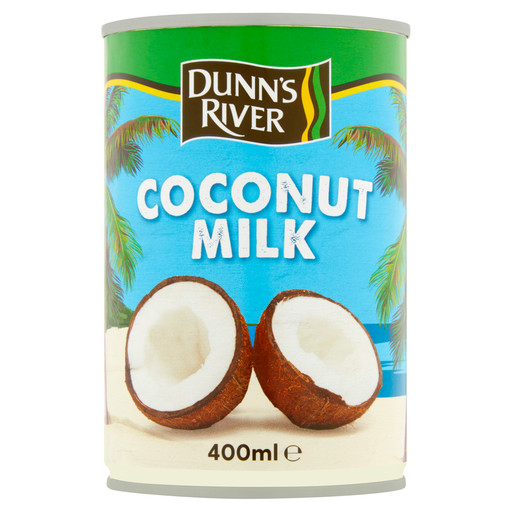 No image available
Consider this 400ml cooking milk for a lunch curry or soup where sauce texture is the priority. Check the current tin’s coconut-extract percentage and saturates when deciding how much to use, and follow its instructions for storing leftovers.
Use the cooking format, ingredients, coconut-extract percentage and nutrition panel to choose. The word “mature” alone does not tell you how a particular coconut milk is formulated or how much saturated fat it contains.
Not necessarily. M&S Reduced Fat Coconut Milk lists 8.2g saturates per 100g, compared with 15.1g per 100g for its checked standard tin. The NHS classifies more than 5g saturates per 100g as high.
Choose a product sold as cooking coconut milk for a curry sauce. The checked Joybuy Coconut Palm 1L product is a ready-to-drink coconut drink that lists sugar; do not assume it will work like a cooking tin because its name includes “coconut milk”.
Follow the instructions on the exact pack for refrigeration, containers and when to use it. Checked cooking-milk products give different use-after-opening periods, so read the tin before planning a second lunch.
Read the allergen statement on the current pack of the product you intend to use. For example, Sainsbury’s listing for Blue Dragon Coconut Milk states that it may contain peanuts and nuts; that statement does not establish the allergen information for another tin.